
Mark Carney Rejects Trump Team “Entry Fee” Demands Before USMCA Talks
Key Takeaways
- US will not dictate terms or demand upfront concessions before talks.
- Canada will not offer new concessions to enter talks; seeks mutual concessions.
- Talks could take time; Canada seeks reciprocity on concessions, including sector tariffs.
Entry Fee Clash
Canada’s Prime Minister Mark Carney rejected the idea that Washington can demand an “entry fee” of concessions before the United States and Canada begin talks on revising the United States-Mexico-Canada Agreement (USMCA).
“US 'won't dictate terms' of free trade talks, says PM Carney Canadian Prime Minister Mark Carney has ruled out making concessions ahead of further talks with the US while a top US official warned the two countries remain fundamentally misaligned on trade”
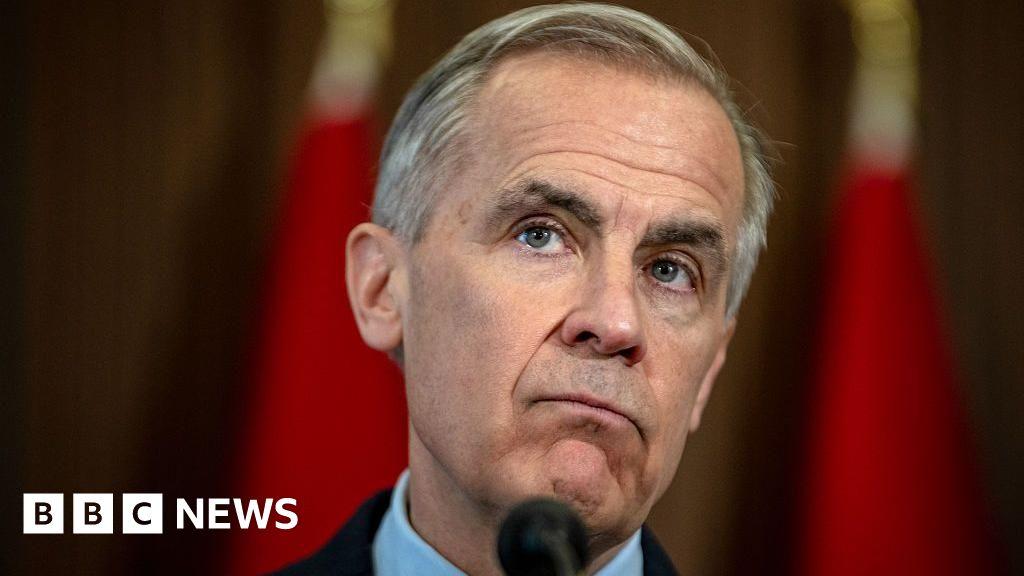
Carney told reporters that “It’s not a case of the United States dictates the terms,” after reports that Trump’s team wants concessions from Canada before agreeing to open negotiations.
The dispute is tied to the U.S. position that the review of the North American free trade pact is approaching, with the BBC describing a “deadline of 1 July for a mandatory review of the free trade agreement between the three countries, called the USMCA.”
In Ottawa, Carney framed the process as negotiation rather than submission, saying, “We have a negotiation, we can come to a mutually successful outcome - it will take some time.”
The CBC-linked reporting cited by multiple outlets said Trump’s team wants an “entry fee,” or concessions, from Canada before starting talks, and Jean Charest told Radio-Canada that Trump is demanding “concessions before we sit down at the table.”
The Toronto Star reported that Canada’s Liberal government would not offer new concessions before getting to the Canada-U.S. trade table, with Trade Minister Dominic LeBlanc warning Ottawa would not “make a series of concessions” just to get a U.S. statement.
The BBC also reported that the U.S. trade representative Jamieson Greer warned Congress Canada is “doubling down on globalisation when we’re trying to correct for the problems of globalisation.”
What Canada Says It Won’t Do
While Washington’s reported “entry fee” demand has become the focal point, Canadian officials also insisted that earlier concessions have already been made and that further steps must be tied to a broader settlement.
The Toronto Star quoted Dominic LeBlanc saying Ottawa has already met some U.S. demands for concessions and will deal with others only “in the context of a broader deal to resolve each country’s respective concerns.”

LeBlanc said Canada would not “agree to a series of things that aren’t in the interest of the Canadian economy, Canadian businesses, Canadian workers,” and Carney echoed that the talks are “a negotiation.”
The BBC similarly reported that Canada has already made concessions, including that “In June, it dropped a planned tax on big US technology firms after the Trump administration flagged it as an irritant.”
CBC also reported that Carney vowed the Americans alone will not dictate the terms, insisting the process must result in “some U.S. concessions to Canada before Ottawa and the provinces make their own compromises.”
In the same reporting, Carney said, “We will sit down and work through those issues with the broader approach in the negotiation,” and he added, “We’ve made some counter-proposals, which they’re aware of.”
The Globe and Mail described the federal government’s stance as refusing to allow Washington to dictate the terms, while sources said the U.S. is demanding upfront changes to domestic policies before it will sit down to negotiate.
U.S. Pressure Points
U.S. officials and congressional testimony described specific trade irritants that they want addressed as the review of USMCA nears, and Canadian leaders responded by pointing to jurisdictional limits and the need for reciprocal relief.
“Canada wants to revisit Trump’s sectoral tariffs hitting key export sectors like steel, aluminum and autos Author of the article: You can save this article by registering for freehere”
The BBC reported that Greer told Congress Canada is “doubling down on globalisation,” and it also quoted Greer warning there may “have to be an enforcement action to deal with this issue” tied to provincial liquor shelf removals.
The same BBC account said U.S. commerce secretary Howard Lutnick told a Senate committee that Canada treats US dairy farmers “poorly,” and it cited Trump’s prior accusation that Canada charged “extraordinary tariffs to our dairy farmers - up to 400 per cent.”
Greer also raised dairy quotas and the decision by most Canadian provinces to remove US liquor from shelves due to tariffs, while the BBC described Canada’s supply-management system and said “Dominic LeBlanc, the Canadian minister responsible for US-Canada trade, told the Globe and Mail newspaper on Wednesday that dairy is off the table.”
In the Toronto Star, LeBlanc said Canada doesn’t want a “one-off” deal on CUSMA while industries hit hard by Trump’s tariffs are left for another negotiation, and it described U.S. frustration with Canada keeping American wine and spirits off provincial liquor store shelves.
The Toronto Star quoted Commerce Secretary Howard Lutnick calling it “insulting and disrespectful” for Canada to keep American wine and spirits off provincial government-controlled liquor store shelves, and it reported that Greer said Canadians “have made no commitments” on dairy and U.S. alcohol sales.
The Globe and Mail described U.S. demands as including changes to dairy supply management, provincial bans on American liquor, the Online Streaming Act and the Online News Act, and it said sources expected negotiations to extend beyond July 1.
Canada’s Counter-Strategy
Canada’s response has combined firm messaging from Prime Minister Mark Carney with a parallel effort to assemble an advisory structure for the negotiations, while provincial leaders maintain retaliatory measures tied to tariffs.
The Guardian reported that Carney named a “24-member advisory committee” to advise on economic relations with the United States, saying it would draw on the “best advice and the broadest perspectives” and show eagerness to reach across the political spectrum.

The Guardian listed members including former Conservative leader Erin O’Toole, former Conservative cabinet minister Lisa Raitt, former provincial premiers PJ Akeeagok and Jean Charest, and former Canadian high commissioner to the United Kingdom Ralph Goodale, while noting only four people were retained from the previous council assembled by Justin Trudeau.
The Guardian said the council would meet for the first time on 27 April and that Carney released a “10-minute video” to Canadians, saying the U.S. had “fundamentally” changed its approach on free trade.
In that video, Carney said the U.S. raised controversial tariffs to levels “last seen during the Great Depression,” and he said “Many of our former strengths, based on our close ties to America, have become weaknesses, weaknesses that we must correct.”
The Toronto Star described Ontario Premier Doug Ford’s stance, quoting him saying, “You never roll over to a bully. You confront them head on,” and adding that “The LCBO, that’s one tool.”
In the Financial Post, Janice Charette said the government has made “very significant — I would describe them as concessions — moves already,” and she warned that so far it’s being “pocketed,” while saying Canada wants “some mutuality” in the negotiating process.
Deadline, Outcomes, and Stakes
As the July 1 review deadline approaches, the sources describe uncertainty about whether negotiators will reach a deal and what happens if they do not, while also laying out the stakes for market access and the possibility of annual reviews.
“The Autorité des marchés publics ordered the Société de l’assurance automobile du Québec to suspend for 30 days the contracts it had entered into for its online services system”
The BBC said the three countries are “staring down a deadline of 1 July for a mandatory review,” and it reported that formal talks between the U.S. and Canada have yet to get underway even as trade officials communicate.

The CBC account said both sides have publicly conceded that the review process is unlikely to wrap up by July 1, and it described Greer’s position that the U.S. is keen to preserve at least some aspects of CUSMA.
The BBC also reported that in the case a deal is not reached, the USMCA could be subject to annual reviews until it is set to expire in 2036.
The Globe and Mail added that parties must decide whether to extend the agreement for another 16 years, or move to annual reviews for 10 years, after which the agreement will expire if they don’t agree to extend it, and it said any of the three parties can withdraw with six months’ notice.
In Washington, Greer told Congress that the U.S. goal is to “make sure that we maintain market access into these countries,” and he said he doesn’t think negotiators should “rubber stamp” the deal.
In Canada, Carney warned that the upcoming talks could inflict damage to the Canadian economy, and the Guardian reported he would give Canadians regular updates on efforts to diversify away from the U.S.
More on Canada

Canada Cuts Tariffs on Chinese Electric Vehicles, Capping Imports at 49,000 Per Year
15 sources compared

Prosecutors Say Luther Davis Used Makeup and Wig to Impersonate NFL Players in $20M Fraud
14 sources compared
Prime Minister Carney Suspends Federal Fuel Taxes Until Labour Day To Lower Prices
18 sources compared

Man Jailed For Stealing £2.2m Fabergé Egg And Watch From Soho Pub
13 sources compared