
Canada · 19 April, 2026 · 7 min read
Mark Carney Says Rules-Based International Order Is Failing After Davos Rupture
Carney says the rules-based international order has broken down. Promotes a realist, value-based framework for global governance.
Framing of the shift in global order.
7 of 8 outlets skipped it: canada reportedly refused to pay a one-billion-dollar tribute demanded by Donald Trump to join his 'Peace Council' (a detail noted by Le Grand Continent)..
9outlets compared
Same story, two versions
tap a side to read it in full
Cinco Días
“Lo que Carney articuló ante el Foro Económico Mundial no fue retórica. Fue una ruptura epistemológica con el marco mental que ha gobernado la política exterior de las democracias occidentales durante tres décadas.”Read the original ↗
Shows a tug between describing the moment as a fundamental rupture vs. a deeper epistemological break, shaping whether readers see the speech as a practical policy shift or a theoretical overhaul.
Carney’s Davos rupture
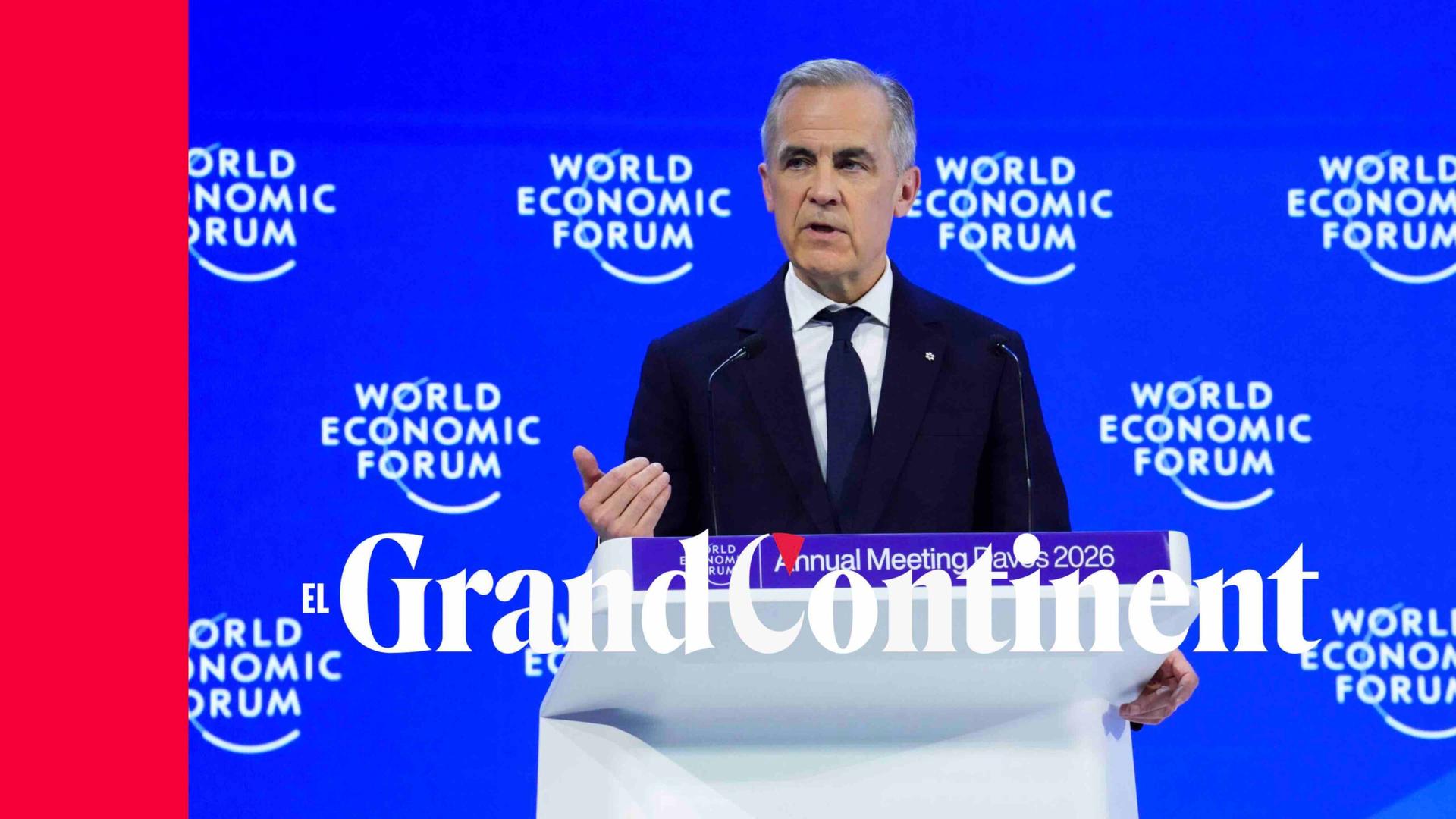
Canadian Prime Minister Mark Carney used his Davos Forum appearance to argue that the “rules-based international order” is no longer working as advertised and that the world is in a “rupture” rather than a “transition.”
“the rupture of the world order”
In the account published by El Mundo, Carney said he would discuss “the rupture of the world order” and “the beginning of a brutal reality in which geopolitics among the great powers is unconstrained,” adding that “This arrangement no longer works.”E

El Mundo also frames Carney’s central claim as a direct challenge to the idea that the system still protects countries like Canada, noting that he acknowledged “the history of the rules-based order was partly false” and that “trade rules were applied asymmetrically.”E
SenePlus similarly quotes Carney describing the international system as a kind of hypocrisy, saying “l'ordre international est une fiction” and quoting him: “Il ne le croit pas. Personne ne le croit. Mais il place quand même le panneau pour éviter les ennuis, pour signaler sa conformité.”
Noovo Info places the speech in the context of Donald Trump’s actions, saying Carney spoke as Trump “continue cette semaine d'appeler à l'annexion du Groenland,” and it quotes Carney warning that “Les grandes puissances ont commencé à utiliser l'intégration économique comme une arme.”
Le Grand Continent describes Carney’s message as a call to exit “the ‘lie’” and to pursue “building something better, stronger and fairer,” while also quoting the speech’s opening French framing of “the rupture of the world order, the end of an agreeable fiction.”
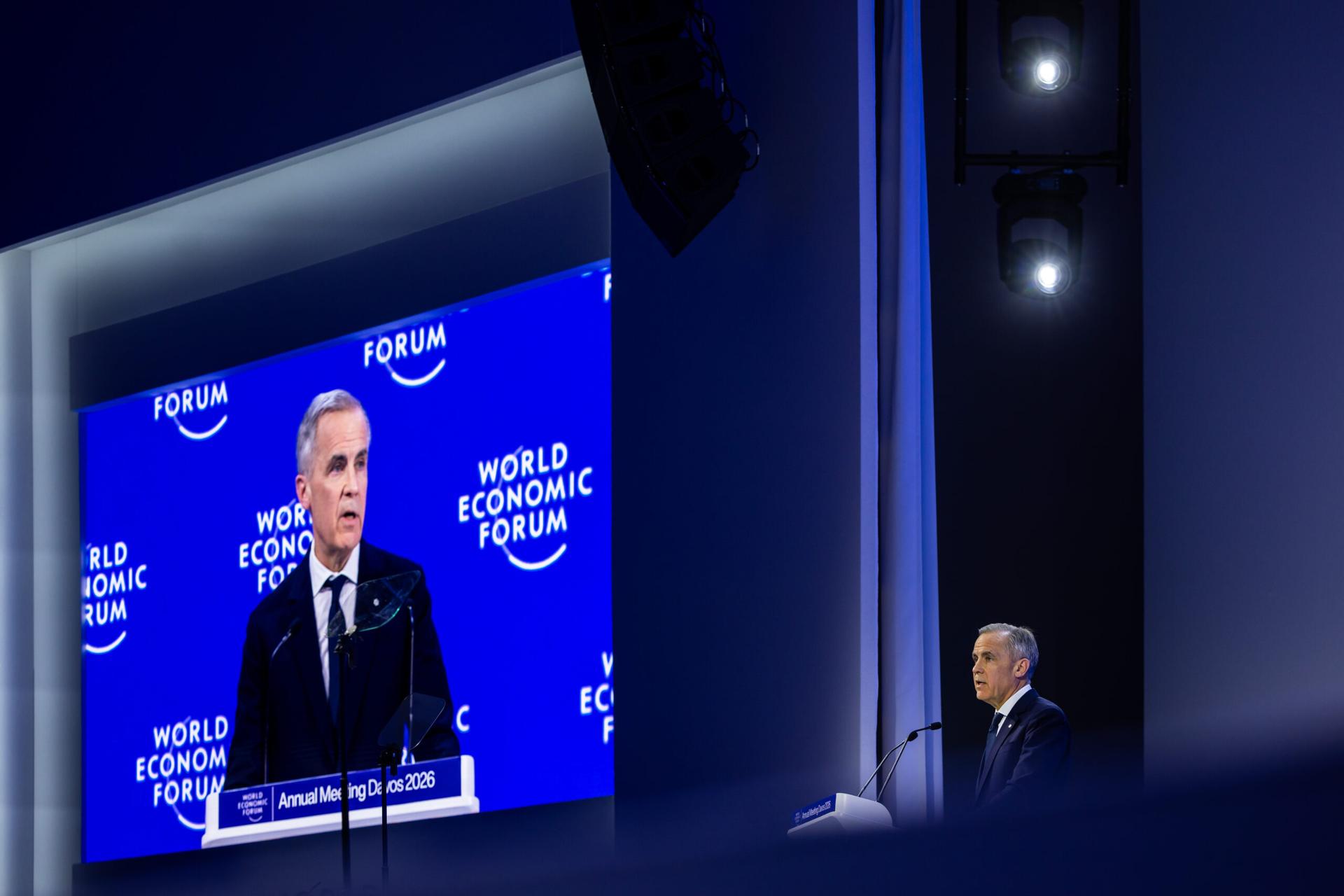
Across these accounts, the Davos setting and the date are consistent: Carney delivered the speech at Davos on January 20, 2026, and the “rupture” diagnosis is presented as the hinge for everything that follows.
The Havel ‘grocer’ analogy
Carney’s Davos argument relies on a specific analogy drawn from Václav Havel, and multiple outlets reproduce the “grocer” framing to explain why the international system persists even when it is not believed.
El Mundo says Carney “opened by saying” he would discuss the “rupture of the world order” and it describes the rules-based order as a “fiction” that “served a purpose,” while also stating that “American hegemony, in particular, helped provide public goods such as open sea lanes, a stable financial system, collective security, and support for dispute-resolution frameworks.”E
Le Grand Continent and El Debate both center the Havel comparison, with Le Grand Continent quoting the grocer story: “Every morning, he places a sign in his shop window: “Workers of all countries, unite!” He does not believe in it. No one believes in it.”
El Debate similarly says Carney cited Havel’s 1978 essay and used the “verdulero” image, writing that Carney “utilizó la analogía del ‘verdulero’ que coloca consignas ideológicas en su ventana solo para evitar problemas y señalar conformidad, aunque no crea en ellas.”
SenePlus provides the same core idea in French, quoting Carney’s line: “Nous avons donc placé le panneau dans la fenêtre. Nous avons participé aux rituels et nous avons largement évité de dénoncer les écarts entre la rhétorique et la réalité.”
Noovo Info quotes Carney’s warning about living in a false bargain, stating: «Vous ne pouvez pas vivre dans le mensonge d'un bénéfice mutuel grâce à l'intégration lorsque celle-ci devient la source de votre subordination.»
The Conversation also quotes Carney’s call to stop invoking the liberal rules-based order and to free oneself from the “fiction,” stating that Carney invites a rethink and calls to “stop invoking a liberal rules-based order” and to permanently free oneself from the “fiction” of a benevolent American hegemon.
Economic integration as coercion
A major part of Carney’s Davos case, as reproduced by multiple outlets, is that economic integration has shifted from being a mechanism of cooperation into an instrument of coercion.
“Les grandes puissances ont commencé à utiliser l'intégration économique comme une arme”
Noovo Info quotes Carney directly, saying: «Les grandes puissances ont commencé à utiliser l'intégration économique comme une arme. Les droits de douane comme moyen de pression, les infrastructures financières comme moyen de coercition, les chaînes d'approvisionnement comme vulnérabilités à exploiter.»
El Mundo similarly describes Carney’s argument that the “rules-based order” no longer works because the powerful can exempt themselves and because trade rules are applied asymmetrically, while also noting that the prior arrangement “generally avoided calling out the gaps between rhetoric and reality.”E
The Conversation frames Carney’s diagnosis as a “realistic reading” that denounces a system in which “great powers act according to their interests using economic integration as a weapon of coercion,” and it ties this to Carney’s call to stop invoking the liberal rules-based order.
SenePlus quotes Carney expanding the same theme, saying: “les grandes puissances ont commencé à utiliser l'intégration économique comme des armes. Les tarifs comme levier, l'infrastructure financière comme coercition, les chaînes d'approvisionnement comme des vulnérabilités à exploiter.”
Le Grand Continent also quotes Carney’s Havel-based “living in the lie” framing and then links it to the fragility of the system, saying: “The moment has arrived for companies and countries to remove their signs.”
El Debate describes the same shift in more direct terms, stating that “la integración económica global ya no es una vía hacia la prosperidad mutua, sino que ha sido convertida en un arma de coerción a través de aranceles, control de infraestructura financiera y explotación de cadenas de suministro.”
A ‘value-based realism’ doctrine
Carney’s Davos speech, as described across the outlets, culminates in a proposed Canadian doctrine that he calls “realism based on values,” paired with a strategy for middle powers to act together rather than accept subordination.
El Mundo says Carney’s new approach draws on what Alexander Stubb called “value-based realism,” explaining that “we aim to be pragmatic while acting with principles,” and it notes that Stubb published an influential Foreign Affairs article “almost simultaneously” on the same question.E
SenePlus describes the doctrine in French terms, saying Carney presented a new doctrine for Canada he qualifies as “réalisme fondé sur les valeurs,” an approach “à la fois ancrée dans les principes et pragmatique.”
Noovo Info similarly quotes Carney’s argument that middle powers must act in concert, saying: “Les puissances moyennes doivent agir de concert, car si vous n'êtes pas à la table des négociations, vous êtes au menu,” and it also quotes his contrast between great powers acting alone and middle powers being unable to do so.
Le Grand Continent quotes Carney’s call for honesty and cooperation, including the line that “The power of the less powerful begins with honesty,” and it frames the speech as a call to “strengthen our position at home and to act together.”
Lisa News adds operational framing by describing “shared strategic autonomy” and “functional minilateralism,” stating that Carney “proposes value-based realism, with shared strategic autonomy and functional minilateralism,” and it describes the speech as rejecting “nostalgia for the old order and retreat into national autarkies.”
El Debate describes the doctrine’s balancing act, saying it seeks equilibrium between being “principistas” and being “pragmáticos,” and it quotes Carney’s emphasis on “valor de su fuerza.”
Stakes, alliances, and backlash
The outlets also place Carney’s Davos speech inside a wider set of immediate geopolitical stakes and domestic political tensions, while showing how different audiences interpret what the speech changes.
“crise du Groenland a dominé les débats à Davos”
Noovo Info situates the speech as Donald Trump approaches the first anniversary of his second mandate and it says the “crise du Groenland a dominé les débats à Davos,” adding that Emmanuel Macron called the situation “délirante” and that the Belgian prime minister Bart De Wever said the United States “ne se comportaient pas comme un allié.”
It also says Mark Carney met Emmanuel Macron on Tuesday and that a cabinet communiqué said the two men “réaffirmé leur engagement mutuel” toward the sovereignty of Denmark, including Greenland.
El Mundo links Carney’s timing to Trump’s threats, stating that “Trump imposed the greatest protectionist barrier in a century,” threatened to “annex Greenland,” to “break NATO,” and to possibly bring his northern neighbor into the United States.
Le Grand Continent adds that Canada had already refused to pay “the one‑billion‑dollar tribute demanded by Trump to join his ‘Peace Council’,” and it frames Carney’s speech as part of resistance to “Trumpism.”
On the domestic front, SenePlus reports that Carney’s speech received “une ovation debout rare,” while Cinco Días and Le Rubicon both characterize the speech’s intellectual and strategic implications differently, with Le Rubicon warning that “a good story and finely tuned phrases do not constitute a doctrine.”C
Finally, El Debate claims the speech has generated a “terremoto político” and mentions reactions including Ursula von der Leyen and Emmanuel Macron, while also stating that Trump, after a bilateral meeting, called the conversation “very agréable.”