Britain20 April, 20269 min read
Metropolitan Police Say No Hazardous Materials Found After Harakat Ashab al-Yamin al-Islamiyya Drone Threat
This article is an automated aggregation of coverage from news outlets. Our editorials offer in-depth analysis curated by the NewsCord team.
Police found no hazardous substances in items near London's Israeli embassy. Kensington Gardens reopened after police completed the security sweep.
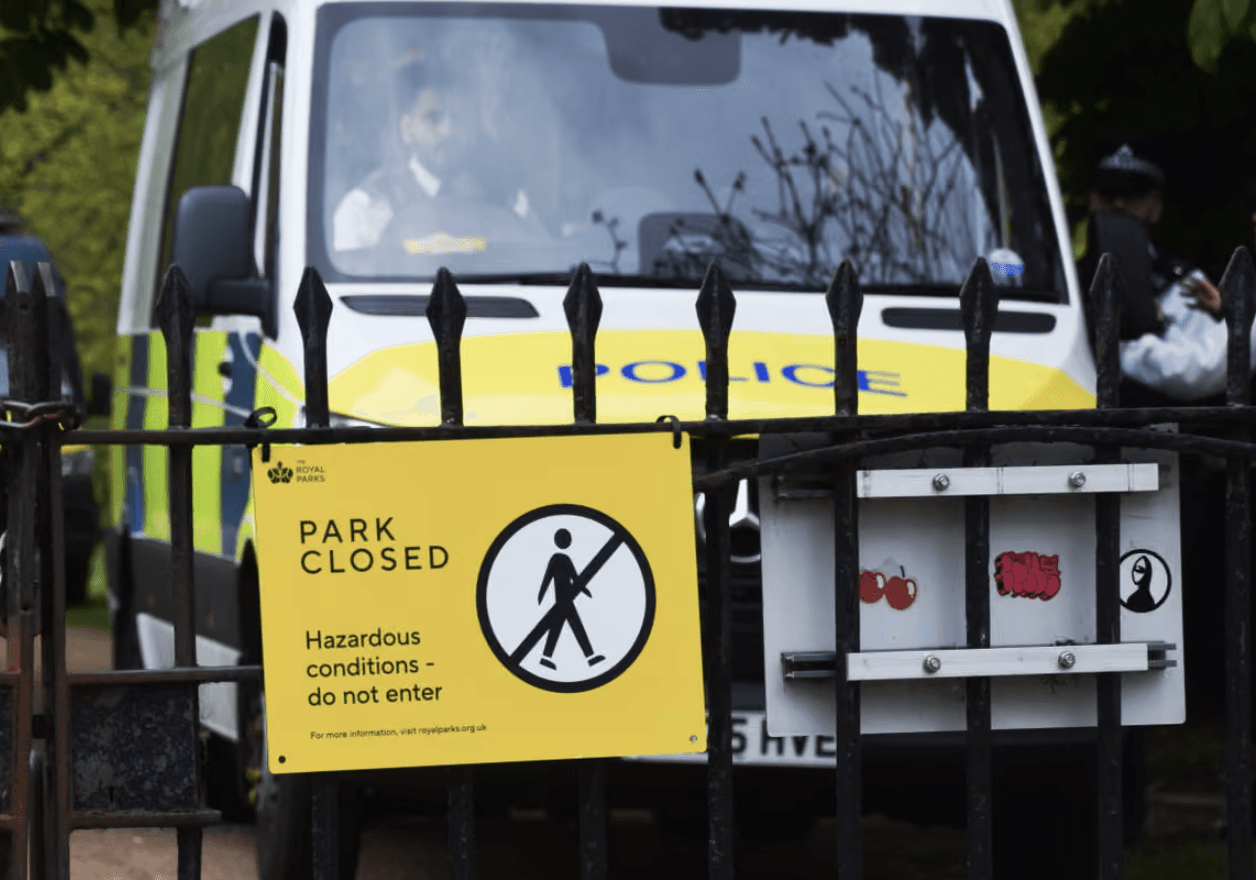
Drone threat near embassy
British police investigated a security incident near the Israeli Embassy in London after a terror group reported online that it had targeted the premises with drones carrying “dangerous substances.” The Metropolitan Police later announced the incident was over and “no hazardous materials had been found,” while counterterrorism policing in London said, “While the Embassy of Israel was not attacked, we continue to work closely with the Embassy and its security team to keep the site safe and secure.” The response triggered a stepped-up police presence and cordons that closed public access to the nearby Kensington Gardens and the surrounding area.
On Friday, Metropolitan Police officers were seen wearing protective clothing while searching the park near the embassy for suspicious objects, and the Foreign Ministry stressed that “all embassy workers were safe and that the embassy was not attacked.” The police said their counterterrorism force was “aware” of a video posted Thursday night in which a group claimed to have targeted the nearby Embassy of Israel with drones carrying dangerous substances.
The threatening video was tied to a newly founded pro-Iranian terror group, Harakat Ashab al-Yamin al-Islamiyya, also described as the “Movement of the Companions of the Right Hand of Islam.” The Times of Israel also linked the video to a wider pattern of incidents involving the embassy and Jewish sites in the British capital, including an arson attack that destroyed ambulances belonging to the Jewish volunteer emergency service Hatzola parked near a synagogue in the Golders Green area of north London.
Searches, jars, and reopening
As the investigation unfolded, Kensington Gardens was closed during the police response and then reopened after searches concluded and forensic checks found no hazardous materials. Reuters, as carried by Global Banking & Finance Review, said police “found no hazardous substances in items discovered near London’s Israeli embassy and reopened Kensington Gardens,” after investigating an online claim that the site had been targeted by drones. The Guardian reported that Kensington Gardens reopened after officers discovered “two jars containing a powdered substance that was deemed to be non-hazardous,” and that the Metropolitan police assessed the items and “did not identify any harmful or hazardous substances.”
The Metropolitan Police statement quoted by the Metropolitan Police outlet said, “Although the items found have been assessed as being non-hazardous, we continue to investigate whether they may have any link to the online video.” The Guardian also described the operational details of the search, saying “Divers from the Met’s underwater and confined space search team attended near the bandstand in Kensington Gardens,” and that “Dogs from the London fire brigade also attended.” The Round Pond ornamental lake was identified by The Guardian as “situated just north of the bandstand and to the east of Kensington Palace in the gardens,” placing the search activity within the geography of the park.
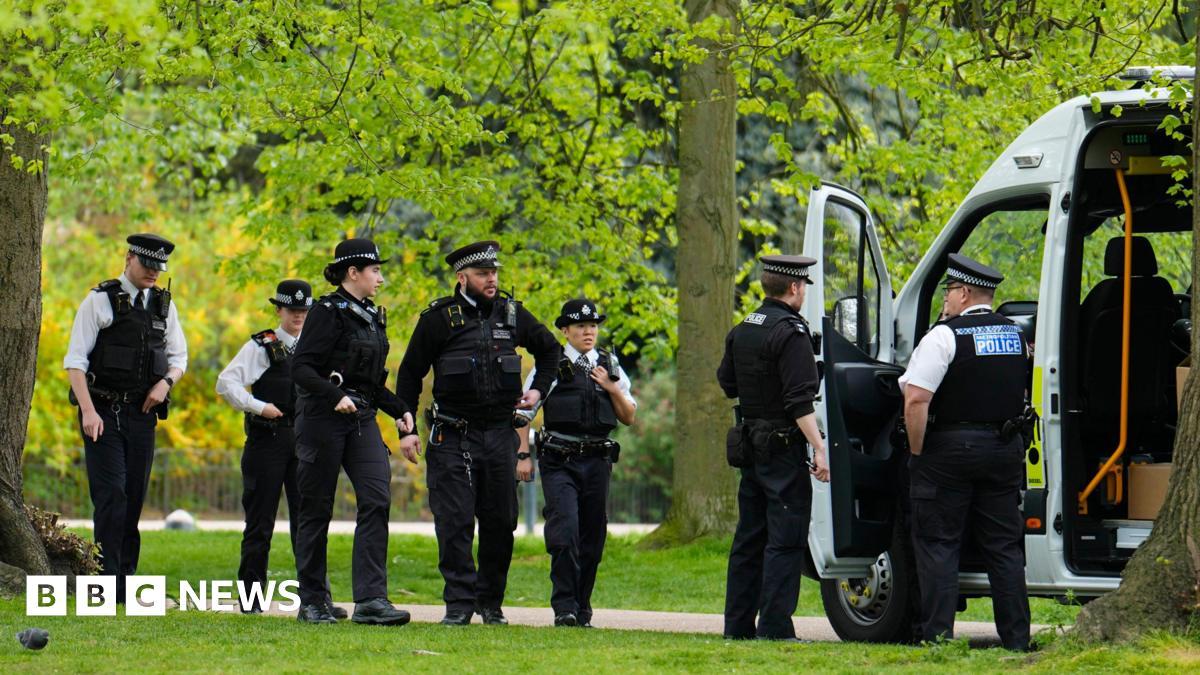
Arab London Sawt Al-Jaliyya Al-Arabiya Fi Britain reported that the security response began last Friday after counter-terrorism police investigated a video circulating online attributed to a group called the 'Islamic Right-Wing Movement,' and said forensic tests confirmed the objects contained “no hazardous materials.” That outlet added that officers conducted searches focusing on the 'Music Platform' and Round Pond, and that during the sweeps they found “two jars containing an unknown powder,” later confirmed as non-harmful. Across the reporting, police emphasized that the embassy was not attacked, while the investigation continued into whether the physical items had any connection to the online video.
Officials and coordination
Police and counterterrorism officials framed the incident as a precautionary response to online claims, while stressing ongoing coordination with the Israeli Embassy and continued inquiries into the video’s authenticity.
“We recognise this incident and consequent police activity may have caused concern among local residents and the wider public. We are grateful to them for their understanding while our work was undertaken.”
The Metropolitan Police outlet quoted Commander Helen Flanagan of Counter Terrorism Policing London saying, “We recognise this incident and consequent police activity may have caused concern among local residents and the wider public. We are grateful to them for their understanding while our work was undertaken.”
Flanagan also reiterated that, “Although the items found have been assessed as being non-hazardous, we continue to investigate whether they may have any link to the online video. This work is being carried out by officers from Counter Terrorism Policing London and our enquiries remain ongoing.”
The Guardian likewise quoted Flanagan saying, “While the embassy of Israel was not attacked, we continue to work closely with the embassy and its security team to keep the site safe and secure.”
The Times of Israel reported that Scotland Yard said the protective suits were a “precaution,” and that the Metropolitan Police continued, “We do not believe there to be any increased public safety risk at this stage.”
In the same reporting, Matt Jukes, the head of counter-terrorism at London police, said the police presence had been stepped up and cordons had been put in place, adding, “We do not believe there to be any increased public safety risk at this time and we would urge people, nonetheless, to avoid the area while officers carry out their work.”
Arab London Sawt Al-Jaliyya Al-Arabiya Fi Britain reported that Commander Helen Flanagan expressed gratitude for public understanding and cooperation during the closure and said investigations were still under way to determine any potential link between the materials found and the content of the posted video.
That outlet also said Flanagan stressed continued close coordination with the Israeli Embassy to ensure the site’s safety.
The Metropolitan Police outlet further instructed the public to “remain vigilant and report anything that doesn't look or feel right to police,” and provided a call number, “0800 789 321,” alongside an online reporting route at “www.gov.uk/ACT,” and an emergency instruction to “always dial 999.”
Competing frames and claims
Different outlets described the same incident while emphasizing different elements of the threat claim, the group identity, and the operational response. The Times of Israel said the video was posted by Harakat Ashab al-Yamin al-Islamiyya, “or Movement of the Companions of the Right Hand of Islam,” and it described the police as “carrying out urgent enquiries to determine the authenticity of the video and to identify any potential link between it and the items discarded in Kensington Gardens.” The Guardian described the video as appearing to have been posted by Harakat Ashab al-Yamin al-Islamia, an “Iran-linked Islamist group,” and said it depicted “a target over an image of the Israeli embassy and people wearing hazmat suits flying drones.”
The Jerusalem Post used the name Ashab al-Yamin and said the group had posted a video including “footage of drones along with two figures dressed in protective clothing,” while also adding that the group had claimed attacks including arson attacks that destroyed “four Hatzola ambulances in Golders Green.” LBC framed the incident as part of “grey-zone warfare,” quoting security firm Augur co-founder and CEO Harry Mead saying the incident reflects “a wider shift towards so-called grey-zone warfare,” and describing the threat as “activity that sits between crime, terrorism, and overt state conflict.” LBC also reported that “Both the Metropolitan Police and the Israeli embassy have denied that any such attack took place,” while noting that video footage emerged online showing a drone “plastered in pro-Iranian stickers.”
Meanwhile, Arab London Sawt Al-Jaliyya Al-Arabiya Fi Britain described the video as attributed to a group called the 'Islamic Right-Wing Movement,' suspected of having ties to Iran, and said forensic tests confirmed the objects contained “no hazardous materials.” The Global Banking & Finance Review version of Reuters reporting focused on the outcome, saying police “found no hazardous substances” and that authorities were still investigating a “claimed link” to the online video. Across these accounts, the common thread was that the embassy was not attacked and that police were investigating whether the physical items related to the online claims, but the outlets varied in how they named the group and how they contextualized the incident.
Ongoing investigation and risk
Even after Kensington Gardens reopened, the reporting emphasized that the case remained open for investigation and technical analysis, with police continuing to assess whether the discovered items had any link to the online video. The Metropolitan Police outlet said, “Although the items found have been assessed as being non-hazardous, we continue to investigate whether they may have any link to the online video,” and it added, “This work is being carried out by officers from Counter Terrorism Policing London and our enquiries remain ongoing.” The Guardian similarly said inquiries remained ongoing and that “This work is being carried out by officers from Counter Terrorism Policing London and our inquiries remain ongoing,” while reiterating that “While the embassy of Israel was not attacked, we continue to work closely with the embassy and its security team to keep the site safe and secure.”
The Global Banking & Finance Review version of Reuters reporting stated that “Authorities are still investigating a claimed link to a pro‑Iranian group’s online video,” and it described the group as Harakat Ashab al-Yamin al-Islamiyya posting a video with drones and people in protective clothing. The Jerusalem Post added that Kensington Gardens is “in the western half of Hyde Park,” and it specified that the embassy is “approximately 2 miles west of Buckingham Palace,” anchoring the location of the diplomatic site within London’s geography. LBC’s Harry Mead warned that the suggestion of hazardous or radioactive material “significantly amplifies the impact of such threats,” saying, “Even the suggestion of hazardous or radioactive material escalates public concern, triggers a significant security response, and dominates national attention.”

LBC also quoted Mead saying the purpose of such operations can be “to create disruption, uncertainty, and pressure on security systems by exploiting the gaps between intelligence, security, and response,” and it warned that “Security and response teams are dealing with vast volumes of data without clear ways to prioritise what matters most in real time.” In a separate West Asian outlet, the police described protocols for “uncorroborated threats,” saying responses follow “protocols for ‘uncorroborated threats,’ which rely on immediate on-site action and then move to intelligence and digital analyses to verify information sources and their credibility.”
That outlet also said the security situation was “completely stable, with no indications of an actual threat,” while still stating that authorities were awaiting results of investigations into the source of the content and its motives. Taken together, the reporting shows a continuing investigative posture: police confirmed no hazardous materials were found, but they kept the question of linkage to the online drone claim under active review.