
Full story
Port operations resume
In Mobile, Alabama, port officials said operations were set to resume after Hurricane Isaac-related preparations.
“este jueves se estarían retomando las operaciones portuarias”
María Conchita Mendez, identified as the port’s director of Commercialización y Negocios para América Latina, confirmed that “este jueves se estarían retomando las operaciones portuarias” and said “todos los empleados se tienen que reportar a trabajar.”
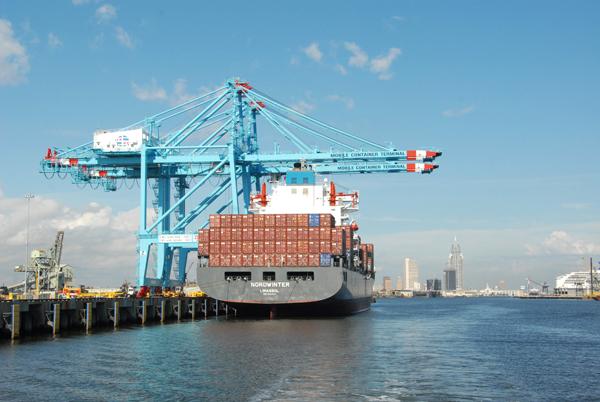
Mendez told T21 that “En realidad no hemos sufrido ningún cambio grave,” adding that “la mayor afectación fue en el área de la costa y playas,” while Mobile “está dentro de una bahía, por lo que no hemos tenido ningún problema.”
She also said that beyond reporting losses from the suspension of service at the port, the port “se siguió con todas las normas dictadas tanto por el gobernador como por el alcalde de Mobile.”
In the same interview, Mendez said, “No hubo perdidas. Al contrario, salvamos y nos matuvimos bajo las circunstancias de todas las normas dictadas por el procedimiento que coordina las evacuaciones mandadas por el gobernador y el alcalde.”
She described the operational impact as the closure causing “unas 10 embarcaciones” to stop running, “tanto de salida como de entrada,” while the port protected assets such as “grúas y oficinas” to avoid problems with vessels entering during the storm.
Mendez explained that the port had remained closed “Desde el lunes pasado” to avoid risk, because “se esperaban más de diez embarcaciones en los días que permaneció cerrado el puerto,” but the closure was intended “para evitar precisamente gastos que hubieran generado los riesgos de permitir embarcaciones enmedio de la tormenta.”
Isaac preparations and closures
The port’s decision to suspend activity was tied to emergency directives issued before Hurricane Isaac’s possible impact.
T21 reported that “El lunes pasado, el gobernador de Alabama Robert Bentley, urgió a la población de la costa a realizar todos los preparativos para el desalojo del área,” and quoted him saying, “El estado de emergencia indica que nos estamos preparando todos para el posible impacto de ‘Isaac’.”
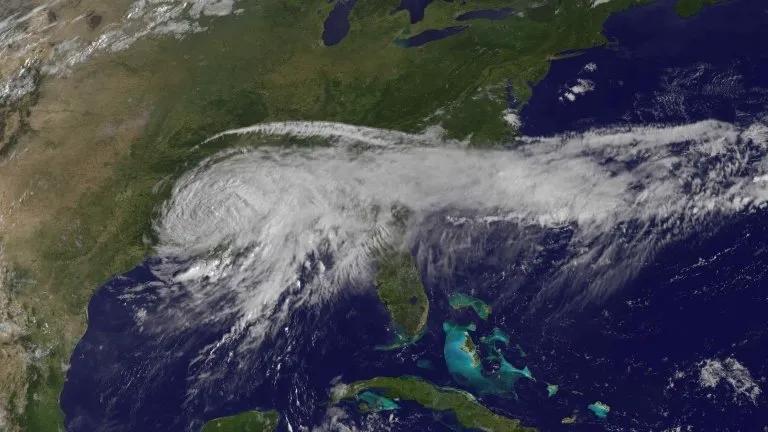
The same report attributed additional orders to Art Faulkner, describing that “ordenaba el lunes el director del Centro de Gestión de Emergencias de Alabama, Art Faulkner,” that residents “hagan ya todos los preparativos para un posible impacto de fuertes vientos e intensas lluvias en su área.”
Mendez said the port followed those norms and evacuation procedures, stating that the port “se siguió con todas las normas dictadas tanto por el gobernador como por el alcalde de Mobile.”
She also emphasized that the port’s closure was a risk-management measure rather than a claim of major damage, saying “Desde el lunes pasado, el puerto de Mobile, Alabama, permaneció cerrado para evitar cualquier tipo de riesgo.”
In her account, the port expected “más de diez embarcaciones” during the period it was closed, but chose to prevent “riesgos de permitir embarcaciones enmedio de la tormenta.”
She said the port’s approach was to “procurar tener todo protegido, tanto como grúas y oficinas y no tener problema con embarcaciones que iban a entrar en medio de la tormenta.”
The interview further connected Mobile’s role to regional shipping, stating that Mobile is “el puerto de entrada del ferrobuque que cada cuatro días conecta el sureste de México con esta región a través del puerto de Coatzacoalcos, Veracruz.”
River reversal explained
Beyond Alabama port preparations, multiple outlets described a hydrological anomaly during Hurricane Isaac in 2012 involving the Mississippi River’s flow.
“the reversal of the Mississippi River’s flow during Hurricane Isaac was attributed to several meteorological factors”
The CSR Journal said Hurricane Isaac “impacted the United States in August 2012,” and described that “Reports surfaced detailing the storm’s effects on various waterways, with the Mississippi River being notably affected due to its size and the surrounding geography.”
It framed the reversal as a meteorological and pressure-driven backflow, stating that “the reversal of the Mississippi River’s flow during Hurricane Isaac was attributed to several meteorological factors” and that “Scientists indicated that the intense wind patterns and exceptionally low atmospheric pressure created a significant backflow.”
The CSR Journal added a fluid-dynamics explanation, saying that “the pressure drop led to water being pushed in the opposite direction of its natural flow,” and that “When a strong wind is generated over a body of water, it can lead to a temporary displacement of water.”
It also said that “Data collected during the hurricane documented changes in water levels and flow direction,” and that “Monitoring instruments and gauging stations throughout the river system recorded this unusual behaviour.”
The Times of India similarly described a temporary disruption, writing that “the storm surge pushed water inland so strongly that parts of the river appeared to reverse their flow for a short period.”
It said the storm surge entered the mouth of the Mississippi River in Louisiana, and that “As a result, there was a reversal in the flow of the river,” while clarifying that “There was no reversal of the geographical position of the river; however, the water flowing upstream was very powerful.”
The Times of India also reported a specific observation at Belle Chasse, saying “there was a report that water levels were several metres above normal at Belle Chasse.”
What scientists monitored
The outlets also described how scientists observed the Mississippi River during Hurricane Isaac, emphasizing instrumentation and measurable changes.
The CSR Journal said that “Monitoring instruments and gauging stations throughout the river system recorded this unusual behaviour,” and that “Data collected during the hurricane documented changes in water levels and flow direction.”
It described the mechanism as a temporary hydrodynamic response, stating that “this extraordinary occurrence” was prompted by the hurricane’s approach and that “the sustained winds were strong enough to turn the river’s flow, albeit for a limited duration.”
The Times of India added that “scientists closely monitored river conditions using a network of instruments,” and that “These devices measured water height, flow speed, and direction.”
It reported that “At peak impact, readings showed unusual upstream movement of water near the river’s mouth,” and that “The flow reached levels significantly higher than normal conditions.”
The Times of India also claimed that “Some measurements indicated thousands of cubic metres of water moving in the opposite direction of the usual current,” and said experts described it as “a temporary but clear reversal caused by storm surge pressure.”
It further stated that “Once the hurricane moved inland and the surge weakened, the river returned to its normal southward flow.”
Together, the accounts portray a short-lived but measurable shift in direction near the river’s mouth, with the system returning to normal once the surge weakened.
Ecosystems, management, and comparisons
The CSR Journal connected the Mississippi River reversal to broader implications for ecosystems and flood management, describing the event as a prompt for reassessing preparedness.
“The implications of the flow reversal were significant for local ecosystems and flood management strategies”
It said “The implications of the flow reversal were significant for local ecosystems and flood management strategies,” and that “The event raised questions regarding the stability of river systems during extreme weather events.”
It also described a need for additional research, stating that “highlighting the need for further research to better predict such phenomena in the future.”
The CSR Journal quoted environmental experts in general terms, saying “Environmental experts remarked that while the river’s ecosystem possesses inherent resilience, incidents like the flow reversal necessitate a review of current management practices in response to climate change and extreme weather patterns.”
The CSR Journal further said the incident “underscored the need for effective strategies to mitigate damage during severe weather events,” and that it drew attention to “the importance of emergency response systems and infrastructure preparedness.”
The Times of India broadened the comparison by linking Isaac to other historical events, stating that “A similar situation occurred during Hurricane Katrina in 2005,” and that “Going further back in history, extreme natural events have repeatedly altered the river’s behaviour.”
It specifically mentioned the “New Madrid earthquakes of 1811–1812” and claimed that “In some accounts, sections of the river temporarily reversed flow due to the violent shifting of the ground.”
In its closing, the CSR Journal framed the reversal as a “critical case study” and said researchers were “prioritising the development of predictive models that could improve responses to such unpredictable events.”