
Mohammad Mustafa Calls for Urgent International Intervention Against Israel in Brussels Talks
Key Takeaways
- Mustafa urges urgent international intervention against Israel at Brussels two-state talks.
- Donor meetings took place alongside the Global Alliance talks in Brussels.
- European and international officials attended the Brussels meeting.
Brussels talks and demands
Prime Minister Mohammad Mustafa met on Monday with European and international officials in Brussels on the sidelines of donor meetings and the Global Alliance for the Implementation of the Two-State Solution meeting, according to WAFA Agency.
“Palestinian Prime Minister Mohammad Mustafa calls for an 'urgent and firm intervention' against Israel”
WAFA said the meetings included Minister of Finance and Planning Estephan Salameh and Ambassador of the State of Palestine to Belgium, Luxembourg, and the European Union Amal Jadou Shakaa, as well as Belgian Deputy Prime Minister and Foreign Minister Maxime Prévot, EU High Representative for Foreign Affairs Kaja Kallas, European Commissioner for the Mediterranean Dubravka Šuica, UK Minister of State Hamish Falconer, and High Representative of the Gaza Peace Council Nikolay Mladenov.
During the meetings, Mustafa reviewed “the worsening humanitarian and social conditions across the occupied Palestinian Territory” amid “restrictions on freedom of movement, daily incursions, colonists’ violence, land seizures for colonial expansion,” and “the continued withholding of Palestinian tax revenues for nearly a year,” WAFA reported.
WAFA added that Mustafa also addressed “the deepening humanitarian crisis and acute shortages of essential supplies” in the Gaza Strip.
The Prime Minister stressed the need to implement UN Security Council Resolution 2803 and “relevant international resolutions,” intensify relief efforts, restore stability, and prepare for reconstruction, according to WAFA.
He also underscored the importance of unifying the Gaza Strip and the West Bank under the State of Palestine “within a single system, law, and legitimate authority,” and enabling the Palestinian Authority to fully assume its responsibilities in the Strip.
WAFA concluded that Mustafa called for “serious and effective international intervention” to halt Israeli measures that undermine Palestinian efforts, including “the release of withheld Palestinian funds.”
European backing and political framing
European officials and leaders used the Brussels meeting to frame support for the Palestinian Authority and the push for a two-state solution, while also positioning the effort against wider regional dynamics.
Kuwait Times reported that “European backers put on a show of support for the Palestinian Authority and the push for a two-state solution Monday,” noting that the “US-Zionist entity war with Iran has dragged focus away from Gaza.”
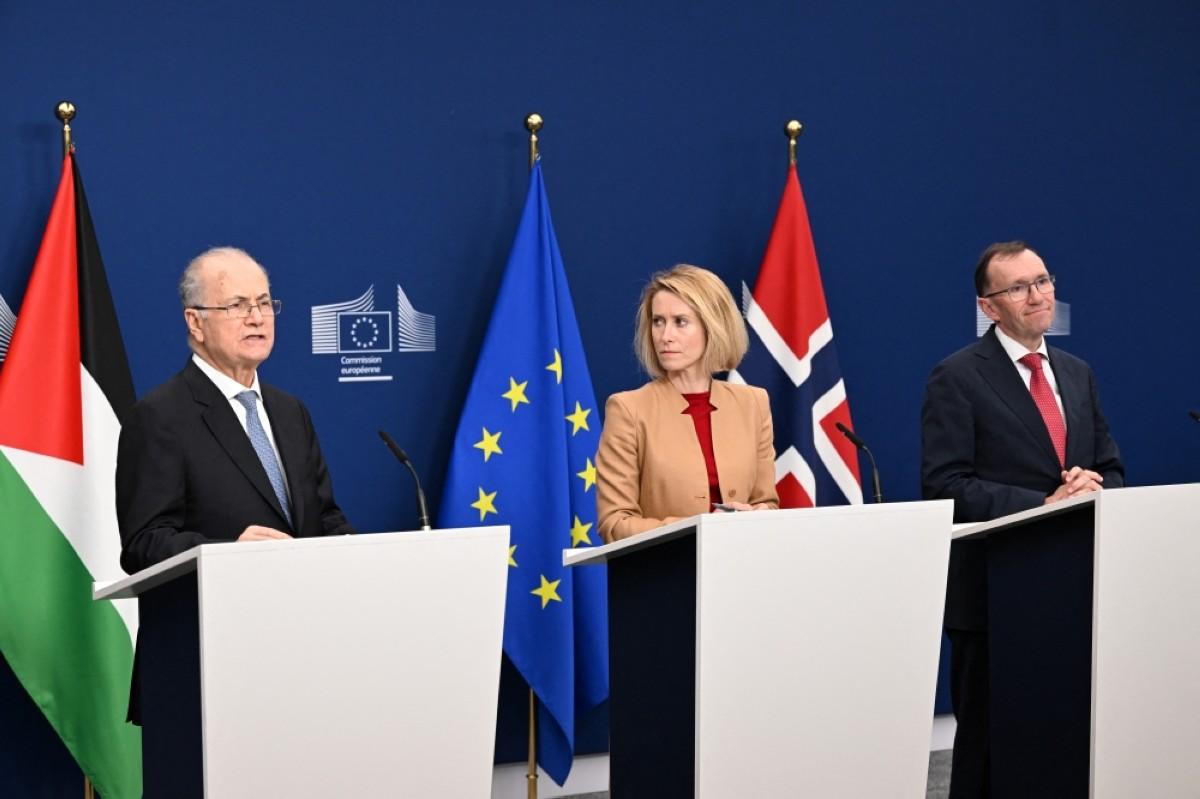
At the start of the “Global Alliance for the Two-State Solution” meeting, Belgian Foreign Minister Maxime Prevot said, “We meet in the middle of a storm. But we cannot abandon the compass,” and added, “We must hold the course, because the (Zionist entity)-Palestinian issue is affecting the Middle East as a whole and also the rest of the world.”
EU foreign policy chief Kaja Kallas said, “We can and must do more to ensure respect for human rights and accountability, to protect the Palestinian people and to put the two-state solution solidly on the table again,” Kuwait Times reported.
The same article said the European Union is “the biggest financial backer of the Palestinians” and, despite “reservations about the Ramallah-based authorities,” believes the Palestinian Authority has “a key role to play in post-war Gaza.”
It also quoted Palestinian prime minister Mohammed Mustafa describing the moment as “at a moment defined by both immense tragedy and a narrow, but real opportunity to move from war toward a just and lasting peace.”
In a separate AP account carried by PBS, Europe’s attention to Palestinians in Brussels was described as gaining momentum after the “election defeat of Israel ally Victor Orban in Hungary,” with “More than 60 nations” sending representatives to Brussels for talks with Palestinian representatives on stability, security and long-term peace.
Mustafa’s unity and accountability
Across multiple reports, Mustafa’s Brussels message emphasized both governance unity and accountability mechanisms aimed at Israel.
“Brussels / PNN / Prime Minister Mohammad Mustafa met on Monday with several European and international officials on the sidelines of donor meetings and the Global Alliance for the Implementation of the Two-State Solution meeting in Brussels”
Anadolu Ajansı said Mustafa called for an “urgent and firm intervention” against Israel, stressing the need to act in response to Israeli violations, and it quoted Kaja Kallas saying, “War has not brought peace. The blockade has not guaranteed security. The occupation has not brought stability,” while Mustafa said forced displacement and annexation would not enable durable coexistence.
Anadolu Ajansı reported that Mustafa reaffirmed that “Gaza is an integral part of Palestine” and described stabilizing Gaza as requiring a global security framework based on “one state, one government, one law,” including “the gradual disarmament of armed groups and a total Israeli withdrawal from the enclave.”
It also said Mustafa denounced the situation in the West Bank, accusing Israel of violations of international law and human rights undermining the viability of the two-state solution, and he insisted on “the urgent protection of Palestinian civilians” and called for strengthening international mechanisms, including “on the issue of disarming Israeli settlers.”
In a separate West Asian report, صدى البلد quoted Mustafa saying, “We call for immediate protection for our people,” and it added that he emphasized strengthening international mechanisms to ensure Israel’s accountability for its crimes.
The same صدى البلد item said Mustafa explained that implementing Resolution 2803 should lead to completing “the transitional arrangements that enable the Authority to fully assume its responsibilities in Gaza.”
بوابة الشروق tied Mustafa’s demands to accelerating transitional arrangements and quoted him saying Gaza is “not merely a humanitarian file, but an integral part of the State of Palestine.”
EU divisions and next steps
The Brussels meeting also surfaced internal European disagreements about how far to go in confronting Israel, with the next test described as an upcoming Foreign Affairs Council.
The European Conservative reported that the EU used Monday’s Brussels meeting of the Global Alliance to “attempt to reclaim political initiative in the Middle East,” but it argued that “behind this diplomatic architecture, the EU continues to arrive late, divided, and with far less leverage than it was claiming just a few months ago.”
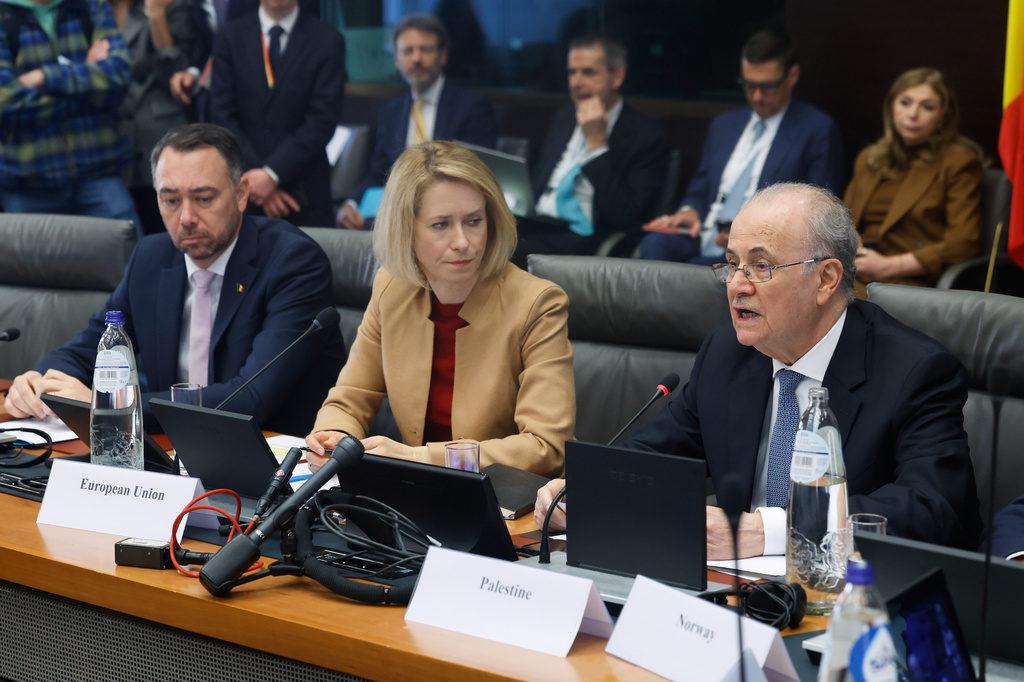
It said the meeting was “co-chaired by High Representative Kaja Kallas and Belgian Foreign Minister Maxime Prévot,” and it described Mustafa speaking in Brussels of “one state, one government, one law, and one goal” while also calling for “a unified security structure and Israeli withdrawal from Gaza.”
The European Conservative said Spain, Ireland, Belgium, and Slovenia pushed for a harder line with “greater conditionality” and “a stronger willingness to link the relationship with Israel to compliance with international law,” while Germany and Austria remained “reluctant to take any step that could be read as a strategic break with Jerusalem.”
It described an intermediate group—including France, the Netherlands, and several Nordic partners—willing to toughen language but not necessarily to take “an open confrontation.”
The report said “The most visible test of that fracture will come on Tuesday, April 21st, at the Foreign Affairs Council,” where Pedro Sánchez wanted to formally put before ministers a request to suspend the EU-Israel Association Agreement.
PBS described the same policy question in terms of feasibility, saying Spain wants the EU to suspend its “long-standing Association Agreement with Israel” and that “a suspension seems unlikely because countries such as Austria and Germany tend to back Israel.”
International coalition, UN officials, and withheld funds
Other reporting on the Brussels meeting emphasized the presence of UN officials and the EU’s stated focus on international law, human rights, and accountability, alongside calls to release withheld tax revenues.
“The European Union has decided to use Monday’s meeting in Brussels of the Global Alliance for the Implementation of the Two-State Solution to attempt to reclaim political initiative in the Middle East”
Yeni Şafak said the European Union hosted, this Monday in Brussels, a meeting of the Global Alliance devoted to implementing the two-state solution, with international and regional partners in attendance.
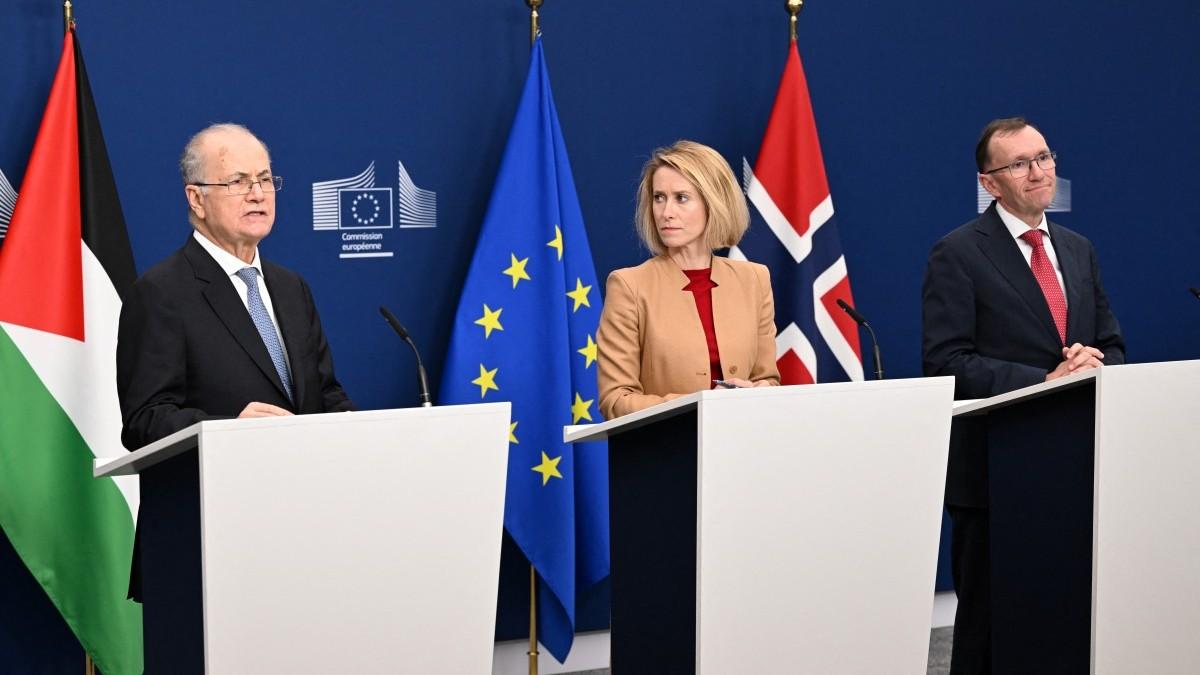
It said the EU highlighted the presence of United Nations officials and former officials, including Nikolay Mladenov, Ramiz Alakbarov, and the UNRWA's Interim Commissioner-General, Christian Saunders.
Yeni Şafak reported that Kaja Kallas stressed the need to ensure respect for international law, human rights, and accountability, as well as to protect the Palestinian population.
It also said Kaja Kallas urged “the release of the withheld tax revenues to ensure the functioning of the Palestinian Authority,” and that “the European Union remains its main external aid donor.”
Anadolu Ajansı added that Mustafa said he had met for the first time Nikolay Mladenov in the Bulgarian diplomat's role as the Trump-appointed director of Board of Peace.
Together, the reports portray the Brussels gathering as a coalition effort that links European diplomacy, UN participation, and Palestinian demands for withheld funds and transitional governance arrangements.
More on Europe

Rumen Radev’s Progressive Bulgaria Wins Bulgaria Snap Election, Securing Majority in 240-Seat Parliament
13 sources compared
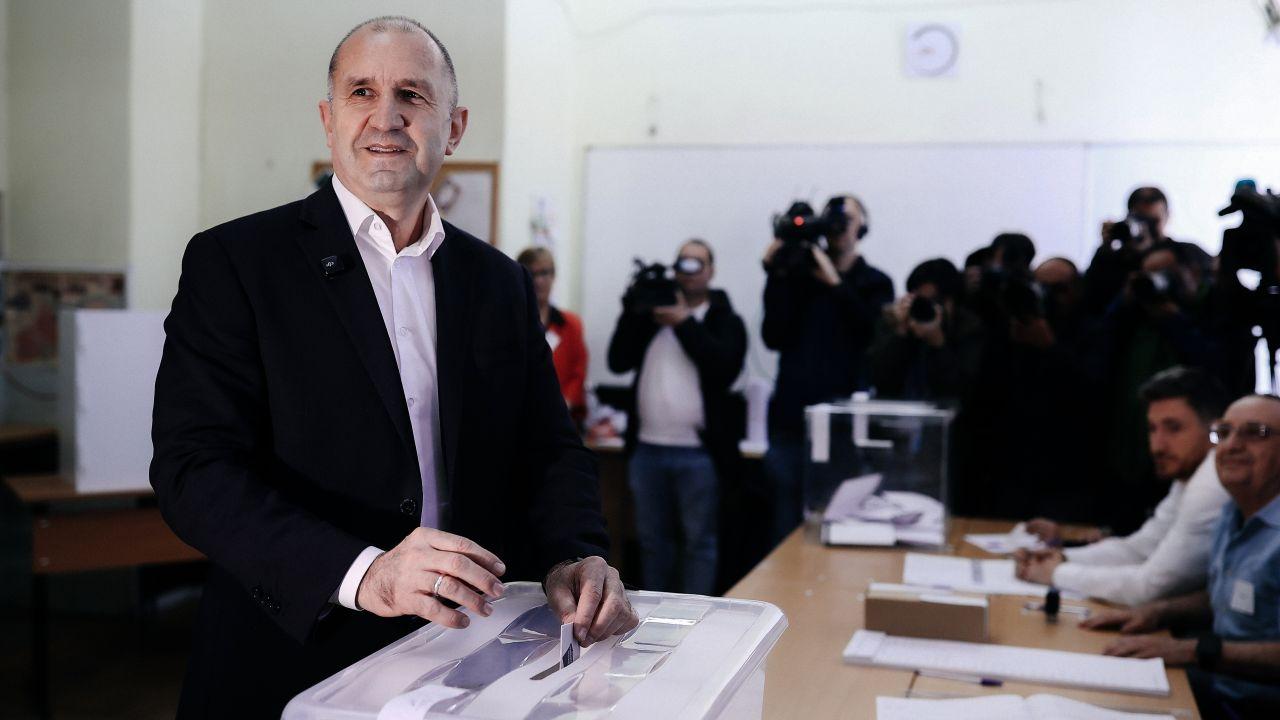
Rumen Radev’s Progressive Bulgaria Wins Bulgaria Parliamentary Election in Landslide
32 sources compared
Iran-Linked Group Ashab Al-Yamin Claims Arson Attack on Kenton United Synagogue in London
20 sources compared
Pedro Sánchez, Lula, and Lars Klingbeil Rally Global Left in Barcelona Against Far-Right Populists
13 sources compared