
Mojtaba Khamenei Vows To Guard Iran’s Nuclear And Missile Programs In Strait Of Hormuz
Key Takeaways
- New phase in Gulf and Strait of Hormuz, future without US presence.
- Iran will defend its nuclear and missile programs as national strategic assets.
- Proposes new legal/management frameworks for Hormuz to boost stability and economic prospects.
Defiant Hormuz message
Iran’s supreme leader Mojtaba Khamenei broke a recent silence with a defiant statement hailing Iran’s control over shipping in the strait of Hormuz and vowing to guard the country’s nuclear and missile programmes.
“The Iranian Supreme Leader Mojtaba Khamenei said that a new phase is forming in the Gulf and the Strait of Hormuz, stressing that the region's future will be 'without America,' and in service of the progress of its peoples, their security and welfare”
In the message, read by a state television anchor, Khamenei said, “Today, two months after the largest military deployment and aggression by the world’s bullies in the region, and the United States’ disgraceful defeat in its plans, a new chapter is unfolding for the Persian Gulf and the strait of Hormuz,” Mojtaba Khamenei said in a statement read by a state television anchor.

He said Tehran would secure the Gulf region and eliminate what he described as “the enemy’s abuses of the waterway”, and that “new management of the strait will bring comfort and progress for the benefit of all the nations of the region and economic blessings will bring joy to the hearts of the people”.
Khamenei also vowed that Iran would “guard its modern technological capacities – from nano to bio to nuclear and missile – as their national capital and will guard it like their maritime land and air borders”.
The Guardian reported that no recording or visual sighting of Khamenei has been broadcast since he was appointed supreme leader in early March, and that reports have suggested he was severely injured in the bombing that killed his 86-year-old father and predecessor on 28 February.
France 24 similarly said Khamenei’s written message was read on state TV to mark the annual national celebration of “Persian Gulf” day in Iran, and quoted him saying the US’s only place in the Persian Gulf was “at the bottom of its waters”.
Blockade, oil shock, and talks
The supreme leader’s statement landed as the US has mounted a counter-blockade designed to stop oil tankers moving in or out of Iranian ports, with the Guardian saying the move has seized up the Iranian oil industry since 13 April.
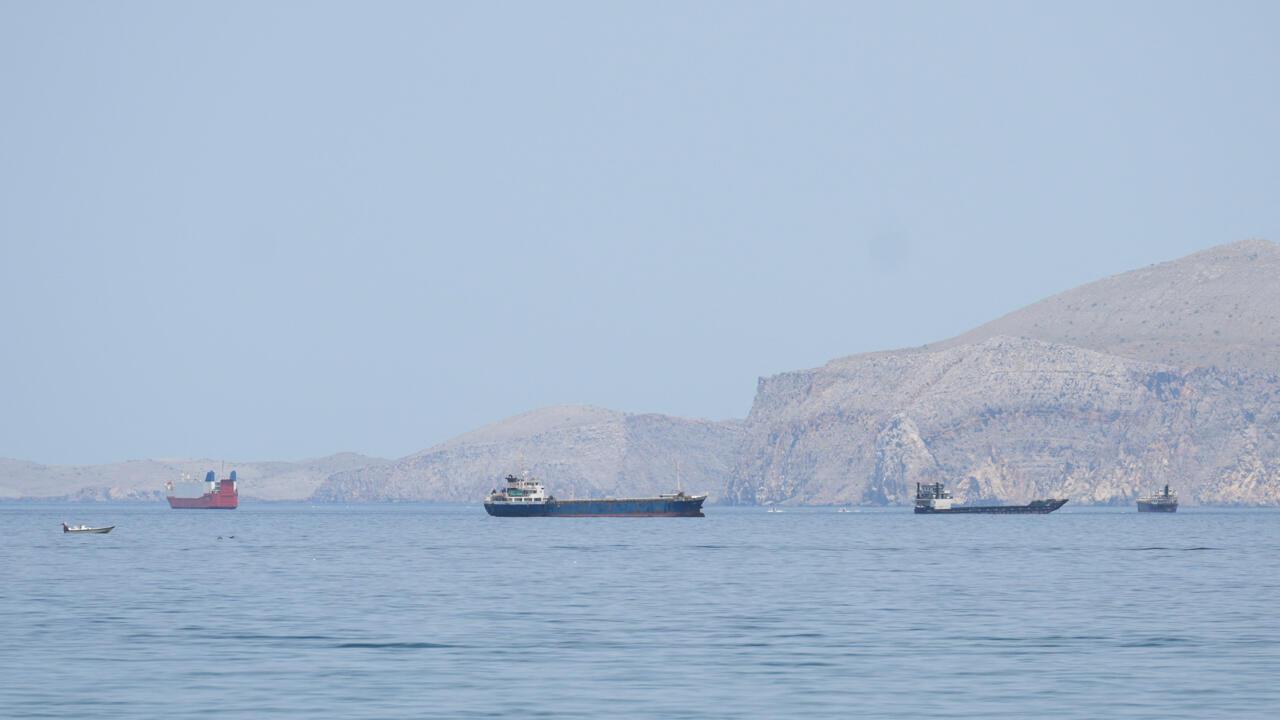
The Guardian reported that with Pakistan-mediated talks at an impasse, there is little sign of either blockade being lifted, pushing the oil price above $120 a barrel, and that vessel traffic levels are still extremely low, sometimes as low as three ships a day compared with 120–140 in normal conditions.

Reuters, as relayed through the Guardian’s account, also described the pressure on the market and on Trump, noting that Trump’s admission on Wednesday that he knew no short way out of the impasse pushed oil prices close to $125 a barrel.
France 24 said Khamenei’s remarks came as Iran’s economy is reeling and its oil industry is being squeezed by a US Navy blockade halting its tankers from getting out to sea, and it reported that on Thursday the global benchmark for oil, Brent crude, traded as high as $126 a barrel.
The Guardian further said Iran has sought to extract a price for being attacked by exerting control over the strait, describing the narrow waterway through which about one-fifth of global oil typically transits.
The Guardian also reported that Iran has proposed that talks with the US on its nuclear programme be parked while both sides agree terms for allowing ships to resume passage along the strait, and that the foreign ministry urged parliament to avoid terms such as “tolls” and instead assert its pre-existing right to charge fees for services rendered.
In parallel, Pakistan said it was still facilitating indirect talks between the US and Iran aimed at easing tensions, with France 24 quoting Ministry of Foreign Affairs spokesperson Tahir Andrabi saying, “If the two parties can engage in real-time conversations, that could ease the sticking points,” while declining to share details of any Iranian or US proposals.
Nuclear and missile red lines
Across multiple outlets, Khamenei’s message tied Iran’s nuclear and missile programmes to national identity and framed them as non-negotiable.
“What you need to know - Mojtaba Khamenei issues a statement to nation hinting at desires for tolls in the Strait of Hormuz and retaining a nuclear program - Germany's Chancellor Merz says Iran 'must come to the negotiating table' - Iran's president says US blockade attempts are 'doomed to fail' - The US military, meanwhile, says it's keeping Iranian oil worth billions stuck in port - Brent crude oil price dips to $110 per barrel region after brief overnight spike past $120 - Besides the blockade and the Strait of Hormuz dispute, the ceasefire continues to hold - Pete Hegseth faces a second day of interrogation in House Armed Services Committee hearing, this time in the Senate This blog is now closed”
The Guardian said Khamenei vowed that Iran would “guard its modern technological capacities – from nano to bio to nuclear and missile – as their national capital and will guard it like their maritime land and air borders”.
The Economic Times, citing a written statement read aloud on Iranian state television, quoted Khamenei saying, “Ninety million proud and honorable Iranians inside and outside the country regard all of Iran’s identity-based, spiritual, human, scientific, industrial and technological capacities—from nanotechnology and biotechnology to nuclear and missile capabilities—as national assets, and will protect them just as they protect the country’s waters, land and airspace,” he said.
The Times of Israel similarly reported that Khamenei insisted the Islamic Republic will protect its “nuclear and missile capabilities” as a national asset, and it quoted him saying, “Ninety million proud and honorable Iranians inside and outside the country regard all of Iran’s identity-based, spiritual, human, scientific, industrial and technological capacities — from nanotechnology and biotechnology to nuclear and missile capabilities — as national assets, and will protect them just as they protect the country’s waters, land and airspace,” Khamenei said.
France 24 said Khamenei vowed to protect the Islamic Republic’s nuclear and missile capabilities, which US President Donald Trump has sought to curtail through air strikes and as part of a wider deal to cement the war’s shaky ceasefire.
The Guardian also reported that Iran has proposed parking nuclear talks while agreeing terms for allowing ships to resume passage, while the message itself signaled that nuclear issues and Iran’s ballistic missile programme wouldn’t be traded away.
Together, the outlets portray a leadership message that links defense posture, technology, and control of the waterway as a single package.
“Bottom of its waters” rhetoric
Khamenei’s message also sharpened hostile rhetoric toward the United States, repeatedly insisting that Americans have no legitimate role in the Persian Gulf.
France 24 reported that Khamenei said the US had been defeated in its war against the Islamic Republic and that its only place in the Persian Gulf was “at the bottom of its waters”.
The Guardian quoted the same line, saying, “Foreigners who maliciously covet it [the strait] from thousands of kilometres away have no place there except at the bottom of its waters,” Khamenei’s statement said.
NDTV likewise quoted Khamenei’s framing of American presence, saying, “By God’s help and power, the bright future of the Persian Gulf region will be a future without America, one serving the progress, comfort and prosperity of its people,” and it also quoted, “Foreigners who come from thousands of kilometres away to act with greed and malice there have no place in it, except at the bottom of its waters,” Khamenei added.
The Times of Israel reported that Khamenei referred to the US as the “Great Satan,” a long hurled insult by Iranian leaders toward the US since the 1979 Islamic Revolution, and it quoted him saying, “Foreigners who come from thousands of kilometers away to act with greed and malice there have no place in it — except at the bottom of its waters.”
i24NEWS described the message as an anti-America, anti-Israel speech and quoted Khamenei saying, “foreigners have no place in region except at the bottom of its waters.”
Beyond the rhetoric, the Guardian said the world considers the strait an international waterway open to all without paying tolls, while Gulf Arab nations, chief among them the United Arab Emirates, have decried Iran’s control of the strait as akin to piracy.
International diplomacy and next steps
While Khamenei’s statement projected defiance, the reporting also described active diplomacy and competing plans for how shipping might resume.
“Gift this articleShare to FacebookPrint article Article printing is available to subscribers only Print in a simple, ad-free format Subscribe Comments: SaveZen Reading Zen reading is available to subscribers only Ad-free and in a comfortable reading format Subscribe”
The Guardian said the US secretary of state, Marco Rubio, and the UK foreign secretary, Yvette Cooper, held talks in Washington on Wednesday about the strait, and it said an email sent by the state department to embassies reported by the Wall Street Journal suggested the US was trying to become involved in largely European-led plans for the oversight of the strait once the conflict ends.

The Guardian also reported that the US is offering to coordinate diplomacy and communications between countries using the strait by reviving and broadening a 12 nation International Maritime Security Construct, a pre-existing naval operation set up in after threats to shipping by the Iranian navy.
In parallel, the Guardian said Iran proposed parking nuclear talks while agreeing terms for allowing ships to resume passage, and it said Iran’s foreign ministry urged parliament to recognise that Iran’s plans being hatched in conjunction with Oman do not require fresh Iranian legislation.
France 24 said Khamenei’s remarks came as Trump floated a new plan to reopen the critical passageway, under which the US would continue its blockade on Iranian ports while coordinating with allies to impose higher costs on Iran’s attempts to subvert the free flow of energy.
It added that Trump was weighing multiple diplomatic and policy options to push Iran to end its chokehold, and that the new proposal, first reported by The Wall Street Journal, was Trump’s latest effort to persuade other nations to help reopen the strait.
The AnewZ feed also included Reuters updates that Iran’s air defences were engaging small drones and surveillance UAVs over parts of Tehran, with air defence fire continuing to be heard in western, central and southeastern areas of the city, as reported by the semi-official Tasnim news agency.
More on Iran
Trump Administration Says Ceasefire Pauses War Powers Clock on Iran War
13 sources compared
US Economy Grows 2% in January-March as Iran War Clouds Outlook
12 sources compared
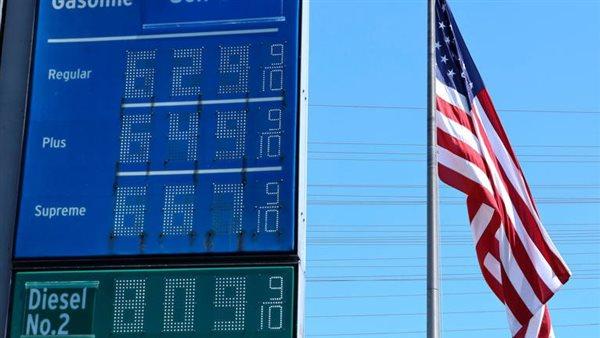
U.S.-Iran War Stalemate Drives Oil Prices Above $126 and Gas to $4.30
16 sources compared
Trump Says U.S. Naval Blockade Will Keep Pressure on Iran After Rejecting Deal Proposal
16 sources compared