Moshe Feiglin Says He Will Build a New Jewish Temple at Al-Aqsa
Key Takeaways
- Moshe Feiglin pledged to build a new Temple at the Al-Aqsa compound.
- He spoke after praying at the Al-Aqsa Mosque compound.
- The visit occurred amid heightened tensions and threatened status quo at Al-Aqsa.
Al-Aqsa Status Quo
The BBC describes how Moshe Feiglin, a right-wing nationalist Israeli politician, spoke about building a new Jewish temple at al-Aqsa while coming down from the al-Aqsa mosque compound in Jerusalem, where he had been praying and singing with around 20 other religious Jews.
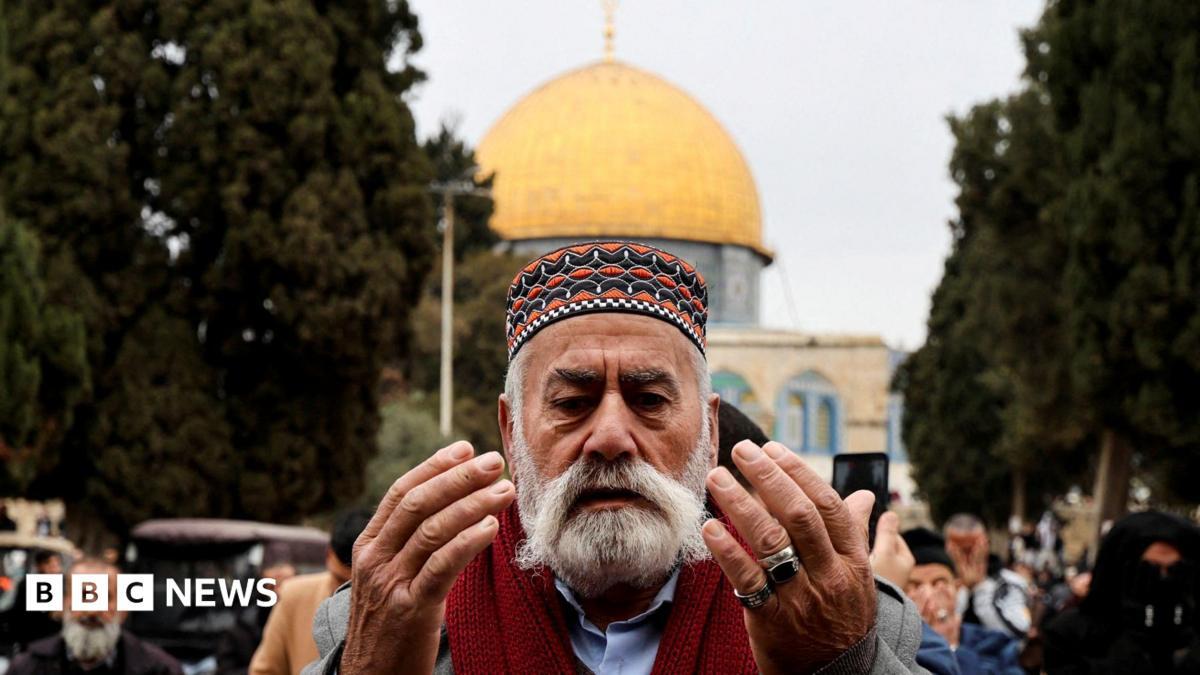
“The first Friday prayers of Ramadan are taking place at the Al-Aqsa Mosque in Jerusalem”
The BBC frames Feiglin’s remarks as contravening a “sensitive agreement” meant to maintain peace at a site that is reserved exclusively for Muslim prayer under the Status Quo, with custody of the al-Aqsa compound handled by the Jordanian-administered Waqf.

The BBC adds that under the Status Quo, non-Muslims are allowed to visit al-Aqsa but are not allowed to pray there or carry out religious rites, and that the Chief Rabbinate of Israel and most ultra-Orthodox rabbis also prohibit Jewish prayer on the site on halachic grounds.
In the same BBC account, Dr Mustafa Abu Sway, the Deputy Head of the Islamic Waqf Council, warns that “Peace without leaving al-Aqsa Mosque alone, is simply opening a Pandora's box.”
The BBC also reports that the Israeli prime minister’s office has repeatedly said there has been no change to the Status Quo, while it notes that the gold-covered Dome of the Rock dominates the 35-acre site and can be seen for miles around.
Nationalists Push Back
The BBC says the “Status Quo at Jerusalem's holiest site” is under threat as Israeli nationalists flout rules, citing “The Temple Mount is ours. It's in our hands!” chanted by Israel’s far-right National Security Minister Itamar Ben-Gvir in a widely circulated video from last month’s Jerusalem Day march.
The BBC reports that Ben-Gvir led a group of flag-waving Israeli nationalists through East Jerusalem, including the Old City’s Muslim quarter, and up to the al-Aqsa compound, where he is described as a regular visitor.
In a separate account, Masrawy says Itamar Ben-Gvir stormed the Al-Aqsa Mosque compound “today, Thursday,” under tightened security measures and a heavy deployment of Israeli occupation forces, and that the Jerusalem Governorate said he raised the Israeli flag inside the mosque and carried out movements described as provocative and dances inside its courtyards.
Masrawy also reports that the Turkish Foreign Ministry condemned Ben-Gvir’s storming of Al-Aqsa Mosque in the company of a group of Israeli settlers, calling the acts “provocative” and saying they violate the historic and legal status of the Al-Aqsa Mosque as a sacred site for Muslims.
The BBC further notes that the British government said “the historic status quo arrangements at Jerusalem's Holy Sites must be respected,” while it describes international alarm involving Jordan, Gulf countries and Egypt at the “recent erosion of Islamic authority at al-Aqsa.”
Gaza and Wider Tensions
The BBC links the al-Aqsa dispute to broader regional stakes by describing how any formal change to the Status Quo could “easily lead to another explosion of tension between Jews and Muslims,” in the view of Dr Mustafa Abu Sway.
“It is an essential gathering for Israeli religious nationalists, perceived as a provocation by Palestinians in the Old City, in East Jerusalem”
In the same BBC account, it says international alarm has included Jordan, Gulf countries and Egypt, and it quotes the British government that “the historic status quo arrangements at Jerusalem's Holy Sites must be respected.”
An-nahar reports that the first Friday prayers of Ramadan took place at the Al-Aqsa Mosque in Jerusalem, with tens of thousands of Palestinians gathering under strict Israeli restrictions inside the compound, including some allowed to enter from the occupied West Bank.
An-nahar says Israel limited to 10,000 the number of Palestinians allowed to enter from the West Bank on Friday, allowing only men over 55 and women over 50 as well as children up to 12, and it adds that Israeli police said more than 3,000 officers were deployed across Jerusalem.
In the Gaza context, An-nahar states that the Israeli military offensive has killed more than 72,000 Palestinians, according to the Gaza Health Ministry, after Hamas-led militants killed about 1,200 people and took 251 others hostage in the initial attack on October 7, 2023.
More on Gaza Genocide

Netanyahu Says Israel Is Not Bound by U.S.-Iran Deal, Rejects Withdrawal From Lebanon, Syria, Gaza
21 sources compared

Israeli Attacks Kill 1,005 Palestinians in Gaza Since October Ceasefire
10 sources compared

Israeli Settlers Burn Vehicles, Attempt Mosque Fire in Deir Dibwan Near Ramallah
15 sources compared
Trump Tells Netanyahu To Be More Responsible With Lebanon, Suggests Syria Fights Hezbollah
25 sources compared