
Mullin takes oath as DHS secretary after Senate confirmation
Key Takeaways
- Senate confirmed Markwayne Mullin to lead DHS in a 54-45 vote.
- He will replace Kristi Noem after leadership controversy over immigration enforcement.
- Mullin was sworn in as DHS secretary at the White House Oval Office.
Confirmation Process
The Senate confirmed Markwayne Mullin as the new Secretary of Homeland Security in a 54-45 vote on Monday evening.
Two Democrats broke ranks to support the Oklahoma Republican, while only one Republican opposed the nomination.

Mullin's confirmation came after the ouster of Kristi Noem, whose tenure ended amid controversy over immigration enforcement operations.
The operations resulted in the deaths of two American citizens in Minneapolis.
Democratic Senators John Fetterman of Pennsylvania and Martin Heinrich of New Mexico supported Mullin.
Only Republican Senator Rand Paul opposed the nomination.
Mullin was sworn in the following Tuesday in a White House ceremony.
President Trump hailed him as a 'great American patriot' who has been a 'close and vital partner' in securing the border and stopping migrant crime.
Background and Experience
Markwayne Mullin brings a diverse background to the Homeland Security role, combining his experience as a former senator, entrepreneur, and athlete.
Before his political career, Mullin built his track record as an entrepreneur, taking control of the family plumbing business after his father fell ill.

He paused his college studies to keep the business afloat.
He later earned a Construction Technology degree from Oklahoma State University Institute of Technology in 2010.
He received an honorary doctorate from Bacone College in 2018.
Mullin had a brief but successful career in mixed martial arts, holding an undefeated record of five wins and no losses.
He was inducted into the Oklahoma Wrestling Hall of Fame in 2016.
At 48 years old, Mullin is an enrolled member of the Cherokee Nation who served in both the House and Senate before being tapped to lead DHS.
He brings a unique blend of practical business experience, athletic discipline, and political acumen to the role.
Inherited Challenges
Mullin inherits the Department of Homeland Security during a period of severe operational challenges.
“The United States Senate on Monday, March 23, confirmed Markwayne Mullin as the new Secretary of the Department of Homeland Security (DHS), in a context marked by political tensions, a partial federal government shutdown, and the hardening of the immigration policy debate driven by President Donald Trump”
The agency has been partially shut down since February 14 due to budget disagreements between the Trump administration and Democratic lawmakers.
The funding stalemate has created chaos at U.S. airports.
Transportation Security Administration (TSA) agents have been working without pay for weeks.
More than 450 TSA officers have resigned since the shutdown began.
Absenteeism rates are above 10% across much of the United States.
This has resulted in hours-long wait times at major airports.
Some facilities experience even higher rates of staff absence – over 33% at JFK, more than 40% in Houston, and over 37% in Atlanta.
The Trump administration responded by deploying ICE agents to assist with airport security.
This move has been controversial and criticized by Democrats who argue ICE agents lack proper training for airport security operations.
Policy Approach
During his confirmation hearing, Mullin outlined his approach to leading DHS.
He signaled both continuity with Trump's immigration agenda and some potential operational adjustments.
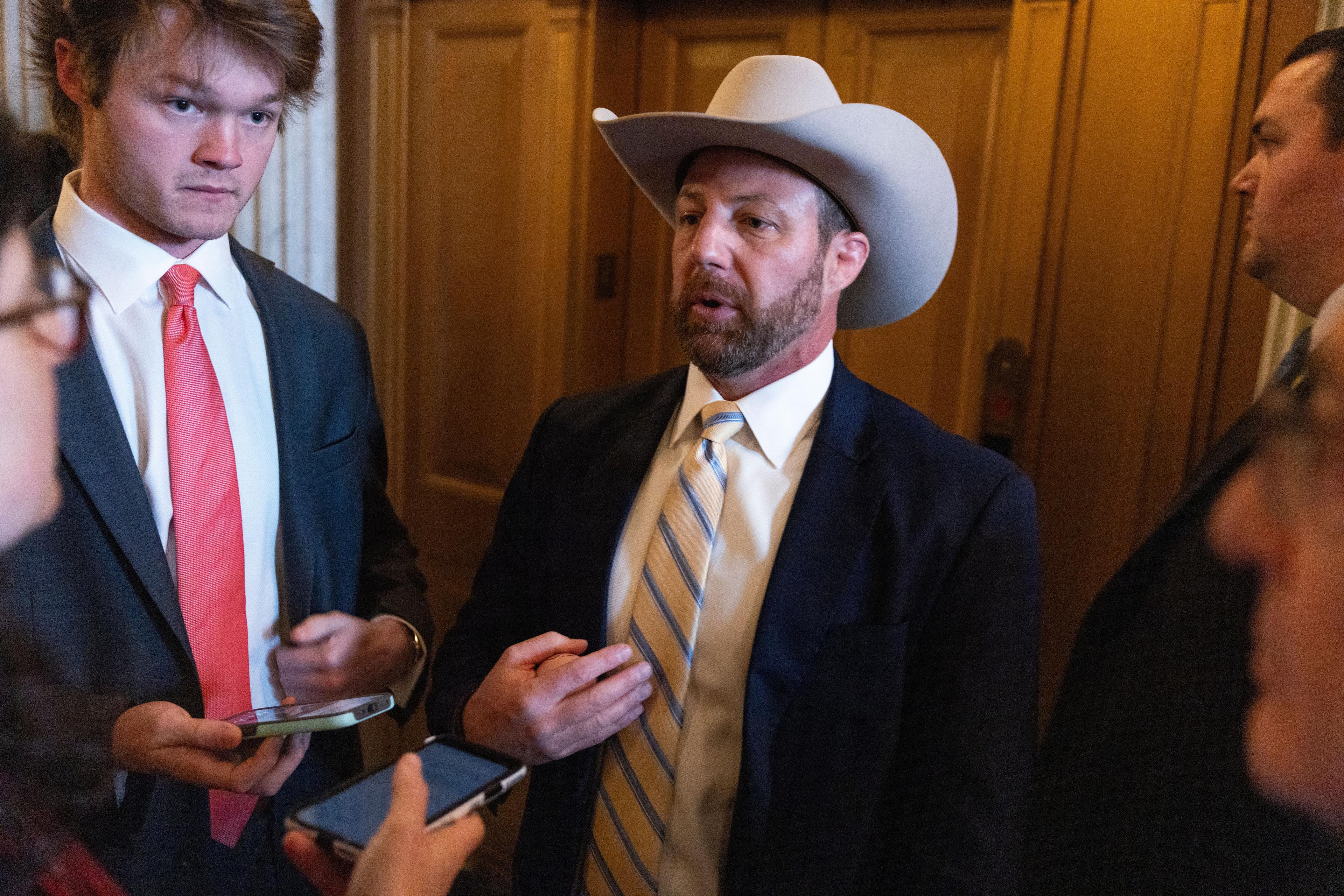
He pledged that 'in six months is that we're not in the lead story every single day',
aiming to reduce the department's media exposure while 'helping people understand we're out there, we're protecting them and we're working with them.'
Mullin specifically promised to require immigration agents to obtain judicial warrants before entering private property,
marking a potential shift from current policy.
He also indicated that ICE should become 'more of a transport than the front line' in immigration enforcement.
However, Mullin emphasized his loyalty to Trump's immigration policies and support for ICE officers,
stating 'I can have different opinions with everybody in this room, but as Secretary of Homeland I'll be protecting everybody.'
His appointment reflects the Trump administration's intention to maintain a firm stance on immigration,
though with possible operational adjustments to address some of the controversies that led to Noem's removal.
Political Dynamics
Mullin's confirmation highlighted the complex political dynamics surrounding the DHS leadership position,
particularly his contentious relationship with Senate Homeland Security Committee Chairman Rand Paul.
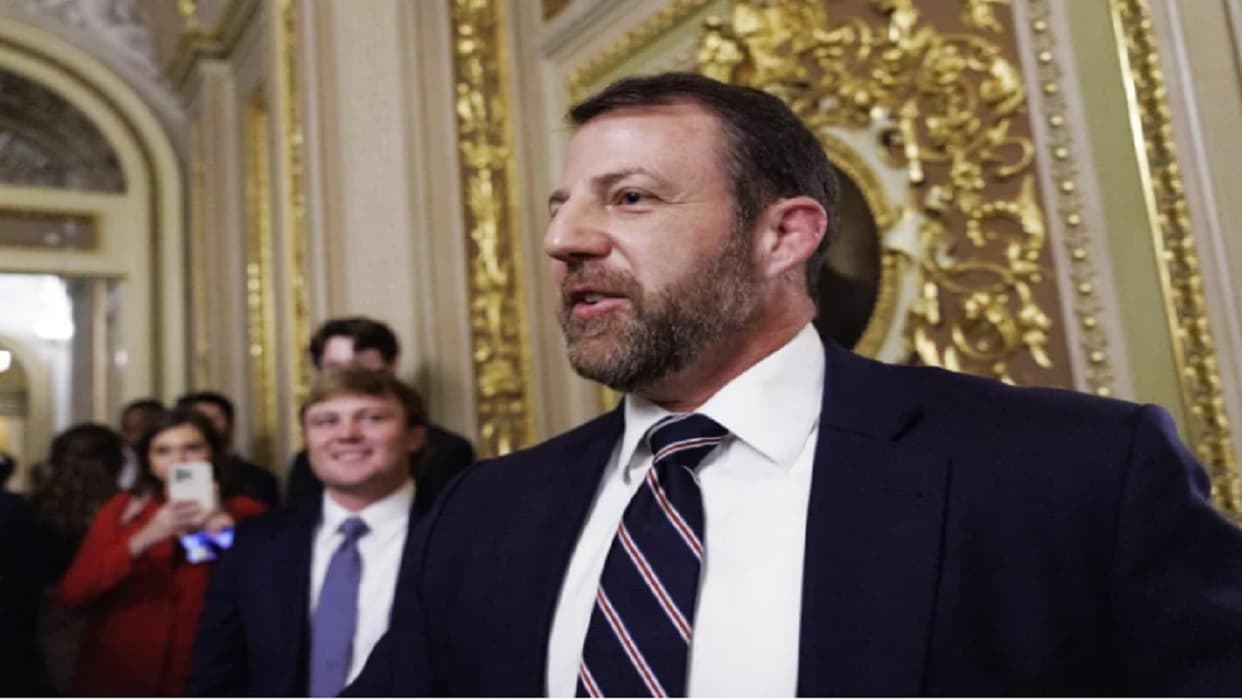
During his confirmation hearing, Mullin refused to apologize for calling Paul a 'freaking snake'
and for suggesting he could 'understand' why Paul's neighbor assaulted the Kentucky Republican in 2017.
Paul expressed serious concerns about Mullin's temperament,
stating 'We shouldn't settle personal questions with violence; I think that would be a terrible example for ICE and for our Border Patrol agents.'
Despite this intra-party conflict, Mullin earned respect from some Democratic colleagues for his independence from Trump's more hardline advisors.
Democratic Senator Martin Heinrich noted that Mullin 'is not someone who can simply be bullied into changing his views'
and expressed hope that he 'doesn't take their orders from Stephen Miller,'
referring to the White House deputy chief of staff and homeland security advisor.
Mullin's confirmation also reflects the broader political tensions within the GOP,
as he navigates between loyalty to Trump and the need to address the operational crises at DHS.
Future Challenges
Looking ahead, Mullin faces the immediate challenge of resolving the DHS funding crisis while implementing Trump's immigration agenda.
The partial government shutdown has created operational chaos,
with 100,000 of the department's more than 260,000 employees working without pay.
Negotiations are reportedly underway on a potential compromise that would fund part of ICE –
specifically the portion that combats trafficking, but not Enforcement and Removal Operations which handles deportations –
while also funding the rest of DHS.
Republicans would then attempt to use reconciliation to fund the remaining ICE operations
and pass limited portions of the SAVE America Act.
Mullin's success will depend on his ability to navigate the complex political landscape,
rebuild public trust in DHS operations, and address the agency's severe staffing shortages.
His background as a businessman and negotiator may serve him well in these efforts,
as he seeks to balance Trump's hardline immigration enforcement with more operational stability
and perhaps some reforms to address the controversies that led to his predecessor's downfall.
More on USA

Trump administration bans imports of new foreign-made routers over security risks
10 sources compared
Minnesota Sues DOJ, DHS Over Evidence Access in Officer-Involved Shootings
13 sources compared

Stitt appoints Alan Armstrong to fill Mullin's Oklahoma Senate seat
15 sources compared

Pakistan Offers to Mediate Talks Between Iran and the United States to End Iran War.
17 sources compared