
MV Hondius Passengers Leave Tenerife After Authorities Confirm Three New Hantavirus Cases
Key Takeaways
- Three new hantavirus cases confirmed among evacuees from MV Hondius: Spanish, French, American.
- Last passengers depart Tenerife; ship heads to the Netherlands as evacuations continue.
- Evacuees undergo medical screening and isolation; wide cross-border monitoring implemented.
Hondius passengers depart
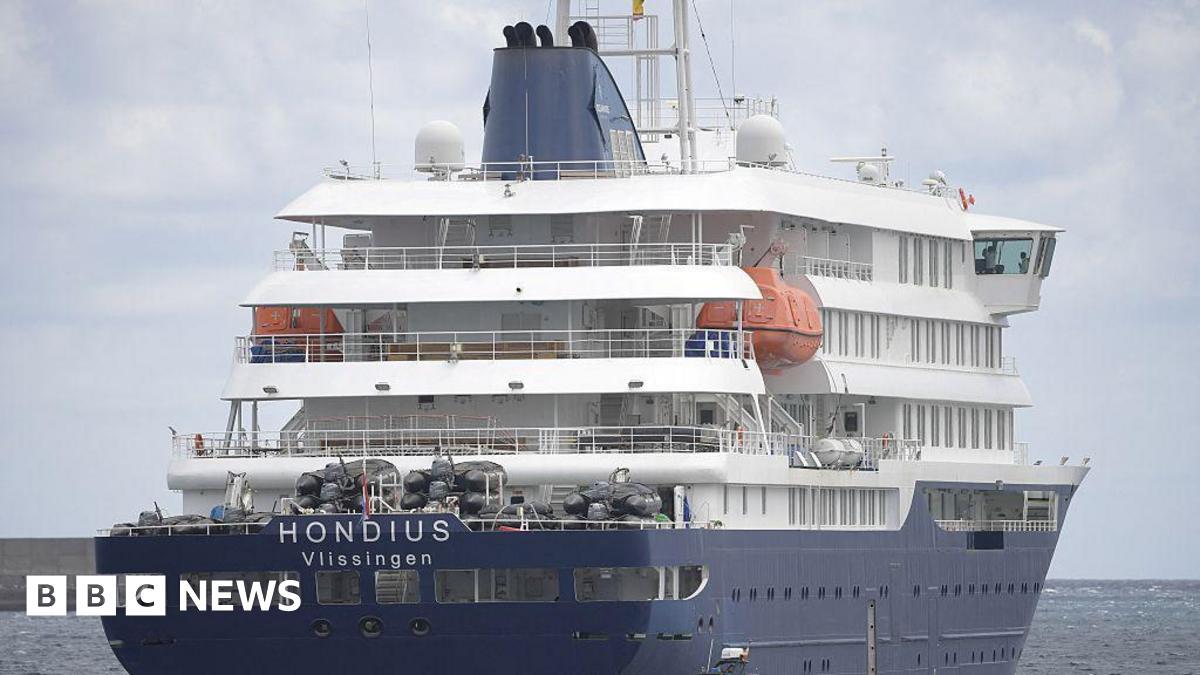
The last passengers left the hantavirus-hit MV Hondius after authorities confirmed three new positive cases linked to the outbreak, and the ship departed Tenerife for the Netherlands on Monday.
The BBC reported that the final six passengers disembarked in Tenerife, including four Australians, one Briton and one New Zealander, as Spain’s health ministry said one Spaniard quarantining in Madrid had provisionally tested positive.

The World Health Organization said seven cases of hantavirus linked to the MV Hondius have been confirmed, with two others suspected, while the BBC noted that the WHO recommended 42 days of isolation for those leaving the ship.
The BBC also said the US health department reported a second American national on Sunday’s repatriation flight had shown mild symptoms and that both passengers had travelled back in "biocontainment units out of an abundance of caution".
In a separate development, the BBC said French Health Minister Stéphanie Rist reported a woman isolating in Paris and that her health was deteriorating, with 22 contacts traced.
Anxiety dismissal dispute
A French passenger’s case sharpened scrutiny after doctors initially treated her symptoms as stress and anxiety rather than hantavirus, with Spain’s health secretary Javier Padilla Bernáldez describing a different, unconfirmed scenario.
The Independent said the Spanish health minister Javier Padilla Bernaldez told The Guardian that the woman’s symptoms were not deemed to be hantavirus and that “what she was having at that moment was kind of like stress or anxiety or nervousness.”

The Guardian’s removed article said it was “removed on 12 May 2026” after the paper was notified of a misunderstanding of remarks from Javier Padilla Bernáldez.
WRAL reported that the French woman tested positive for hantavirus and that her health worsened in the hospital overnight, while French Health Minister Stephanie Rist said the woman developed symptoms on the flight to Paris.
WRAL also said one of 18 passengers evacuated to Nebraska tested positive but was not showing any symptoms, and it quoted Kayla Thomas saying, “The passenger who is going to the Biocontainment Unit tested positive for the virus but does not have symptoms.”
Monitoring, quarantine, risk
As countries repatriated passengers from Tenerife, the BBC said officials say the risk of a major outbreak is very low, while the WHO recommended active monitoring and follow-up for those leaving the MV Hondius.
The BBC reported that Dr Jay Bhattacharya, acting head of the US Centers for Disease Control (CDC), said he did not want to cause public panic and insisted that human-to-human transmission was rare and it should not be treated like Covid.
Al Jazeera said the WHO’s Maria Van Kerkhove told governments involved that passengers be tested and monitored for at least 42 days after suspected exposure, and it described the evacuation process from Tenerife.
Al Jazeera also said Prime Minister Sebastien Lecornu ordered all five French passengers to be put into isolation “until further notice,” and it reported that a Japanese national would be monitored for up to 45 days.
In the Netherlands, Al Jazeera said an evacuation plane carrying 26 people landed in Eindhoven on Sunday evening and that Dutch citizens were being put into a six-week self-quarantine at their homes.
More on Technology and Science

Apple Rolls Out iOS 26.5 End-to-End Encrypted RCS Messaging Between iPhone and Android
11 sources compared

General Motors Lays Off 500 To 600 Salaried IT Employees In Austin And Warren
16 sources compared
Seventeen Americans Arrive From MV Hondius, One Tests Mildly PCR Positive for Andes Virus
15 sources compared

European Commission Coordinates EU Response to Hantavirus Outbreak Aboard MV Hondius
10 sources compared