
NAACP Sues xAI Over Unpermitted Gas Turbines Powering Colossus 2 in Southaven, Mississippi
Key Takeaways
- NAACP sued xAI and MZX Tech over 27 unpermitted gas turbines powering Colossus 2.
- Gas turbines emit smog-forming pollutants and hazardous chemicals affecting nearby communities.
- Southaven-based power plant powers Colossus 2, alleged to violate the Clean Air Act.
xAI’s Southaven power plant
xAI has built what the Southern Environmental Law Center describes as an illegal power plant to run its Colossus 2 data center in Southaven, Mississippi, using dozens of unpermitted gas turbines just south of the Tennessee-Mississippi state line.
“The NAACP filed a lawsuit Tuesday against Elon Musk’s xAI, alleging the company is illegally operating methane gas turbines that spew dangerous air pollution at a massive data center complex near Memphis, Tennessee”
The Southern Environmental Law Center says the company set up the de facto power plant “with no permits, no public input, and no notice to nearby communities that will have to deal with the consequences.”
Earthjustice similarly frames the setup as “an illegal power plant in Mississippi to power its AI data center — with no air permits, lax oversight, and little concern for families living nearby.”
The lawsuit filed by the NAACP and the Mississippi State Conference of the NAACP targets xAI and its subsidiary, MZX Tech, for operating “27 unpermitted methane gas turbines in Southaven, Mississippi, to power its Colossus 2 data center in South Memphis.”
In the Earthjustice account, “Thermal drone footage shows unpermitted turbines operating at xAI’s gas plant in Southaven, Miss., nearly two weeks after the EPA ruled such turbines require permits before they can run.”
The complaint is filed in federal district court for the Northern District of Mississippi, according to Earthjustice and WREG.
The NAACP’s suit also asserts that the turbines effectively create a power plant that federal law requires major sources of pollution to permit before construction or operation, as described by E&E News by POLITICO and echoed in the Earthjustice explanation of Clean Air Act requirements.
Emissions and health risks
The lawsuit and related filings describe the turbines’ emissions as both large in volume and hazardous in composition, tying the alleged pollution to health harms.
The Southern Environmental Law Center says the turbines can generate up to 495 megawatts of power, “the equivalent of a conventional power plant,” and it describes gas turbines as releasing “smog-forming pollution, fine particulate matter, and hazardous chemicals like formaldehyde.”
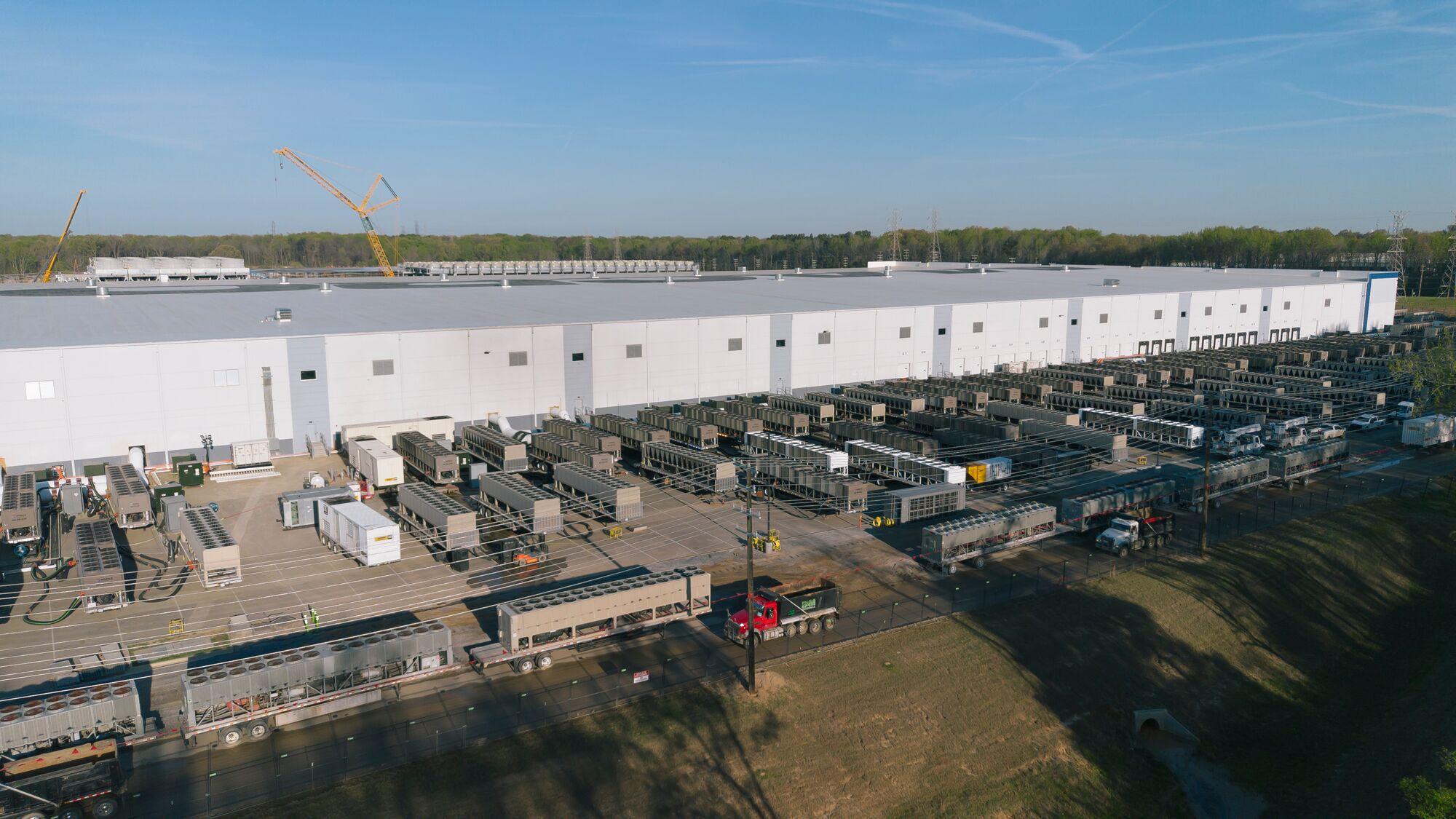
It adds that xAI’s power plant in Southaven has the potential to emit more than 1,700 tons of smog-forming nitrogen oxides (NOx) each year, and it says the facility “likely make[s] the facility the largest industrial source of NOx in the greater Memphis area.”
Earthjustice similarly states that xAI’s power plant has the potential to emit “more than 1,700 tons of nitrogen oxides (NOx) each year,” and it lists potential releases of “up to 180 tons of fine particulate matter, 500 tons of carbon monoxide, and 19 tons of formaldehyde.”
E&E News by POLITICO and The Guardian both describe the same core emissions framing, with The Guardian adding that the NAACP says the makeshift power plant is polluting “residential neighborhoods on the border of Tennessee and Mississippi.”
Earthjustice and WREG both emphasize that the plant is located near sensitive community sites, with Earthjustice saying it is “located half a mile from homes and just a mile from an elementary school,” and WREG saying it is “located near homes, schools, and churches.”
The Southern Environmental Law Center also connects the emissions to specific health outcomes, stating that pollutants are tied to increases in “Asthma, Respiratory diseases, Heart problems, and Certain cancers.”
In the same account, the Southern Environmental Law Center says Memphis was recently named an ‘asthma capital’ and that both Shelby County, Tennessee, and DeSoto County, Mississippi, received an “F” for ozone pollution from the American Lung Association.
What the NAACP is asking
Across the reporting, the NAACP’s lawsuit is presented as seeking multiple forms of relief aimed at stopping the alleged Clean Air Act violations and forcing pollution controls.
“en EnglishUnited States Deutsch English Español Français Italiano العربية All languages Afrikaans azərbaycan bosanski català Čeština Cymraeg Dansk Deutsch eesti EnglishUnited Kingdom EspañolEspaña EspañolLatinoamérica euskara Filipino FrançaisCanada FrançaisFrance Gaeilge galego Hrvatski Indonesia isiZulu íslenska Italiano Kiswahili latviešu lietuvių magyar Melayu Nederlands norsk o‘zbek polski PortuguêsBrasil PortuguêsPortugal română shqip Slovenčina slovenščina srpski (latinica) Suomi Svenska Tiếng Việt Türkçe Ελληνικά беларуская български кыргызча қазақ тілі македонски монгол Русский српски Українська ქართული հայերեն עברית اردو العربية فارسی አማርኛ नेपाली मराठी हिन्दी অসমীয়া বাংলা ਪੰਜਾਬੀ ગુજરાતી ଓଡ଼ିଆ தமிழ் తెలుగు ಕನ್ನಡ മലയാളം සිංහල ไทย ລາວ မြန်မာ ខ្មែរ 한국어 日本語 简体中文 繁體中文 繁體中文香港 Sign in Sign in”
WREG says the NAACP is asking the court to “declare that xAI has violated the Clean Air Act, force xAI to stop operating unpermitted turbines at its Southaven facility, order xAI to install the best available control technology on the power plant, and assess financial penalties to xAI for every day it violated federal law.”
Earthjustice describes the same set of requested actions, stating that “Among other things, the NAACP is asking the court to: Declare that xAI has violated the Clean Air Act Force xAI to stop operating unpermitted turbines at its Southaven facility Order xAI to install the best available control technology on the power plant Assess financial penalties to xAI for every day it violated federal law.”
The Southern Environmental Law Center likewise lists the court actions it says the NAACP is seeking, including forcing xAI to stop operating unpermitted turbines, ordering installation of “the best available control technology on the power plant,” and assessing “financial penalties to xAI for every day it violated federal law.”
The Guardian’s account similarly states that the NAACP is asking the court to declare a Clean Air Act violation, order “the best available control technology on the power plant,” and pay “financial penalties for every day it violated federal law.”
The suit’s framing also emphasizes that xAI continues operating despite notice, with WREG quoting the NAACP’s statement that the case “follows a 60-day notice of intent to sue, which is required under the Clean Air Act and was sent to xAI in February,” and that “xAI continues to unlawfully operate its power plant even after receiving the notice letter.”
The Southern Environmental Law Center adds that “In February, we sent xAI a notice of intent to sue,” and it says the notice letter explained that xAI is violating the Clean Air Act by installing and operating polluting gas-fired turbines without obtaining any permits.
E&E News by POLITICO also describes the complaint as alleging xAI is violating the Clean Air Act by running “27 unpermitted gas turbines” at the Colossus 2 project.
Voices: NAACP, SELC, Earthjustice
The lawsuit is accompanied by statements from NAACP leadership and attorneys describing the action as a response to health risks and unlawful operation.
NAACP Director of Environmental and Climate Justice Abre’ Conner says, “A data center should not be a potential death sentence for a community’s health,” and she adds that by “looking to evade clear air laws to operate dirty turbines that emit pollution and known carcinogens, these companies are following a shameful, familiar pattern: asking Black and frontline communities to bear the toxic brunt of ‘innovation,’” in both the Southern Environmental Law Center and WREG accounts.

Conner also tells WREG, “As we shared since xAI started operating in Memphis, our homes, churches, and playgrounds will not be sacrifice zones for Big Tech’s convenience,” and she says, “The NAACP stands firm that true progress cannot be built by ignoring community health and our environment.”
SELC Senior Attorney Ben Grillot frames the continued operation as both illegal and insulting, saying, “xAI’s continued operation of these turbines is not only illegal, it’s an insult to families living nearby who for months have expressed serious concerns about how air pollution from the company’s personal power plant could impact their health and wellbeing.”
Grillot repeats the theme in WREG, saying, “xAI must be held accountable for its reckless, unlawful actions—and that’s exactly what this lawsuit aims to do.”
Earthjustice’s Laura Thoms, Director of Enforcement at Earthjustice, is identified in the Earthjustice material as explaining the lawsuit, and Earthjustice states there are “no exceptions that would allow this major source of pollution to evade the law.”
State Representative Justin J. Pearson (D-Memphis) is quoted by WREG describing the suit as “another important step toward justice for South Memphis, North Mississippi, and the Mid-South,” and he says, “This lawsuit represents another important step toward justice for South Memphis, North Mississippi, and the Mid-South.”
Pearson also criticizes officials and describes a coalition, saying, “Despite the failure of local elected and appointed officials to protect us, including those serving with the Shelby County Health Department and the Mississippi Department of Environmental Quality, we have a coalition of community agencies and residents fighting xAI’s pollution for profit scheme.”
Prior Colossus 1 and next steps
The lawsuit is presented as part of a broader pattern in which xAI allegedly relied on unpermitted turbines in the Memphis area before moving to Colossus 2 in Southaven.
“A new lawsuit accuses Elon Musk’s artificial intelligence company of illegally spewing toxic pollutants into residential neighborhoods on the border of Tennessee and Mississippi”
The Southern Environmental Law Center says xAI began operations at its first site, Colossus 1, in June of 2024 and used as many as 35 unpermitted gas turbines to power the facility.

It adds that after public pushback over illegal turbines and lack of public input and transparency around Colossus 1, xAI officials said they planned on “copying and pasting” its unlawful turbine strategy to power Colossus 2.
The Southern Environmental Law Center says xAI removed its unpermitted turbines at Colossus 1 after SELC, on behalf of the NAACP, sent a notice of intent to sue under the Clean Air Act, and it says the company obtained permits for its remaining 15 turbines.
The Guardian provides additional timeline detail, saying that by the time Musk said the facility was up and running, “122 days later, there were at least 18 generators going,” and that “Eventually, xAI got permits for 15 generators there.”
The Guardian also says that in March, Mississippi regulators approved a permit for 41 permanent turbines in Southaven, while the NAACP says xAI is illegally operating 27 generators at this location without air permits and is asking that regulators revoke the March permit.
The Guardian further reports that xAI is working on building another datacenter in Southaven named Macrohardrr, where it is expected to also use gas-burning turbines.
In the immediate term, the NAACP’s suit seeks to force xAI to stop operating unpermitted turbines, install “the best available control technology on the power plant,” and face financial penalties “for every day it violated federal law,” according to WREG and Earthjustice.
The litigation posture is reinforced by the Southern Environmental Law Center’s note that the article was updated April, 14, 2026 to reflect new litigation.
More on Technology and Science

Google Cloud Unveils TPU 8t and TPU 8i to Challenge Nvidia
11 sources compared

Chemical Leak Kills Two at Catalyst Refiners Plant in Institute, West Virginia
10 sources compared

LinkedIn Names Daniel Shapero New CEO, Succeeding Ryan Roslansky Effective Immediately
10 sources compared
Earth Day 2026 Climate Advocates Urge Communities to Mobilize Against U.S. Climate Rollbacks
14 sources compared