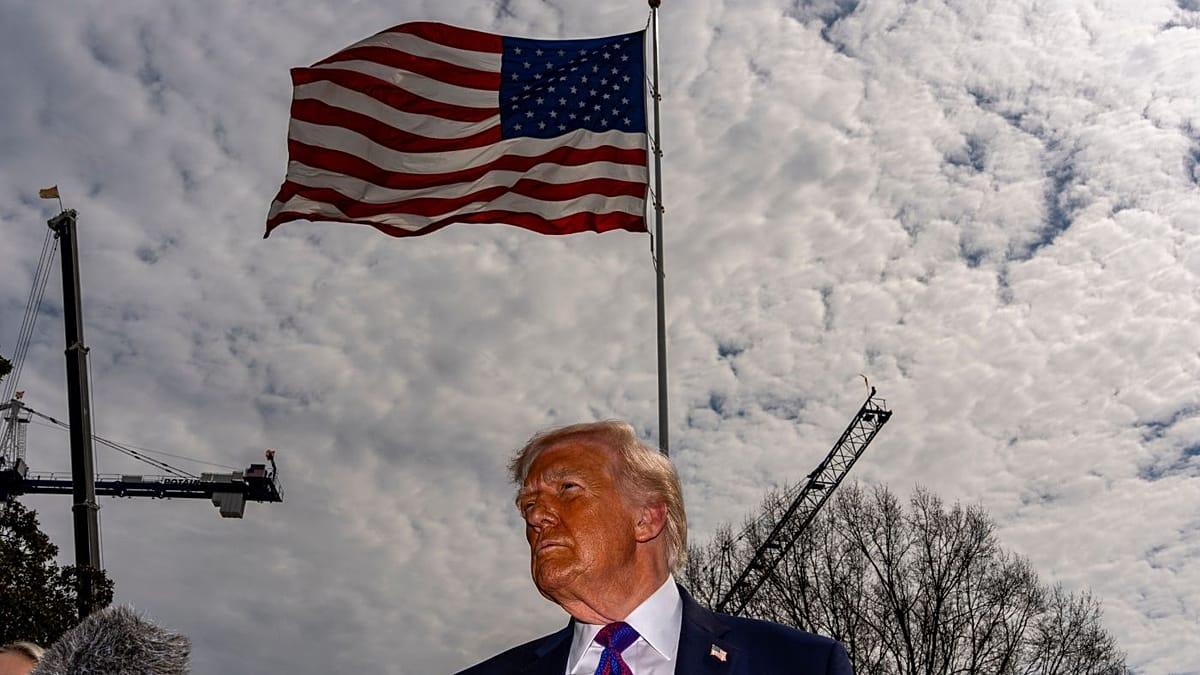
NBC Poll Shows Donald Trump Approval Sinks to Second-Term Low Amid Iran Conflict
Key Takeaways
- Trump's approval sinks to a second-term low around 37% in NBC poll.
- A majority oppose ongoing military action in Iran after a month of war.
- Gas prices rising in the U.S. raise costs amid Iran tensions.
Poll shows erosion
A cluster of US polling released in April 2026 depicts President Donald Trump’s job approval sinking to the lowest sustained levels of his second term, with NBC News reporting that “37% of adults approve of Trump’s performance as president, while 63% disapprove.”
NBC News Decision Desk polling also found that “Two-thirds of respondents also disapproved of Trump’s handling of inflation and the Iran conflict,” and it put his job rating at “the lowest point of his second term in NBC News Decision Desk polling.”
The NBC News poll further reported that “one-third of Americans believe the country is on the right track while two-thirds believe it is on the wrong track,” describing it as “the most pessimistic outlook in Decision Desk polling since Trump retook office last year.”
The same NBC News Decision Desk Poll powered by SurveyMonkey showed Republican support softening, with “83% of Republicans gave Trump a positive approval rating, down 4 points,” and “the share of Republicans who strongly approve of Trump’s job performance has dropped 6 points, from 58% to 52%.”
A separate polling roundup in the Foreign Policy Journal similarly framed the movement as sustained erosion, citing Rasmussen Reports’ “April 17 daily tracking figure” of “43% approval and 54% disapproval.”
The Guardian’s account of the same period echoed the downward trend, stating “Just 38% of voters approve of the way Trump is handling his job as president, while 55% disapprove,” and it paired that with “A mere 36% of voters approve of the way the president is handling the situation with Iran, while 58% disapprove.”
Economy and Iran war
Across the polling described by NBC News and the Foreign Policy Journal, inflation and the Iran war are repeatedly identified as the drivers of dissatisfaction, with NBC News saying “the economy continues to be the top issue for Americans, with 29% saying it’s the issue that matters most to them right now.”
NBC News reported that “inflation and the rising cost of living was the runaway winner — 45% chose that option,” and it paired that with “Just 32% of Americans said they approve of Trump’s handling of inflation and the cost of living, compared to 68% who disapprove.”

The same NBC News poll found that “almost two-thirds of Americans said gas prices have been a problem for them and their family,” breaking that down as “Twenty-nine percent call it a serious problem and 36% call it a somewhat serious problem.”
In the Foreign Policy Journal’s compilation, CNN’s SSRS polling found “Trump’s approval on the economy at 31%, a new second-term career low,” and it reported “his inflation approval at just 27%, down from 44% a year earlier.”
The Foreign Policy Journal also tied the war to single-issue polling, noting that “Quinnipiac found 64% of voters considered Trump’s social media threat that “a whole civilization will die tonight” to be unacceptable language for a sitting president.”
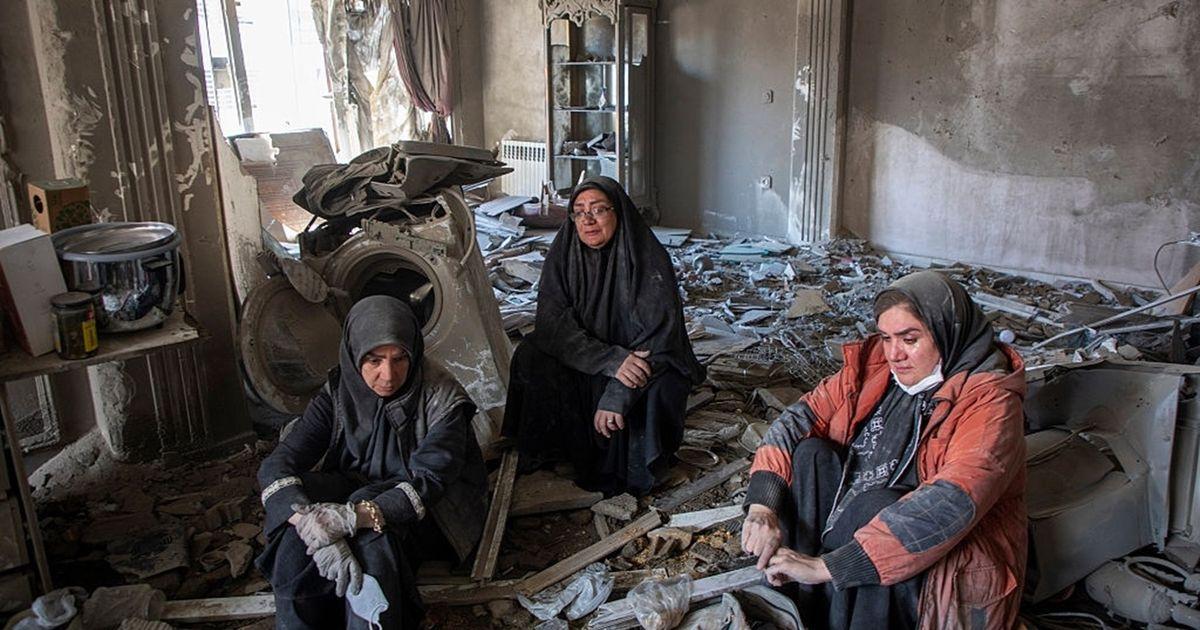
On the Iran conflict itself, NBC News said “two-thirds of Americans disapproved of Trump’s handling of the war with Iran, with one-third approving,” and it added that views “did not significantly shift after he announced a temporary ceasefire on April 7.”
The Guardian’s narrative similarly emphasized the war’s political and economic linkage, stating that “Having launched an unpopular war with Iran, the president was scrambling for a way out as fuel prices climb,” and it reported “Two in three voters blame him for the recent rise in gas prices.”
Voices and political fallout
The polling and reporting also captured direct reactions from political figures and named analysts, showing how the economy and Iran war are shaping criticism of Trump’s presidency.
The Guardian quoted Elaine Kamarck, a former official in the Bill Clinton White House, saying: “He’s in the most serious trouble he’s been in, and that includes his first term, where there were some constraints on him.”
Kamarck added: “It’s hard to tell whether it’s the absence of constraints or the fact that he’s getting old and cranky but he seems to have a dramatic loss of judgment,” and she concluded: “The best description of Trump – apparently it’s British slang – is shambolic.”
In the same Guardian account, Lance Johnson, a 47-year-old contractor in Crescent Springs, Kentucky, described his dissatisfaction with the third term, saying, “We’re supposed to not start any new wars. Prices were supposed to come down. We were promised a lot of things and we’re not getting them.”
The Guardian also described Catholic backlash after Trump launched a verbal assault on Pope Leo XIV, quoting the president’s reported attack as “WEAK on Crime, and terrible for Foreign Policy,” and it included a response from David Brody of the Christian Broadcasting Network: “TAKE THIS DOWN, MR. PRESIDENT. You’re not God. None of us are. This goes too far. It crosses the line.”
In a separate West Asian report, Nour News quoted former Georgia Republican representative Marjorie Taylor Greene criticizing Trump’s Iran policy and urging him to focus on Americans’ economic conditions, writing: “Americans do not want to go to war with Iran!!! The American people want to be able to pay their living costs and have hope for the future.”
Greene also said: “The American people want the White House to put in prison influential individuals who sexually abuse children,” and she urged Trump to “Publish all Epstein files and stop protecting pedophiles (people who sexually abuse children).”
Different outlets, different frames
While the underlying numbers in the NBC News Decision Desk Poll and the Foreign Policy Journal’s roundup point to widespread dissatisfaction, the outlets frame the story through different lenses: day-to-day polling mechanics, cultural and political narrative, or economic pressure in the Iran war.
NBC News foregrounded the poll’s structure and toplines, stating that “Overall, 37% of adults approve of Trump’s performance as president, while 63% disapprove,” and it emphasized that the job rating was “at the lowest point of his second term in NBC News Decision Desk polling.”
The Foreign Policy Journal instead assembled a comparative map of multiple surveys, citing Rasmussen’s “April 17 daily tracking figure” and then listing Quinnipiac’s “poll of 1,028 registered voters conducted April 9 to 13” with “overall approval at 38% against 55% disapproval.”
It also highlighted stability in a specific metric, saying “Silver Bulletin’s polling aggregator, run by Nate Silver’s team, placed Trump’s net approval at minus 16.6 on April 16,” and it described that as “essentially unchanged from the minus 16.3 recorded when the two-week Iran ceasefire was announced on April 7.”
The Guardian’s framing, by contrast, used a narrative of unraveling and cultural conflict, saying “Two weeks that pushed Trump to the edge. Is his presidency unravelling?” and it described a sequence including “he insulted the pope and posted an AI image of himself as Jesus Christ on social media.”
The Guardian also tied the polling to a broader coalition shift, describing “the unlikely coalition that put Trump back in the White House is unravelling” and naming groups such as “anti-interventionists who wanted an end to forever wars.”
A separate Reuters-based report carried in جريدة عمان framed the same Iran war as an economic pressure problem, stating “Economic pressure is Trump's Achilles' heel in the Iran war,” and it quoted Brett Bruen saying that “Trump is feeling the economic squeeze, which he sees as a weakness in this war.”
What comes next
The sources connect the polling and the Iran war to near-term political and diplomatic decisions, emphasizing midterm election stakes and the possibility of continued or extended truce.
NBC News said the poll results “underscore the challenges Republicans face as they defend their majorities in Congress in this year’s midterm elections,” and it tied the dissatisfaction to Trump’s earlier campaign promises to “tackle inflation and keep the United States out of foreign entanglements.”
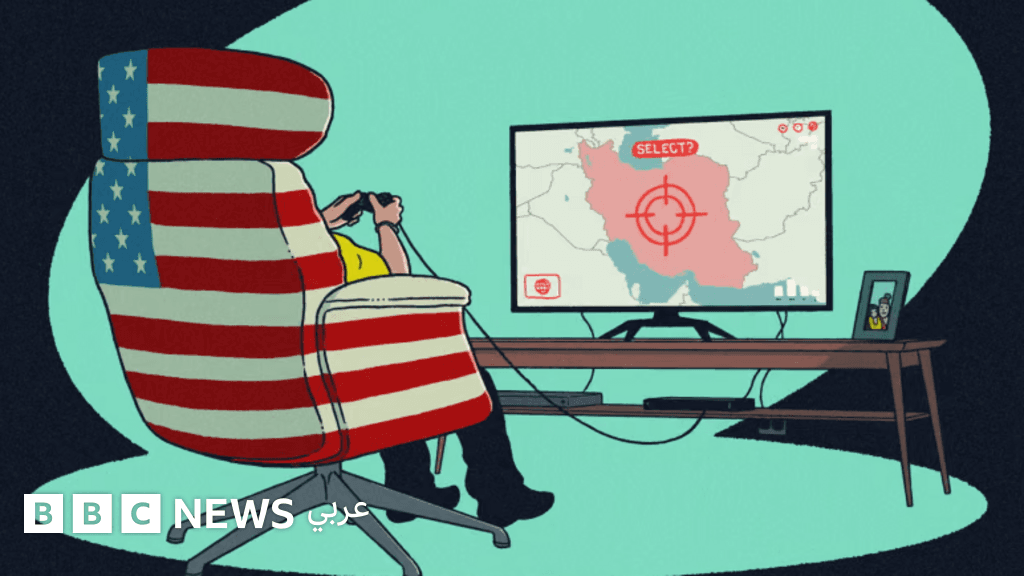
It also reported that “Americans’ frustrations with the economy and the Iran war also come after Trump promised to tackle inflation and keep the United States out of foreign entanglements during his 2024 presidential campaign,” and it described the Iran ceasefire timing as “after he announced a temporary ceasefire on April 7.”
In the Reuters-based جريدة عمان report, the war’s economic pressure was linked to a diplomatic exit timeline, stating that “As the weeklong ceasefire nears its end, it remains to be seen whether the unpredictable president will reach a deal that meets his aims from the war or extend the truce beyond April 21 or renew the bombardment.”
That same report said Iran announced it would “reopen the Hormuz Strait to navigation,” and it described how “global oil prices have fallen sharply while financial markets, which Trump often regards as a gauge of his success, surged on Friday.”
It also stated that “Experts warned that even if the war ends soon, the economic damage could take months, if not years, to repair,” and it raised the question of whether any agreement would achieve Trump’s objectives, including “closing the path for Iran to acquire a nuclear weapon.”
The Foreign Policy Journal similarly framed the question heading into November as whether any stabilization holds, saying “The question heading into November is whether that stabilisation holds or proves fragile if gas prices remain elevated through the summer.”
Finally, Nour News reported that Marjorie Taylor Greene said Trump is “set to visit my former congressional district on Thursday,” adding a concrete campaign-like next step tied to her criticism of the Iran war and domestic costs.
More on USA
Donald Trump Sends U.S. Delegation to Pakistan for Iran Talks, Threatens Power Plants and Bridges
47 sources compared

Shooting Near University of Iowa Campus Leaves Five Injured, Including Three Students
22 sources compared

United Flight 2092 Diverted to Pittsburgh After Crew Reported Possible Security Issue
12 sources compared

Pope Leo XIV Defuses Tensions With Donald Trump During Africa Tour
20 sources compared