
Netanyahu Orders Gaza Seizures, While Israel Strikes Kill Hamas Commander Mohammad Odeh
Key Takeaways
- U.S. Senate blocked resolutions to halt a $450 million weapons sale to Israel.
- France and other European leaders discuss sanctions or embargo options against Israel.
- Rights groups and NGOs call for accountability, endorsing arms embargo against Israel.
Ceasefire talks and Gaza expansion
Al Jazeera said diplomatic efforts to end the Iran war were gaining momentum as United States and Iranian negotiators moved closer to a temporary ceasefire agreement, with US sources describing a preliminary framework for a “60-day ceasefire extension” that still required President Donald Trump’s approval.
“Diplomatic efforts to end the Iran war appear to be gaining momentum, with United States and Iranian negotiators moving closer to a temporary ceasefire agreement even as tensions remain high across the region”
In the same Al Jazeera update, Israeli Prime Minister Benjamin Netanyahu said he had directed the military to seize more of Gaza, starting with “70 percent of the Palestinian territory,” while the report also said Israel was already estimated to control about 64 percent of the Strip despite an October US-brokered truce calling for forces to withdraw to the “Yellow Line.”
Al Jazeera also reported that the Israeli military ordered residents of parts of Tyre city and Zaqqoq al-Mufdi in southern Lebanon to vacate immediately and move north of the Zahrani River, about 40km (25 miles) from the Israeli border.
The Al Jazeera report added that Hezbollah said it launched dozens of operations targeting Israeli troops, tanks, engineering vehicles and military positions across southern Lebanon and northern Israel, including close-range clashes and strikes on Merkava tanks.
In Gaza, Al Jazeera said dozens of Palestinians marched through Gaza City carrying the body of Hamas’s armed wing commander, Mohammad Odeh, who was killed in an Israeli strike on Tuesday night.
Senate votes block weapons
The Al Jazeera report on Iran war day 90 described a wider regional picture, but multiple sources focused on U.S. legislative friction over arming Israel as the Senate blocked resolutions tied to a roughly $450 million package of bombs and bulldozers.
Al Jazeera reported that the U.S. Senate blocked two resolutions to halt the sale of bombs and bulldozers worth about $450 million to Israel, while the overwhelming support from the Democratic caucus in the Senate totaled 47 members for the resolutions.

In the same coverage, Senator Bernie Sanders said, “The United States should use the leverage we have—billions in weapons and security assistance—to demand that Israel stop these atrocities.”
Al Jazeera also reported that the vote was “63 to 36,” with “No Republican senator voted,” and that Sanders called the sales a violation of the Foreign Assistance Act and the Arms Export Control Act.
Separately, Al Jazeera said Israel’s raids aim to neutralize militants and military infrastructure, while it noted that the scale of civilian casualties in several areas suggests otherwise.
Aid totals and political pressure
Al Jazeera’s backgrounder on U.S. weapons and aid to Israel said American aid to Israel since World War II has surpassed $300 billion, combining military grants and economic assistance, and described Tel Aviv as the largest cumulative recipient of U.S. foreign aid in modern history.
That same Al Jazeera report traced the relationship to 1962, when former U.S. President John F. Kennedy approved the sale of defensive missiles to Israel, and said the 1973 October War brought an emergency package worth $2.2 billion and thousands of tons of military equipment.
The report said Congress converted $1.5 billion of that package into a non-repayable grant and later, in the 1980s, the Reagan administration converted military aid from loans into non-repayable grants, while the legal framework was established in 1976 through the Foreign Military Financing program.
In the 1990s, Al Jazeera said the two sides moved to a “ten-year” framework beginning in 1999 with $21.3 billion, rising under Barack Obama to $30 billion, peaking in the current agreement at $38 billion—i.e., $3.8 billion annually—scheduled through 2028.
The Mondoweiss piece added that a Quinnipiac poll found that 60 percent of all Americans opposed U.S. military funding for Israel, and said Sen. Lindsey Graham backed a proposal to transition from “aid” to a “partnership,” with Netanyahu suggesting the shift in an interview with 60 Minutes.
More on Gaza Genocide
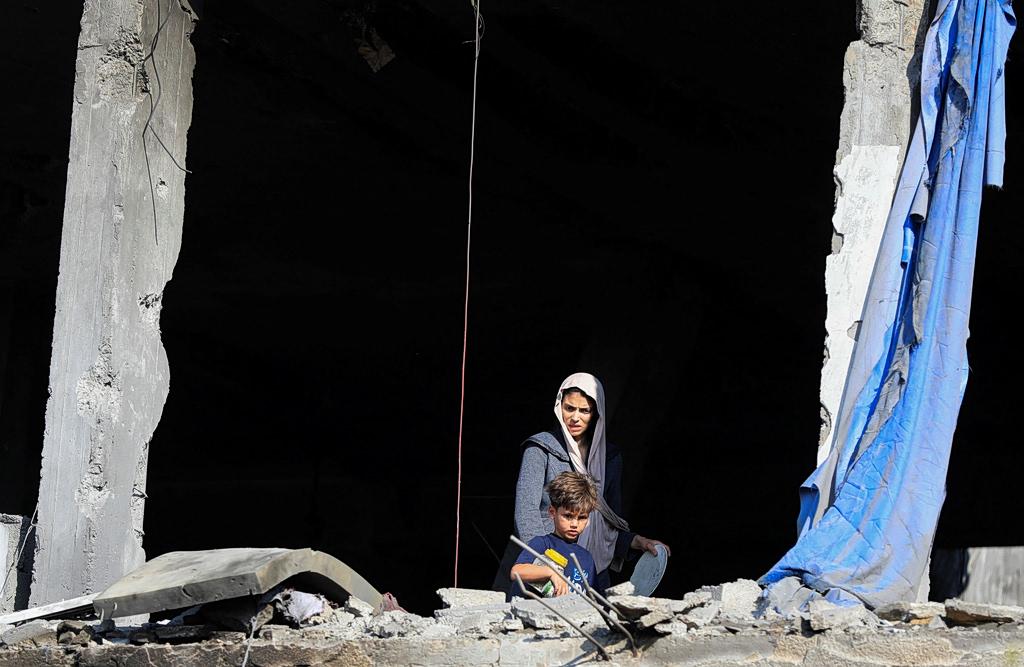
UN Warns Israel’s Forces Killed Palestinians Near Gaza Armistice Line, Possible War Crimes
10 sources compared

Benjamin Netanyahu Orders Israel Defense Forces To Expand Gaza Control To 70%
24 sources compared
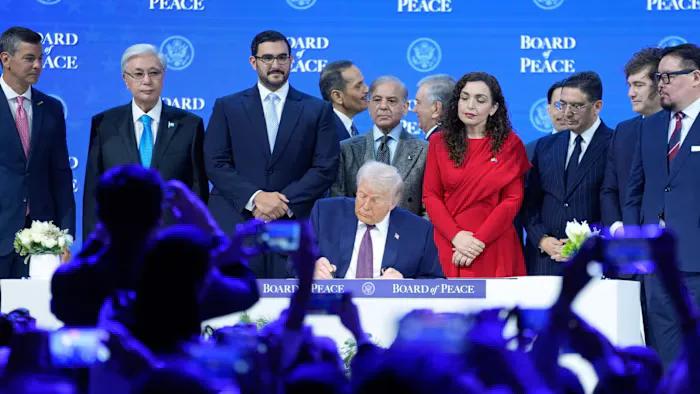
Trump’s Gaza Board of Peace Fund Receives Zero Donor Money, Reconstruction Stalls
10 sources compared

UN Places Israel On Blacklist For Conflict-Related Sexual Violence After Patten Gets No Response
10 sources compared