Netanyahu Orders Israeli Army To Extend Security Zone In Southern Lebanon, Strikes Kill 1,238
Key Takeaways
- Netanyahu ordered extending the security zone in southern Lebanon.
- Israeli strikes in southern Lebanon have killed over 1,200 since early March.
- The conflict continues with Hezbollah, amid a fragile ceasefire and regional tensions.
Netanyahu Orders Expansion
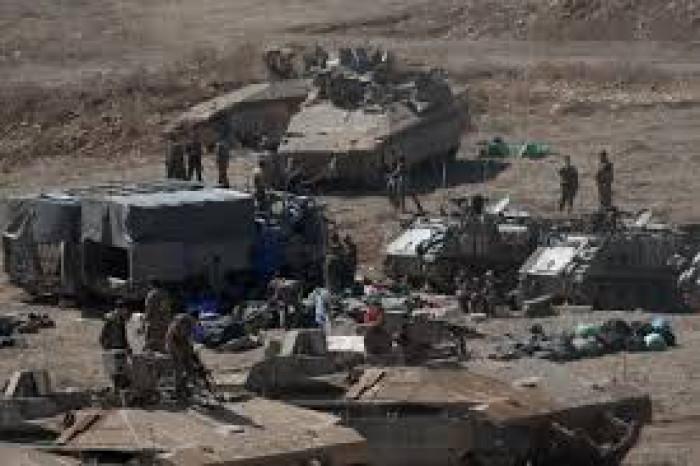
Israeli Prime Minister Benjamin Netanyahu ordered on Sunday the Israeli army to "extend the security zone" in Lebanon as it carries out massive strikes that have killed more than 1,200 people since early March.
La Presse said the Israeli army is conducting a deep ground incursion into southern Lebanon to widen a "buffer zone," and it described troops crossing on foot through thick snow from Mount Hermon in Syria to the Mount Dov region in southern Lebanon to monitor the area, gather intelligence, and locate the enemy's terrorist infrastructure.
The La Presse report said the Health Ministry gave a new death toll of 1,238 dead since March 2, including 124 children, and that in just Saturday and Sunday 49 people were killed including 10 rescuers and three journalists.
In a separate account focused on the eastern Beqaa Valley, Chronique de Palestine said Nabi Chit was hit by several Israeli airstrikes after an order from the Israeli army, killing 41 villagers and wounding 40 others during the day, according to the Ministry of Public Health.
Chronique de Palestine also described Hajjeh Hamda al-Halbawi hearing digging noises near the Shukr family cemetery before a drone opened fire, killing all three family members as they rushed to take her to the hospital.
UN Worries, UNIFIL Strains
Radio France reported that the UN fears Israel will reproduce in Lebanon what it did in the Gaza Strip, as it said the Israeli army has penetrated up to 8 km inland into Lebanese territory and continues ground fighting against Hezbollah.
Radio France also said the Israeli General Staff is considering building 18 permanent military posts up to the Litani River, located about 30 km from the border, and that orders to forcibly move Lebanese populations in the 'red zone' extend about ten kilometers further north, to the Zahrani River.

In an interview with franceinfo, General François Chauvancy said the mandate given to UNIFIL, which included disarming Hezbollah with the support of the Lebanese army, has "never been properly implemented," and he argued that Israel is seeking security by occupying a zone to prevent Hezbollah from using it to strike.
Chauvancy told franceinfo that UNIFIL "does not have the means to act by force; its resources are very limited," and he said a UNIFIL blue helmet was killed on Sunday, March 29, in an explosion as fighting between Hezbollah and Israel continued.
Radio France added that UNIFIL estimated the number of Israeli attacks ranged between 10,000 and 15,000 despite the ceasefire after its first year in effect, and it said the Israeli army issued warnings in some villages by spraying glyphosate and using white phosphorus to prevent residents' return.
Buffer Zone, Control Stakes
As Israel presses to widen its buffer zone, La Presse said Netanyahu ordered to further expand the existing security zone "to definitively neutralize the invasion threat" and to push anti-tank missile fire away from the border.
La Presse reported that the Health Ministry said 52 rescuers and health workers have been killed since the start of the war, and it said a warehouse where medicines were stored was destroyed by strikes.
In a broader assessment of territorial control, Yafa News Network said Israel expanded its military reach across Gaza, southern Lebanon, and Syria as part of a new security strategy led by Netanyahu, based on creating buffer zones and bolstering the military presence on several fronts.
Yafa News Network added that Israeli forces advanced up to about 12 kilometers in some areas of southern Lebanon while continuing airstrikes and issuing evacuation orders to residents of areas north of their deployment sites, and it quoted Defense Minister Yisrael Katz saying Israel seeks to impose security control up to the Litani River.
In the same La Presse report, it said Lebanese authorities ordered the Iranian ambassador to leave the country by Sunday, a decision contested by Hezbollah and its ally, the Shiite Amal party, and it quoted an Iranian diplomatic source saying Mohammad Reza Raeuf Sheibani would not comply "in line with the will of the president of Parliament Nabih Berri and Hezbollah."
More on Lebanon
Israeli Forces Advance Beyond Litani River, Poised to Encircle Nabatieh
34 sources compared
Israel Issues Expulsion Orders for 13 Villages in Southern Lebanon as Netanyahu Advances
11 sources compared
Ahmed al-Sharaa Visits Deir Ezzor After Euphrates Floods Displace Thousands
18 sources compared
Israel Intensifies Southern Lebanon Attacks, Leaving 31 Dead and 40 Wounded
48 sources compared