Gaza Genocide08 May, 20263 min read
Netanyahu’s New Security Doctrine Drives Battle After Battle Against Hamas In Gaza
This article is an automated aggregation of coverage from news outlets. Our editorials offer in-depth analysis curated by the NewsCord team.
Sea/Periphery doctrine expands Israel's regional and maritime alliances with Greece, Cyprus, India, Arab, African states. Israel's security doctrine prioritizes constant readiness and repeated campaigns against threats.
Doctrine After Oct. 7
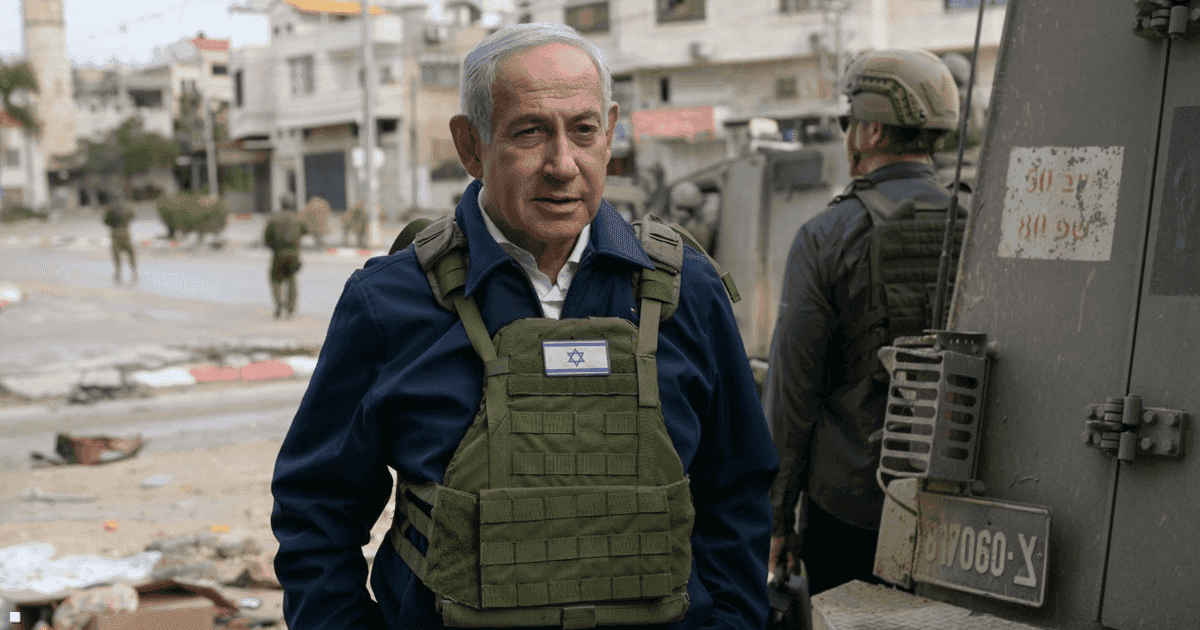
After the October 7, 2023 Hamas attack, Israeli Prime Minister Benjamin Netanyahu vowed to achieve "complete victory" in the war that followed, and an analysis in the British Financial Times says waging battle after battle and launching pre-emptive wars has become his new security doctrine.
“Netanyahu vowed to achieve 'complete victory' in the war that followed.”
The same analysis says Hamas and its fighters still control what remains of roughly half of the Gaza Strip, while Hezbollah, which Netanyahu said was "crushed" in 2024, continues launching a regular volley of rockets from Lebanon at northern Israel.
It also describes Israel and the United States finding themselves once again in a state of war with Tehran less than a year after declaring a "historic victory" over Iran, and it frames Netanyahu’s approach as escalating and receding threats with an open-ended conflict.
In a recent address to graduating military officers, Netanyahu said: "No more containing threats. No more the idea of a villa in the woods where you hide from predators behind the wall."
The analysis adds that Netanyahu now speaks of history's long arc and a shifting balance of power, with Israelis preparing for a future where dangers are persistent and the conflict is open-ended.
Pre-emptive Force and Critiques
The analysis quotes Netanyahu telling graduating military officers: "On the contrary, if you don’t go into the forest, the forest will come to you," and it says this vision requires Israel to wage what it calls 'pre-emptive' wars against potential threats. It says critics point to the absence of any genuine diplomatic initiative promising a more sustainable regional settlement and warn of the cost of sparking consecutive battles in the international arena with little consideration of human costs. Michael Milstein, a former military intelligence officer who now teaches at Tel Aviv University, is quoted as saying the approach resembles a "post-trauma national-security doctrine," formed as an automatic reaction after the October 7 attack but lacking in-depth study.
Milstein also says Netanyahu's stance and his supporters can be summarized in the phrase: 'We do not trust Arabs and only believe in force and land.' A senior Israeli official speaking on condition of anonymity says: "you cannot buy quiet; you must mount rounds of fighting to deter threats," adding that this approach will continue even after Netanyahu because "there is no other option after October 7."

Open-Ended Stakes and Resources
The analysis says Israel’s current conflicts have no end in sight, noting that the army is conducting an air campaign against Iran, widening its ground offensive in Lebanon, and still controls half of Gaza while also controlling large swaths of southwestern Syria. It reports that pressure has led to a warning by Chief of Staff Aviv Kochavi to the government last week that the army needs roughly 15,000 more soldiers, half of them ground troops, and it quotes him: "I raise ten red flags... at this rate the army will crumble from within." It also describes Netanyahu and his ministers insisting they intend to redraw a broad 'security zone' by seizing land inside southern Lebanon and permanently keeping buffer zones in Gaza and Syria, which the analysis says is unsustainable given the size of the army.
“I raise ten red flags... at this rate the army will crumble from within.”
In a separate account, El Mundo quotes veteran Haaretz military analyst Amos Harel saying the new de facto doctrine arises from the trauma after October 7 and that Israel acts with fewer barriers and doubts and with greater ease. El Mundo adds that Harel warns that one of the problems is that "you walk into an ambush as in Lebanon two months ago," while also citing the toll of "1,200 dead and 251 kidnapped" from the country’s south.