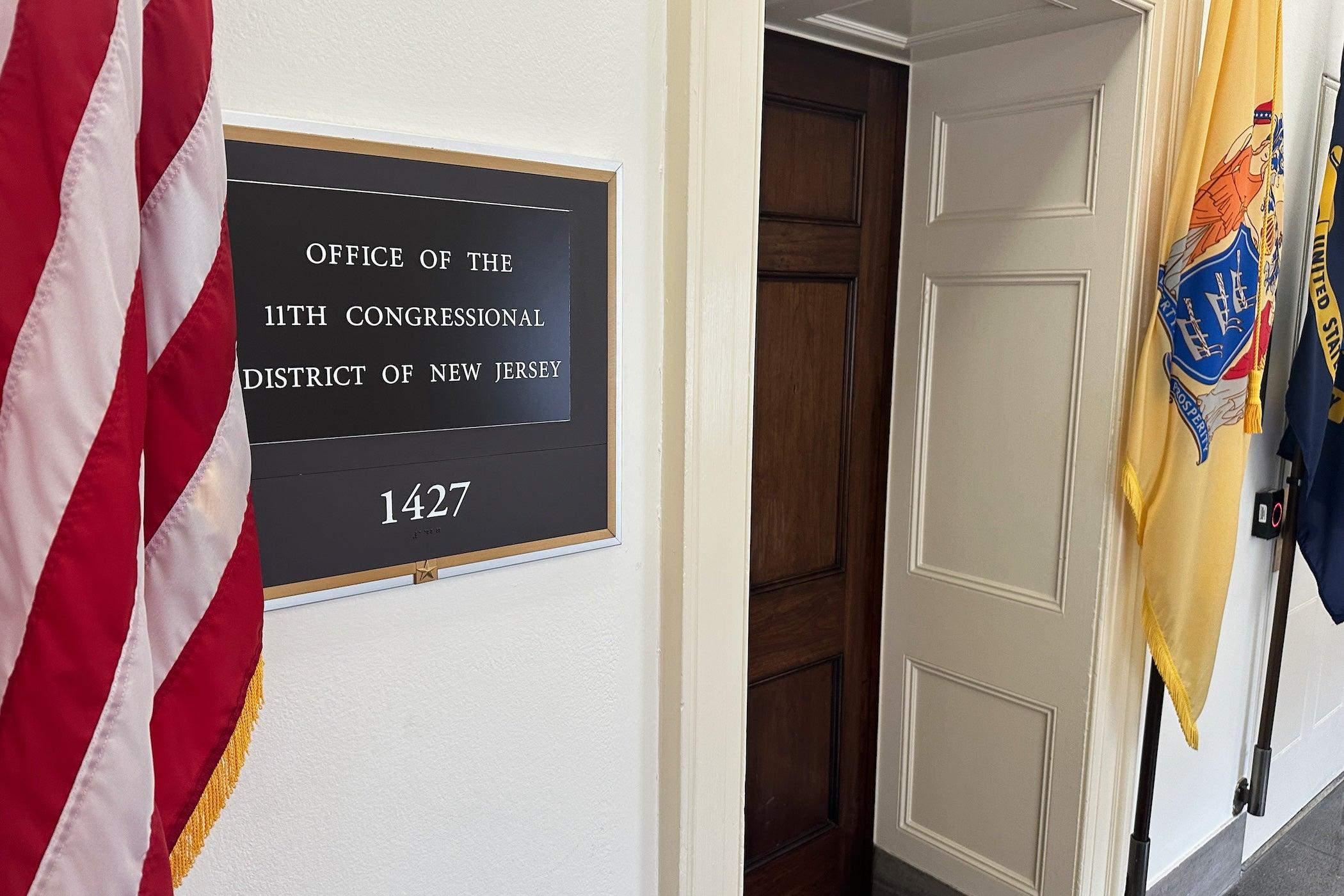
New Jersey Voters Elect Analilia Mejia, Joe Hathaway, Alan Bond in 11th District Special Election
Key Takeaways
- Special election to fill Mikie Sherrill's NJ-11 seat on April 16, 2026.
- Mejia and Hathaway are the Democratic and Republican candidates; Bond independent.
- Mejia advanced from the February Democratic primary.
Special election in NJ
Voters in New Jersey’s 11th Congressional District headed to the polls on Thursday, April 16, to fill the U.S. House seat vacated by New Jersey Gov. Mikie Sherrill, who resigned from Congress in November after winning the governorship.
The race was set as a special election under New Jersey law, with the winner serving only until Jan. 3, 2027, and then facing a new contest in the November 2026 general election to hold the seat beyond that.
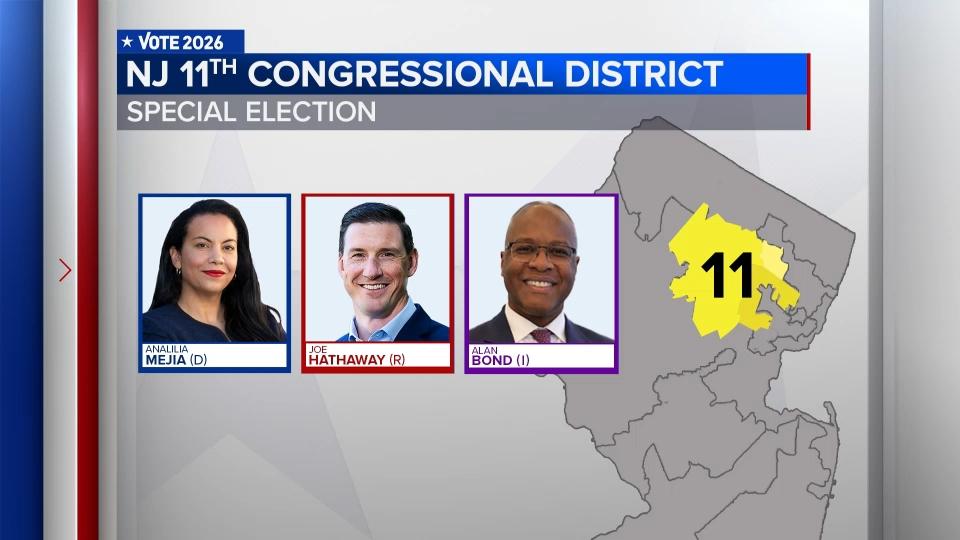
The candidates on the ballot were Democrat Analilia Mejia, Republican Joe Hathaway, and independent Alan Bond, with the district spanning parts of Essex County, Morris County, and Passaic County.
Polling places were open from 6 a.m. to 8 p.m., and voters were told to vote at their assigned polling location if they did not cast an early vote.
The election was also framed as having national implications for control of Congress, with one report noting that a Democratic win could narrow Republicans’ slim House majority between now and January.
In the lead-up, Politico described the contest as “another test of Trump’s popularity ahead of midterms,” while CNN said a Mejia win would be a “boon for progressives” and a test of whether voters want to send her to Congress.
“The winner will serve the remainder of the current congressional term and is expected to run again in November for a full term,” a report from MS NOW said, tying the special election to the broader 2026 midterm calendar.
How the race set up
The special election was triggered by Sherrill’s resignation from Congress in November after she won the governorship, leaving the 11th District seat vacant and forcing New Jersey to use a special election rather than appointment.
Multiple outlets tied the timing to the state’s rules, with Bergen Record stating that “a vacancy in the U.S. House must be filled through special election rather than appointment,” and New Jersey Monitor describing that the winner would take Sherrill’s place “until the term expires in January.”

The candidates emerged from party processes earlier in the year, with MS NOW saying “Party primaries were held in February” and that the Democratic primary drew “more than a dozen candidates.”
NBC News added that Mejia advanced from that February primary in the 11th District, which included veteran Democrats such as former Rep. Tom Malinowski, former Lt. Gov. Tahesha Way, and Essex County Commissioner Brendan Gill.
On the Republican side, Hathaway was unopposed in his party’s primary, and MS NOW described him as “a Republican mayor” on the ballot Thursday.
The district’s partisan tilt was also part of the setup: CNN said the district had “about 65,000 more registered Democrats than Republicans,” while NBC News said the 11th District had trended blue in recent years and that Kamala Harris carried it by 9 percentage points in 2024.
Several reports also linked the special election to the House’s razor-thin balance, with USA Today noting that the House majority is “razor-thin” and that each special election in 2026 has heightened importance.
“Polls close Thursday at 8 p.m. ET,” NBC News said, underscoring that the contest’s outcome would quickly affect the House’s arithmetic for the remainder of the year.
Voices, endorsements, and attacks
The campaign featured sharply contrasting political identities and a heavy focus on national issues, with Mejia presenting herself as a progressive alternative and Hathaway positioning himself as a moderate who would not be a “rubber stamp.”
“Two months after progressive Analilia Mejia won a special election in the Democratic primary for New Jersey’s 11th District, voters will decide Thursday whether they want to send her to Congress”
MS NOW quoted Mejia saying, “We are fed up with the chaos coming out of Washington — from rising prices to attacks on our democracy,” and it also included her statement that “This is our chance to reject MAGA extremism, fight for an economy that works for everyone, and elect someone who is truly unbought and unbossed.”
CNN reported that Mejia told the network, “Their pocketbook, the prices at the gas pump, the prices at the grocery store, are informing people about just how dangerous it is to send someone else to do Donald Trump’s bidding in Congress.”
Hathaway, meanwhile, told Politico that “Throughout our campaign, I’ve focused on what matters most: putting the residents of NJ-11 first over party, and over ideology,” and he also attacked Mejia as someone who would “appease the most radical fringes of her party and put radical socialist and antisemitic ideology first.”
The Hill reported that Hathaway described Mejia as antisemitic and said she would be a “socialist” and “radical,” while Mejia responded during the debate by characterizing Hathaway as a supporter of Trump who “will vote in lockstep with the very same people who are making your daily life increasingly unaffordable and have thrown us into a reckless war.”
Endorsements and political backing were central to the narrative: NBC News said Mejia’s campaign received a boost in the primary from national progressive figures, with Sens. Bernie Sanders and Elizabeth Warren and Rep. Alexandria Ocasio-Cortez endorsing her.
WHYY similarly said Mejia had early backing from “U.S. Sens. Bernie Sanders and Elizabeth Warren and U.S. Rep. Alexandria Ocasio-Cortez,” and it described her as a longtime progressive organizer and former Labor Department official.
The campaign also included a dispute over Israel and Gaza, with The Hill quoting Hathaway’s accusation that Mejia’s views included that Israel has committed a genocide in Gaza and with Mejia arguing for upholding international law and the Geneva Convention.
“Do we not want a member of Congress who will uphold international law? Do we not want a member of Congress who is willing to stand up to its own — to our own nation and allies, and say we must uphold the Geneva Convention?” Mejia told The Hill.
Coverage divergence on what matters
Different outlets emphasized different drivers of the special election, even while describing the same matchup between Analilia Mejia and Joe Hathaway.
Politico framed the contest as a referendum on President Donald Trump, quoting pollster Patrick Murray saying, “Trump is just making it extremely difficult for Republicans to do well anywhere,” and adding that “People don’t like the war, but they also don’t like paying $4 a gallon for gas.”

CNN, by contrast, focused on the House arithmetic and the immediate impact on Speaker Mike Johnson’s ability to lose “two GOP defections on party-line votes and still pass legislation,” and it described a Mejia win as shrinking the margin yet again.
NBC News leaned into the campaign’s fundraising and outside spending dynamics, noting that Mejia raised “just over $1 million by the end of March” and that a secretive super PAC called American Centerpoint launched “$183,000 worth of digital ads and direct mailers” opposing Mejia and supporting Hathaway.
The Hill emphasized early voting and the debate over Israel, reporting that as of Monday, “65 percent of early or absentee voters were Democrats,” and it described Hathaway’s accusations about antisemitism and Mejia’s rebuttal that Hathaway would be a “yes-man” for Trump.
USA Today highlighted the race’s national stakes for the House and described Mejia’s fundraising edge, stating that “Mejia’s fundraising also sets her apart, with over $1 million compared to Hathaway’s $525,000,” while also quoting Hathaway’s April 8 event remarks about working with people “you don’t always agree with.”
WHYY provided a more granular election-data framing, including that “As of April 1, there were about 603,000 registered voters in the 11th Congressional District,” and it described the AP’s approach to calling the race.
Even when discussing the same outside group, outlets differed in how they characterized its role: CNN described AIPAC-linked spending as a factor in the primary, while NBC News described United Democracy Project attack ads and quoted that the super PAC told The New York Times it was opposing Malinowski because he had spoken in support of putting conditions on U.S. aid to Israel.
Across the coverage, the shared thread was that the special election would be watched as a bellwether, but each outlet attached that label to different underlying reasons, from Trump’s unpopularity to the House’s slim margin and to the Israel-related debate.
What’s at stake after polls
The immediate consequence of Thursday’s vote was control of the seat for the remainder of Sherrill’s term, with multiple outlets specifying that the winner would serve until January and then face a June primary for the full term.
“A progressive activist and a Republican mayor will be on the ballot on Thursday when voters head to the polls for a special election to fill the U”
New Jersey Monitor said the winner “will take her place until the term expires in January,” while NBC News said the winner would serve the rest of Sherrill’s term this year and that there would be a regularly scheduled primary in June for the full term.

USA Today similarly described that the winner would head to Washington to represent the 11th District and that “Whoever wins will serve the next eight months of Sherrill's term and then can run for a full term in November,” tying the special election to the November midterm cycle.
CNN emphasized that the House majority is razor-thin, stating that “House Speaker Mike Johnson is now able to lose two GOP defections on party-line votes and still pass legislation,” and it warned that a Mejia victory would shrink that margin yet again.
Politico added that the contest would be viewed as a test of anti-Trump sentiment ahead of November, quoting Patrick Murray and describing the district as a “microcosm” of suburban voters revolting against Trump.
Several reports also pointed to how the election could affect progressive momentum: MS NOW said Thursday’s contest is being watched as an early indicator of Democratic voter sentiment heading into the 2026 midterm elections, and WHYY said a Democratic victory would further narrow the slim majority Republicans hold in the chamber.
The Hill and NBC News both described how the race’s debate over Israel and Gaza could carry into the next phase, with The Hill quoting Mejia’s vow to protect Jewish constituents and convene spaces to educate and fight antisemitism.
“The progressive vowed that, if elected, she would “use every legislative power at my disposal to protect the rights of Jewish constituents and convene spaces to educate and to fight antisemitism”,” The Hill wrote, placing a concrete policy pledge in the immediate stakes.
Even as the election’s outcome was expected to be consequential, the reporting also stressed that both candidates would return for the next stage: CNN said Hathaway and Mejia are both running in June primaries, and New Jersey Monitor said the winner would serve until January and then face the next party contests.
More on USA

Miami Jury Orders Carnival Cruise Line To Pay Diana Sanders $300,000 After Tequila Overserving
20 sources compared
Justin Fairfax Kills Wife And Himself Inside Annandale Home, Police Say
22 sources compared
British-Born Man Kills DHS Worker and Another Woman in Atlanta Attacks
12 sources compared

US Navy Enforces Strait of Hormuz Blockade, Turns Back 10 Iranian Ships
20 sources compared