
OTC Traders and MSTR Prop Up Bitcoin Amid Oil-Driven Market Shock
Key Takeaways
- MSTR and OTC traders kept bitcoin demand steady during the oil-driven market shock
- Bitcoin remained relatively stable and gained about 4% this month despite global equity sell-off
- Global equity markets experienced a sharp, oil-driven sell-off that pressured risk assets including bitcoin
Market shock and Bitcoin
Bitcoin showed notable resilience amid an oil-driven market shock in early March, rising roughly 4% this month even as oil benchmarks and equities tumbled.
“Here's how traders and big buyers stepped in to keep bitcoin steady during the oil shock Several market participants, including MSTR and OTC traders, kept demand steady, helping BTC stay resilient”
Major oil benchmarks Brent and WTI surged about 30% this month and traded above $100 per barrel early Monday, contributing to a sharp sell-off in global equity markets that weighed heavily on Asian, European and other markets.
Despite that, Bitcoin rose nearly 4% to about $70,200 this month, indicating a divergence between crypto and traditional risk assets during the turmoil.
OTC trades supporting BTC
Market participants said large over-the-counter (OTC) purchases and private trades helped prop up Bitcoin during the volatility.
Paul Howard of liquidity provider Wincent told CoinDesk that large OTC trades and positioning for a swift end to the conflict in Iran, along with MicroStrategy’s continued accumulation, were driving demand.
OTC desks — private venues for negotiating large transactions outside public order books — allowed big buyers to snap up BTC without moving spot prices, a behavior traders use to execute sizable buys during stress.
MicroStrategy accumulation
MicroStrategy’s fresh purchases were cited as a major bullish factor, with Nasdaq-listed MicroStrategy buying 17,994 BTC between March 2 and March 8 and raising its total holdings to 738,731 BTC.
“Here's how traders and big buyers stepped in to keep bitcoin steady during the oil shock Several market participants, including MSTR and OTC traders, kept demand steady, helping BTC stay resilient”
Analysts and platforms such as Nexo highlighted that those purchases represent material new demand — the recent buy equated to several days’ worth of new bitcoin issuance.
MicroStrategy’s accumulating position has become an influential market force.
ETF inflows and carry trade
Spot Bitcoin ETFs and institutional flows also lent support, reversing a stretch of outflows and delivering sizable net inflows in early March.
CoinDesk cited data showing the 11 U.S.-listed spot Bitcoin funds registered net inflows of over $700 million this month, and that spot ETFs had seen about $1.7 billion of inflows since late February.
Traders have paired ETF purchases with strategies that short MicroStrategy stock — a ‘‘carry trade’’ that profits if BTC rises faster than MSTR falls — amplifying demand dynamics.
Supply limits and on-chain demand
Underlying supply constraints and on-chain buying amplified the impact of those concentrated flows, with the network having surpassed 20 million BTC mined and under one million coins left to be issued.
“Here's how traders and big buyers stepped in to keep bitcoin steady during the oil shock Several market participants, including MSTR and OTC traders, kept demand steady, helping BTC stay resilient”
At roughly 450 BTC mined per day, incremental supply is limited, meaning large block purchases — like MicroStrategy’s 17,994 BTC — can represent several weeks of issuance.
CoinDesk noted that bullish on-chain activity and institutional accumulation funneled demand into markets at a time when traditional assets were pressured by the oil shock.
More on Crypto

Bybit Pay Joins Mastercard Crypto Credential Network, Lets Users Send Digital Assets Using Verified Aliases
10 sources compared
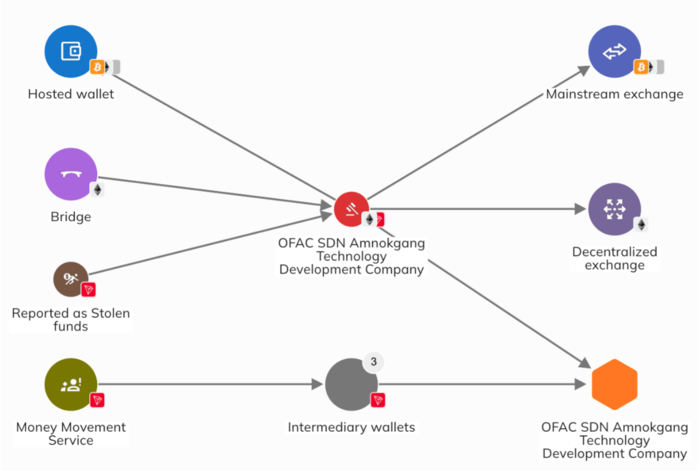
U.S. Treasury Freezes Crypto Network Feeding Nearly $800 Million To North Korea's Weapons Programs
10 sources compared

Europol and DOJ Freeze $3.4–$3.5M, Dismantle SocksEscort Proxy Network That Compromised 369,000 Devices
13 sources compared

BlackRock Launches iShares Staked Ethereum Trust (ETHB), Sparks Whale Buying in $15.5M Debut
10 sources compared