Crypto13 March, 20262 min read
U.S. Treasury Freezes Crypto Network Feeding Nearly $800 Million To North Korea's Weapons Programs
U.S. Treasury sanctioned six individuals and two entities linked to the network Fraudulent IT worker scheme funneled nearly $800 million via cryptocurrency in 2024
OFAC sanctions announced
On March 12, 2026 the U.S. Treasury’s Office of Foreign Assets Control (OFAC) announced sanctions targeting a network that converted nearly $800 million into cryptocurrency for North Korea in 2024, blacklisting six individuals and two entities tied to the scheme and freezing related crypto addresses.
“The U.S. Treasury has sanctioned six people and two entities tied to a North Korean scheme that brought in close to $800 million last year, much of it moved through cryptocurrency, by tricking American companies into hiring fake tech workers.”
The action was described by multiple outlets as an effort to shut down a fraud network that used remote IT jobs to generate revenue for Pyongyang’s weapons programs, with officials saying the designations block property and bar most dealings by U.S. persons.
How the scheme worked
U.S. officials and reporting say the network relied on placing North Korean IT operatives in overseas remote jobs using stolen identities, fake documents and front firms; those workers often funneled wages back to the regime, sometimes installing malware to steal data or extort companies.
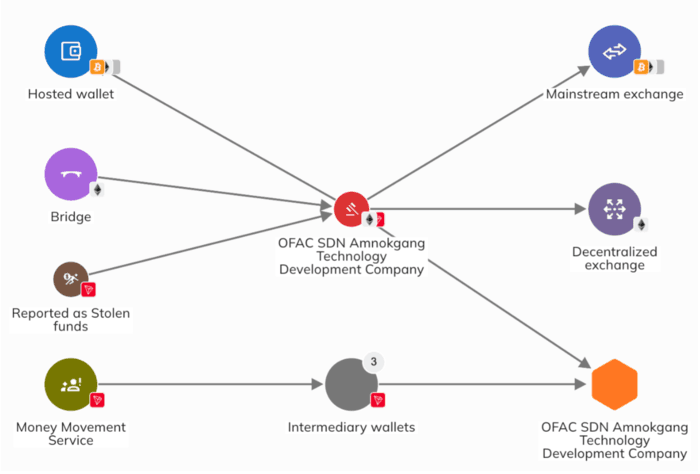
Treasury and analytics firms noted the operation then converted earnings into crypto and laundered funds through a mix of centralized exchanges, hosted wallets, DeFi services and cross-chain bridges to obscure flows.

Named actors and addresses
OFAC’s designations named specific facilitators and added 21 wallet addresses across multiple blockchains; reporting identified Vietnam-based Nguyen Quang Viet as a convertor of roughly $2.5 million into crypto for DPRK-linked clients and flagged Amnokgang Technology Development Company and individuals such as Yun Song Guk, Sim Hyon Sop and Hoang Minh Quang with multiple addresses across Ethereum, Tron and Bitcoin.
“One of those named was Nguyen Quang Viet, chief executive of a Vietnam-based firm called Quangvietdnbg International Services Company Limited. Between mid-2023 and mid-2025, Nguyen converted roughly $2.5 million into cryptocurrency for the regime, including money earned by IT workers tied to a North Korean company called Amnokgang Technology Development Company.”
Wider crypto and cyber context
Officials and analysts placed this enforcement action in a larger cyber-financial context: a UN-linked report and Chainalysis data cited by multiple outlets say North Korea’s crypto-related thefts and fraud exceeded $2 billion and affected dozens of countries, with incidents such as the February 2025 Bybit breach (near $1.5 billion) and rapidly rising DPRK-linked hacker activity driving urgent calls for tougher AML and sanctions enforcement.
Enforcement and consequences
Treasury statements and reporting stressed the legal and practical bite of the measures: designated assets are frozen in U.S. jurisdiction, U.S. persons are barred from dealings, foreign banks risk secondary sanctions, and violations can carry civil or criminal penalties—measures intended to choke the flow of revenue to Pyongyang and deter intermediaries across borders.
“As a result of the action, all property and interests in property of the these individuals in the U.S. are blocked and must be reported to OFAC, with violations carrying potential civil or criminal penalties, per the statement.”