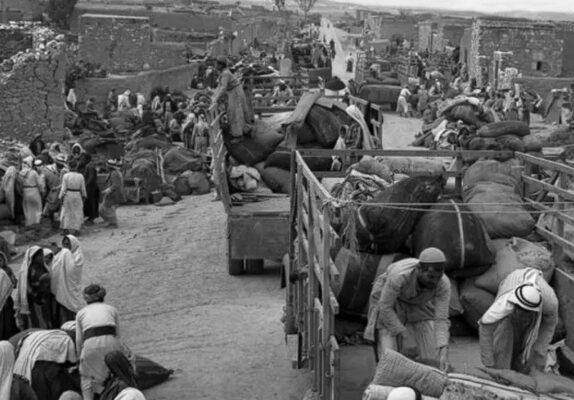
Palestinian Citizens Mark 78th Nakba Anniversary Under Israeli Restrictions Amid Gaza War
Image: Kul al-Arab

Palestinian Citizens Mark 78th Nakba Anniversary Under Israeli Restrictions Amid Gaza War

24 April, 2026.Gaza Genocide.6 sources

Key Takeaways

  • Palestinian citizens in 1948 territories marked Nakba with on-the-ground and digital marches amid restrictions.
  • Israeli authorities limited central Nakba march, triggering dispersed commemorations.
  • Slogans frame Nakba as counter to Israel's Independence Day.

Gaza war and Nakba framing

The war on Gaza is being discussed in the same news cycle as commemorations of the Nakba, with multiple outlets tying Israel’s Independence Day to the Palestinian “catastrophe” and the “right of return.”

Gift this articleShare to FacebookPrint article Article printing is available to subscribers only Print in a simple, ad-free format Subscribe Comments: SaveZen Reading Zen reading is available to subscribers only Ad-free and in a comfortable reading format Subscribe

HaaretzHaaretz

Haaretz frames Israel’s Independence Day as an occasion that “seeks to conceal the country’s best-kept secret: the Nakba – the catastrophe Palestinians commemorate as Israelis celebrate,” describing the Nakba as a “raw mirror image” of the two peoples’ narratives.

Image from Haaretz
HaaretzHaaretz

In parallel, Middle East Monitor reports that Palestinian citizens of Israel marked the “78th anniversary of the Nakba (Palestinian catastrophe)” under the slogan “Their Independence Day is Our Nakba,” while saying Israeli authorities imposed “restrictions” on public events.

Arab 48 and كل العرب describe the same slogan—“Their Independence Day Is Our Nakba Day”—and say marches and remembrance activities took place in depopulated villages while a central unified march was thwarted.

The war on Gaza is also explicitly invoked in جريدة الرياض, which says Israel has carried out “genocide in the Gaza Strip” since “October 7, 2023,” and it links that framing to Israeli Independence Day symbolism.

In that same report, the Gaza Health Ministry tally is used to describe ongoing harm, while the Nakba commemoration is presented as continuing despite restrictions.

Across the coverage, the “Independence Day” theme functions as a bridge between the Gaza war narrative and the 1948-era commemoration, with each outlet emphasizing different aspects of the same calendar.

Nakba marches under restrictions

Several outlets describe Palestinian commemorations of the Nakba in the “1948 territories” taking place alongside Israel’s founding anniversary, with Israeli restrictions shaping how events were organized.

Middle East Monitor says the commemoration “included marches and activities in several depopulated villages,” but also notes “restrictions imposed by Israeli authorities on public events,” and it quotes Muhammad Barakeh saying, “the current situation is not related to exceptional security circumstances, but rather reflects a historical reality that has persisted since the establishment of Israel at the expense of the Palestinian and Arab presence.”

Image from Middle East Monitor
Middle East MonitorMiddle East Monitor

Arab 48 and كل العرب both say the central unified march—organized annually since 1998 by the Association for the Defence of the Rights of the Displaced—was “thwarted,” and they describe depopulated-village activities continuing in its place.

Arab 48 provides a detailed program, stating that “Nakba remembrance activities will take place in several depopulated sites” beginning at “10:00,” followed by marches at “11:00,” “11:30,” and “noon,” culminating in “Kafr Bir‘am in the afternoon.”

It also describes a specific setting in Safuriya, saying “Hundreds of residents from the depopulated Safuriya village, north of Nazareth,” marked the anniversary by visiting the village and organizing “heritage and historical activities,” while “Israeli police were present in the vicinity and at the entrance to the Zippori settlement built on the ruins of the depopulated Safuriya.”

Arab 48 adds that participants “chanted the ‘Mawtini’ anthem” and wore “Palestinian keffiyehs” and clothing bearing the Palestinian flag, and it includes Hana Zahir’s account that “visiting the depopulated villages carries a clear message to our people and to the world: the right of return does not lapse with time nor is it nullified by the passage of years.”

In parallel, Middle East Monitor reports that the Association for the Defence of the Rights of the Displaced announced that this year’s “March of Return” would be held “digitally via social media platforms” at “6:00 PM,” after suspending the in-person march due to “strict restrictions and systematic obstacles.”

Voices: Barakeh, Zahir, Akter

The Nakba commemorations described in the sources include named leaders and participants who link the events to a longer political narrative, while also emphasizing how restrictions shape public expression.

Events in the displaced Palestinian villages inside the 1948 territories bring life back, even if only for hours, through popular activities that revive memory and reaffirm attachment to the land

Al-Arabi Al-JadeedAl-Arabi Al-Jadeed

Middle East Monitor quotes Muhammad Barakeh, former head of the High Follow-Up Committee for Arab Citizens of Israel, saying, “This land has its own authentic narrative and its people who have never left its heart,” and it adds that Barakeh said the presence of Palestinians in depopulated villages is “a natural act reflecting their right and a clear message that they are always destined to return.”

Arab 48 includes Hana Zahir, a “third-generation resident of Safuriya,” who told Arab 48 that “visiting the depopopulated villages carries a clear message to our people and to the world: the right of return does not lapse with time nor is it nullified by the passage of years,” and it adds that she described attending as “an act of steadfastness to the land and memory.”

In the same Arab 48 account, Zahir says, “this land will remain the Palestinians’ destination wherever they are, and millions of refugees and displaced people will return to it,” and it connects that message to “the role of the younger generations and children.”

Arab 48 also quotes Azzedine Badran, describing him as “a leader in the National Democratic Assembly,” speaking from the lands of the depopulated al-Damun during Nakba 78 remembrance events.

Separately, Al Jazeera’s Gaza-linked reporting centers on the Rahman Textile fire, but it also includes a named labor leader, Kalpona Akter, who is quoted saying, “This was not an accident. This was corporate murder,” and it says the Bangladesh Garment Workers' Federation called a nationwide strike.

Haaretz’s framing of Israel’s Independence Day as concealing the Nakba provides another named perspective, with the outlet describing the Nakba as a “raw mirror image” of Israelis and Palestinians.

Gaza casualty tallies and claims

The war on Gaza is presented with extensive casualty accounting in جريدة الرياض, which cites the Gaza Health Ministry and frames the figures as part of a broader “genocide” narrative.

The report says the Gaza Health Ministry “said yesterday that two Palestinian martyrs were transferred to hospitals in the Gaza Strip over the past 24 hours, in addition to four injured,” and it adds that “the tally of martyrs and injuries since the start of the genocide against the Gaza Strip on October 7, 2023 has risen to 72,562 martyrs and 172,320 wounded.”

Image from Haaretz
HaaretzHaaretz

It also states that “a number of victims remain under the rubble and in the streets, where ambulance crews and the civil defense cannot reach them at the moment.”

The same outlet says that “since the ceasefire went into effect on October 11, the total number of martyrs resulting from Israeli violations reached 786, along with 2,217 wounded,” and it adds that “761 bodies have been retrieved from among the missing under the rubble.”

The report further asserts that Israel has carried out “genocide in the Gaza Strip, including killings, starvation, destruction, displacement, and arrest,” and it says the actions occurred “ignoring international calls and orders from the International Court of Justice to stop it.”

It also claims that “The genocide has left more than 244,000 Palestinians dead or injured,” and it adds that “more than 11,000 missing” remain.

In addition to the casualty tallies, جريدة الرياض includes a separate controversy tied to Independence Day symbolism, saying Israeli transport minister Miri Regev selected “extremist rabbi Avraham Zerbib” to light a flame as part of the “so-called 78th Independence Day.”

Symbolic flame and B'Tselem critique

The sources also connect the Gaza war to Israeli Independence Day symbolism through a dispute over who was chosen to “light a flame” during the “so-called 78th Independence Day.”

Palestinians in the 1948 territories observed today, Wednesday, the 78th anniversary of the Nakba through marches and activities in the depopulated villages, alongside digital events, as Israeli restrictions prevented organizing the central march

Arab 48Arab 48

جريدة الرياض says the Israeli transport minister in the occupation government, Miri Regev, selected “extremist rabbi Avraham Zerbib” to light the flame as part of the Independence Day commemoration that “commemorates Israel’s founding in 1948 on the ruins of Palestine.”

Image from Middle East Monitor
Middle East MonitorMiddle East Monitor

It reports that B'Tselem criticized the honor, saying it “shows that genocide has officially become part of Tel Aviv’s national narrative,” and it describes the honor as a sign that “genocide, ethnic cleansing, and war crimes are the soul of the nation.”

The report includes B'Tselem’s quotation of Zerbib’s earlier television remarks, stating that he boasted: “Palestinians have nothing to return to in Rafah and in Jabalia; tens of thousands of families have no documents, no photos from their childhood, no identity cards, and no homes, they have nothing.”

It further says B'Tselem described Zerbib as serving as “a judge at the regional rabbinical court in the settlement of Ariel near Salfit in the northern occupied West Bank,” and as “the head of a military preparatory school in the Beit El settlement north of Jerusalem, teaching hundreds of Israeli youths.”

The report also claims that Zerbib photographed himself “while demolishing several civilian buildings in Gaza,” and it says he did so “while blowing the shofar (a Jewish horn made from a ram’s horn), praying, and reciting verses from the Torah.”

In addition, it says Zerbib “has repeatedly called for the destruction of the Gaza Strip,” and it claims his name has become “synonymous with deliberate and systematic destruction of Gaza.”

More on Gaza Genocide