Gaza Genocide06 May, 20266 min read
Palestinian Government Warns Gaza Health Catastrophe as Rodents Spread Skin Infections
This article is an automated aggregation of coverage from news outlets. Our editorials offer in-depth analysis curated by the NewsCord team.
Rodent infestations and waste buildup drive widespread skin infections among Gaza's internally displaced. Poliovirus detected in Gaza wastewater raises fears of outbreak in crowded enclaves.

Al Jazeera was read line by line by the Watchdog: 1.2. See the score →
Health catastrophe in Gaza
Gaza is facing an impending “health catastrophe” among displaced people, the Palestinian government warned, citing deteriorating environmental conditions linked to the Israeli war in Gaza. Authorities pointed to “contaminated water,” “damaged sewage systems,” and the spread of “rodents and mosquitoes” driven by accumulated waste and limited access to hygiene supplies. Shafaq News reported that on X, the United Nations Relief and Works Agency (UNRWA) said there had been a sharp rise in skin infections linked to infestations of rats, lice, fleas, and mites.
UNRWA’s teams are treating “around 40% of cases,” which it said number in the thousands, and it added that such conditions would typically be manageable with basic medicines that remain largely unavailable. The World Health Organization (WHO) recorded “more than 17,000 infections related to rodents and external parasites among displaced Palestinians since the start of the year,” and described the situation as “desperate and dangerous.”

Shafaq News also said the WHO estimated damage to the health sector at about “$1.4 billion,” with “more than 1,800 facilities partially or completely destroyed,” including major hospitals such as Al-Shifa. Despite a ceasefire that took effect on “October 10, 2025,” Shafaq News reported that conditions for Gaza’s “roughly 2.4 million residents,” including “1.4 million displaced people,” continue to deteriorate amid ongoing restrictions on the entry of food, relief supplies, medical aid, and shelter materials.
Summer spread and tripled infections
As summer approaches, skin diseases are spreading through Gaza’s refugee camps, with the UN warning that the situation could worsen during hotter months.
Al Jazeera reported that UNRWA said the number of skin infections has “tripled in recent months,” with rising temperatures, overcrowding, and worsening sanitation creating a breeding ground for scabies, chickenpox and other diseases, particularly among children.

The report tied the current surge to shortages in medical equipment, saying families and healthcare officials are desperate to avoid a repeat of 2024, when “at least 150,000 people in Gaza suffered from skin conditions.”
Al Jazeera said a “ceasefire” has been in place in the Gaza Strip since “October 2025,” but Israel has continued to strike the territory and enforced a blockade that has “severely limited the import of essential medical equipment.”
Fawzi al-Najjar, a displaced Palestinian living in one of Gaza’s refugee camps, described the overcrowding and sanitation collapse in a direct quote: “There are a million people crammed on top of each other. And we came here to live on top of a garbage dump.”
UN spokesperson Stephane Dujarric told a news briefing that “Teams on the ground say that pests and skin infections among people in Gaza are still on the rise,” and he added that “In March, such infections have more than tripled in our own UN-run displacement sites.”
Dujarric also said the crisis is now “impacting almost 10,000 people compared with about 3,000 in January,” while he urged greater access for “the entry of anti-lice shampoo, lotions, hygiene supplies, pesticides and insecticides.”
Disinfecting tents with shortages
In Khan Younis, southern Gaza, health workers are trying to disinfect tents to limit the spread of infections, but shortages of essential materials are leaving many camps untreated, Al Jazeera reported. The outlet said Saeb Lagan, spokesperson for the Khan Younis municipality, described the scale of the work and the constraints: “So far, within 26 days, we have sprayed more than 50,000 tents out of a total of 200,000.” Lagan said the municipality is “struggling with our inability to provide the necessary materials for the work, as the pesticides are not available in the local market.”
Al Jazeera also described children in Deir el-Balah, central Gaza, suffering from scabies, chickenpox and other skin conditions linked to poor hygiene and overcrowded living spaces. Dr Salim Ramadan, a general practitioner in Gaza, said: “Skin diseases spread rapidly by nature due to close contact,” and he added, “We cannot prevent that contact.”
Ramadan said dealing with the illnesses is “extremely difficult right now because medications are unavailable,” and he said the “proper conditions needed after treatment, such as adequate nutrition, ventilation and hygiene, are also lacking.” Together, the accounts show a public health response constrained by the availability of pesticides, medicines, and hygiene supplies in displacement settings.
Polio detected in wastewater
Beyond skin diseases, L’Express reported that poliovirus was discovered in Gaza wastewater, describing the enclave’s sanitation collapse as “fertile ground for the spread of diseases.”
The outlet quoted Dr. Hanan Balkhy, WHO’s Regional Director, saying: “Wastewater and garbage litter the devastated streets. The smell of fermented waste fills the air.”
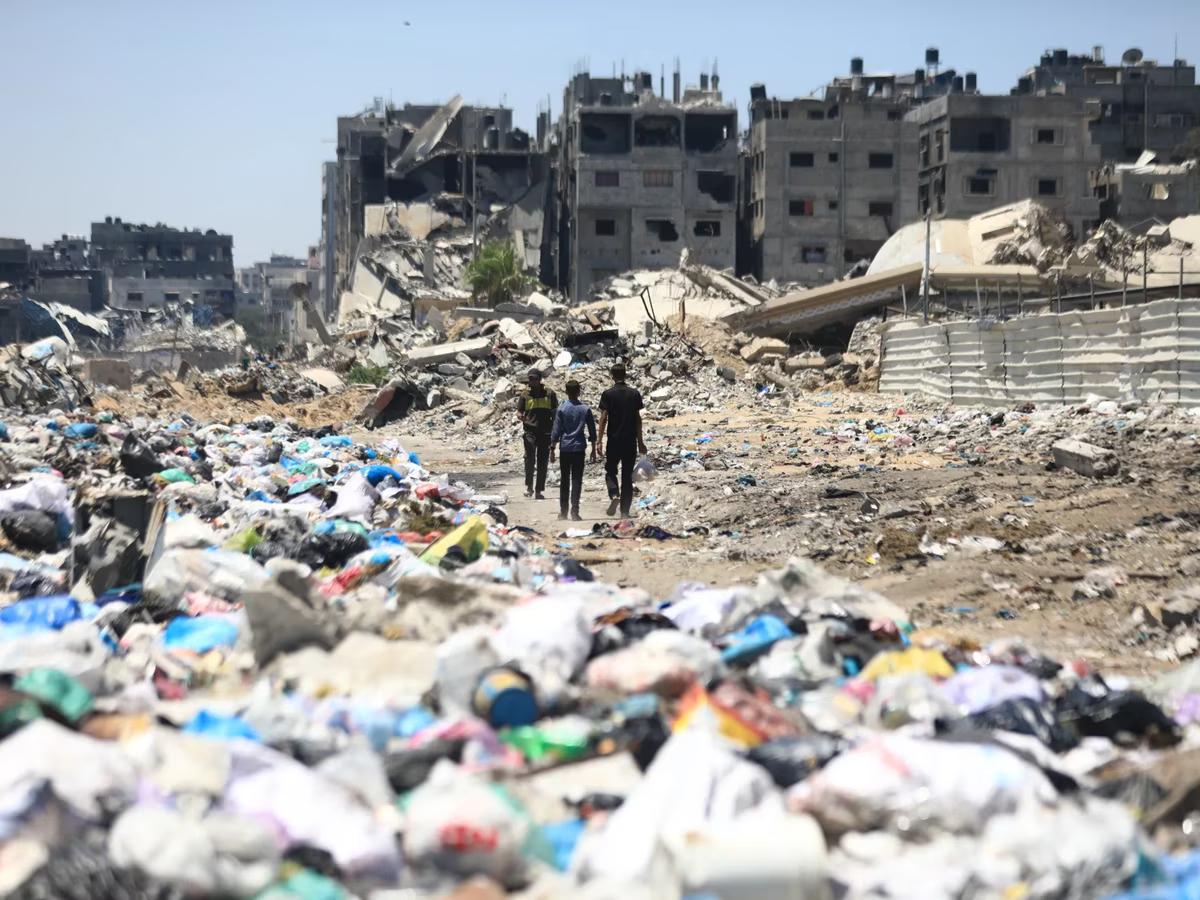
L’Express said Gaza is populated by “nearly 2.4 million people in an area of barely 360 square kilometers,” and it described displacement after infrastructure destruction, including “370,000 housing units destroyed by early May according to a UN report.”
It reported that “Hamas Health Ministry announced on Thursday, July 18, the presence of poliomyelitis in wastewater,” after tests conducted in coordination with UNICEF.
L’Express said the announcement was supported by the Israeli Health Ministry, which stated that samples were tested in a “WHO-accredited Israeli laboratory” and revealed “the presence of a poliovirus type 2, believed to have been eradicated since 1999.”
The outlet also said: “For now, no case of poliomyelitis has been detected in the Gaza Strip, said the WHO this Friday,” and it quoted WHO spokesperson Christian Lindmeier saying: “A rapid response is essential to prevent the spread of the virus.”
L’Express further reported that wastewater treatment in southern Gaza had not functioned since the Deir el-Balah pumping station stopped due to fuel shortages.
WHO damage, displacement, and calls to act
Multiple outlets tie the health crisis to the destruction of Gaza’s health infrastructure and the collapse of water and sanitation systems, while also emphasizing the scale of displacement and the need for medical and preventive supplies. Shafaq News said the WHO estimated damage to the health sector at about “$1.4 billion,” with “more than 1,800 facilities partially or completely destroyed,” including Al-Shifa, and it said more than “80% of displacement sites report skin diseases, including scabies, lice, and bedbugs.” Al Jazeera similarly described UN efforts constrained by the blockade, with UN spokesperson Stephane Dujarric urging “the entry of anti-lice shampoo, lotions, hygiene supplies, pesticides and insecticides” and warning that infections have “more than tripled” in March.
WAFA reported that the Palestinian Cabinet warned of the “onset of the outbreak of serious diseases among displaced people in the Gaza Strip,” driven by “the catastrophic impact of water contamination and the destruction of sewage systems,” and it called on the World Health Organization and “all relevant international bodies” to “take urgent action immediately” to provide “necessary medical and preventive supplies.” WAFA also said the Cabinet denounced Israeli government decisions about “new colonial roads in the occupied West Bank,” while it linked the disease spread to the “continued blockade on the entry of sanitation and hygiene supplies, medical materials, and essential equipment.”
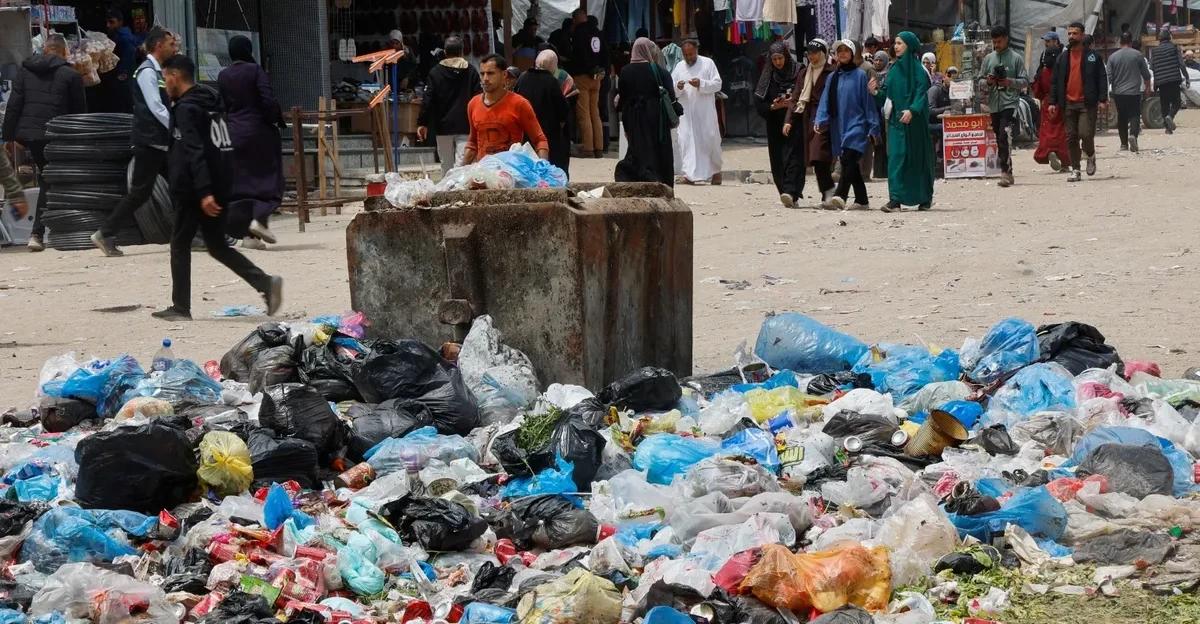
In parallel, Al Jazeera described how the crisis is affecting people in displacement sites and how the lack of medications and hygiene conditions makes treatment difficult, with Dr Salim Ramadan saying “medications are unavailable” and that “adequate nutrition, ventilation and hygiene” are lacking. Across the reporting, the immediate next steps described by officials and agencies center on access to hygiene supplies, pesticides, medicines, and laboratory equipment to contain outbreaks and protect healthcare workers.