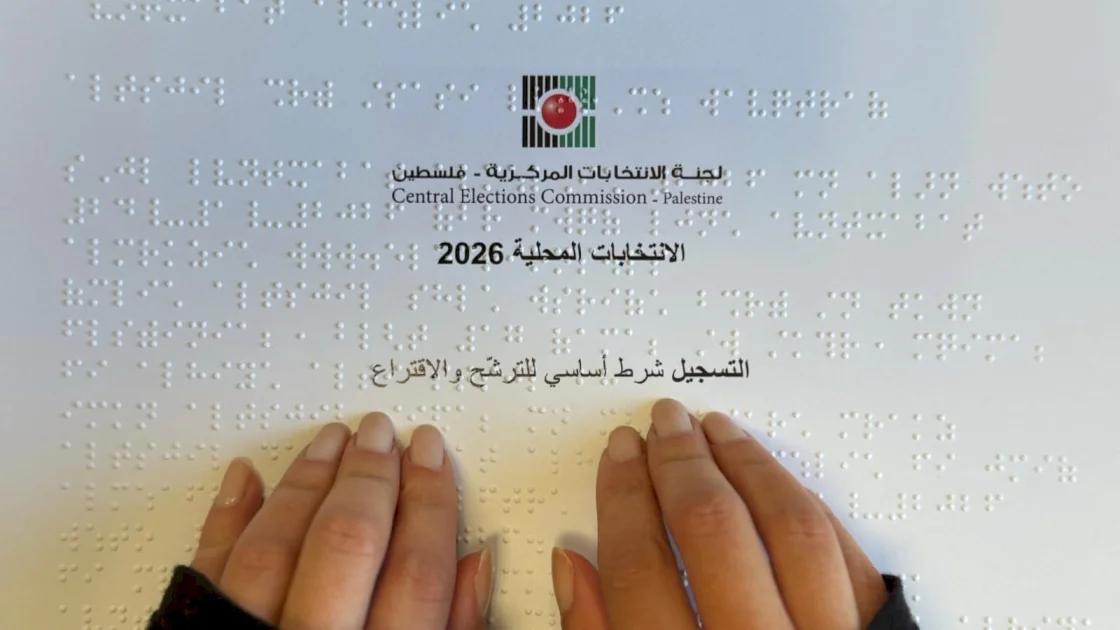
Palestinians Vote in Gaza’s Deir el-Balah and West Bank Municipal Elections
Key Takeaways
- Municipal elections held in West Bank and Gaza's Deir al-Balah, first since Gaza war.
- Over one million voters across 183 councils participate; Deir al-Balah has 70,000 eligible.
- Hamas barred from running; several factions boycott local elections.
First Gaza vote in 20 years
Palestinians in central Gaza and the occupied West Bank voted in municipal elections on Saturday, with polling stations opening at 7am (04:00 GMT) for 70,000 eligible voters in Gaza’s Deir el-Balah area, described as the first local vote held since the start of Israel’s “genocidal war on Gaza.”
The Gaza vote is the first electoral exercise in the besieged enclave in 20 years, and it is also the first time in about 20 years that a Gaza city held local elections, according to Haaretz.

The Ramallah-based Central Elections Commission chose Deir al-Balah because it is one of the few areas in Gaza not destroyed by Israeli forces, and NBC News said the city was spared an Israeli ground invasion.
Election officials and international reporting framed the single-city Gaza vote as largely symbolic, with Al Jazeera describing it as a “pilot” and NBC News calling it a “pilot” as well.
The Jerusalem Post reported that the Palestinian Authority local elections opened up their polls on Saturday, with 1 million Palestinians expected to vote, including 70,000 from Gaza, and that the polls would close by 7 p.m.
Reuters reporting cited by the U.S. News & World Report said the vote would gauge the political mood as Israel’s government seeks to destroy any future for a Palestinian state.
In Gaza, the process was constrained by the war and by access to materials, with Al Jazeera saying the commission was unable to send materials like ballot papers, ballot boxes or ink into Gaza, and NBC News adding that Israel had blocked the entry of materials like ballot paper, ballot boxes or ink into Gaza.
How the vote was shaped
The municipal elections were held under conditions shaped by the long political split between the Palestinian Authority and Hamas, and by the physical destruction of Gaza during the war.
Al Jazeera said Hamas won parliamentary elections in 2006 and seized control of Gaza from the Fatah-led PA a year later, and it added that Hamas did not put forth candidates for Saturday.

BBC reported that Hamas was not allowed to stand and that several other factions boycotted the elections over a requirement that candidates recognise the authority of the Palestinian Liberation Organisation (PLO), which dominates the PA.
The Jerusalem Post said the elections would be held in accordance with the new electoral law published on November 19, 2025, which established two different electoral systems, including proportional representation (open list) for municipal councils and a majority system (personal candidacy) for village councils.
It also reported that the elections represented the first one held in Gaza since Hamas expelled the Palestinian Authority in 2007, with the PA seeing this as an opportunity to show symbolic control of the enclave.
NBC News described the PA’s local races as part of an effort to politically link Gaza and the occupied West Bank, and it said the Central Election Commission campaigned under the slogan “We Stay.”
Al Jazeera said the commission had not coordinated directly with either Israel or Hamas ahead of the Deir el-Balah vote and had been unable to send ballot materials into Gaza.
NBC News added that the election commission relied on repurposed material for voting, using wooden ballot boxes and blue ink leftover from a vaccination drive last year.
The New Arab said the elections were organised by the Palestinian Central Elections Commission, a Ramallah-based body operating under the PA, and it described the Gaza vote as limited to Deir al-Balah because it is one of the few areas not heavily damaged during the war.
In addition, Anadolu Ajansı reported that Rami Hamdallah said the turnout in the local elections reached 15 percent in the first five hours, and it said polling ending times differed between Gaza and the West Bank, with polling ending at 5:00 PM in Gaza and at 7:00 PM in the West Bank.
Voices from the polling lines
As ballots were cast, voters and officials tied participation to services, rights, and the hope of political unity, while others questioned whether elections could change anything under occupation and war.
NBC News quoted Ashraf Abu Dan saying, "I came to vote because I have a right to elect members to municipal council so they can provide us with services," and it also included Khalid al-Qawasmeh’s view that "Municipal laws need to be enforced so people feel there's justice."
The Christian Science Monitor described Mohammed Reyati, a former UNRWA official running for office, saying, "For the first time in 20 years, people are exercising their democratic right to elect a municipal council that represents them," and it added that he said the process represented "life, stability, and peace – away from political divisions."
In Gaza, the Christian Science Monitor reported that Mohammed Reyati’s candidacy was part of a broader push for unity, and it quoted Jamil Khaldi, regional director of the Central Elections Commission in Gaza, saying, "All these issues require elected bodies that can act more effectively – both internally and externally – to secure funding and provide services to residents."
The BBC included comments from Mohammed al-Hasayna, who said after voting in Deir al-Balah that the election served as a sign of people’s "will to live," and it quoted him saying, "We want the world to help us overcome the catastrophe of war. Enough wars - it is time to work towards rebuilding Gaza,".
Reuters reporting cited by U.S. News & World Report included a voter, Mamdouh al-Bhaisi, 52, saying, "As a Palestinian and a son of the Gaza Strip, I feel proud that after this war the democratic process is returning," and it quoted candidate Munif Treish saying, "We hope that the procedure carried out today will be crowned with legislative and presidential elections."
At the same time, AFP reporting carried by the BBC and the New Arab included skepticism from Tulkarem businessman Mahmud Bader, who said, "The [Israeli] occupation is the one that rules Tulkarem. It would only be an image shown to the international media - as if we have elections, a state or independence,".
The New Arab also carried a voter quote from the Strip: "We want the world to help us overcome the catastrophe of war. Enough wars - it is time to work towards rebuilding Gaza,".
Different framings of the same vote
Coverage of the municipal elections converged on the basic facts of voting in Deir al-Balah and across the West Bank, but diverged in emphasis—particularly around symbolism, legitimacy, and the role of Hamas and the PA.
Al Jazeera described the Gaza vote as largely symbolic, with officials calling it a “pilot,” and it said Deir el-Balah was selected because it is one of the few areas not destroyed by Israeli forces, while also stressing that official policy decisions in occupied areas are not made without Israeli approval.

NBC News similarly called the Gaza vote a largely symbolic “pilot,” and it framed the vote as a test of public trust, noting that some polling places were busy while others appeared empty and that election officials reported 15% turnout as of 11 a.m.
The Christian Science Monitor framed the elections as a rare moment of hope and talk of Palestinian unity, saying the elections “called by the Palestinian Authority and allowed by Hamas” were being held in Deir al-Balah and coinciding with voting in the West Bank.
In contrast, BBC emphasized the political exclusion and the lack of unity, stating that Hamas was not allowed to stand and that several other factions boycotted the elections over the requirement that candidates recognise the PLO.
The New Arab described the elections as taking place under conditions of war, political division, and widespread public disillusionment, and it said Hamas is not formally participating while Reuters reported that its police were involved in security operations around polling stations.
The Jerusalem Post highlighted the PA’s framing of symbolic control, reporting that the elections were the first held in Gaza since Hamas expelled the PA in 2007 and that the PA saw it as an opportunity to show symbolic control of the enclave.
U.S. News & World Report, citing Reuters, framed the vote as a gauge of political mood as Israel’s government seeks to destroy any future for a Palestinian state, and it described the PA’s hope that the symbolic inclusion of Deir al-Balah would reinforce its claim to authority over the territory.
Anadolu Ajansı focused on process and logistics, quoting Rami Hamdallah on turnout and describing how the commission manufactured 100 ballot boxes inside Gaza using available materials after import from the West Bank proved impossible.
Across these accounts, the same election mechanics—Deir al-Balah as the sole Gaza site, the PA’s electoral reforms, and the constraints of war—were presented through different lenses of unity, legitimacy, and public trust.
What comes next
The municipal elections were presented by multiple outlets as a step that could shape future political processes, even as the vote’s limited scope underscored the constraints on governance.
Al Jazeera said the elections come amid a tightly restricted political landscape and deep public disillusionment, as the Palestinian Authority (PA) seeks to project reform and legitimacy amid growing public frustration over corruption, political stagnation and the absence of national elections since 2006.

It also said the vote is preparing to transition to a new governance structure under US President Donald Trump’s 20-point plan, which established a Board of Peace composed of international envoys and a committee of unelected Palestinians, intended to operate under it.
BBC described a fragile ceasefire in place as part of President Trump’s 20-point peace plan, which halted the fighting in October last year, and it said results were expected late on Saturday or on Sunday.
U.S. News & World Report, citing Reuters, said Western diplomats viewed local elections as a step towards the first national elections in nearly two decades and advance reforms to increase transparency and accountability that the PA says are under way.
It also reported that the PA has struggled to pay wages as Israel withholds tax revenues it collects on its behalf, raising fears of economic collapse, and it said Israel justifies withholding the funds in protest at welfare payments to prisoners and families of those killed by its forces.
The Christian Science Monitor described the elections as a step toward self-governance and a post-Hamas future, and it said the elections were seen as a chance for Palestinians in the coastal enclave to be united with their West Bank compatriots.
At the same time, the BBC and NBC News reported that turnout and contested races varied, with NBC News quoting election officials reporting 15% turnout as of 11 a.m. and BBC noting that Hamas was not on the ballot in Deir al-Balah while one slate was widely seen as aligned with it.
Looking ahead, the Jerusalem Post said the elections were the first of their kind since the October 7 massacre in 2023, and it reported that Hamas has said it will respect the results and that Hamas’s police would be deployed to secure polling stations in Gaza.
In the immediate aftermath, Reuters reporting cited by U.S. News & World Report said results were expected late on Saturday or on Sunday, and it quoted Munif Treish saying, "We hope that the procedure carried out today will be crowned with legislative and presidential elections," tying the municipal vote to the next stage of Palestinian elections.
More on Gaza Genocide

Israel Prevents Essential Materials as Aid Trucks to Gaza Fall After Iran War
11 sources compared

Israeli Police Detain Alex Sinclair, Cut Palestinian Flag From Kippah in Modi'in
10 sources compared

Israel Kills Lebanese Journalist Amal Khalil in Airstrikes on Al-Tiri Shelter
11 sources compared
Benjamin Netanyahu Says He Received Successful Treatment for Early-Stage Prostate Cancer
50 sources compared