Palestinians Vote in West Bank and Deir al-Balah as Hamas Is Barred From Standing
Key Takeaways
- Gaza’s Deir al-Balah and West Bank held elections, first Gaza vote in over two decades.
- Hamas barred from standing; competition limited amid boycotts.
- Final turnout around 53–54% across 183 councils.
Gaza’s first ballot in decades
Palestinians voted in local elections on Saturday across the occupied West Bank and in Deir al-Balah in central Gaza, with the Gaza vote described as the first poll of any kind in Gaza since 2006.
The BBC reported that Hamas was not allowed to stand, and that several other factions boycotted the election over a requirement that candidates recognise the authority of the Palestinian Liberation Organisation (PLO).

The BBC said elections took place across the occupied West Bank, as well as in Deir al-Balah, where Hamas operates, and that results were expected late on Saturday or on Sunday.
PBS, citing Associated Press reporting, described the Deir al-Balah vote as a largely symbolic “pilot” election, with officials saying it was part of the Palestinian Authority’s effort to politically link Gaza and the West Bank.
PBS also reported that Hamas did not field candidates in Deir al-Balah, and that the area was damaged by airstrikes but spared an Israeli ground invasion in more than two years of war.
In Deir al-Balah, the BBC said 12 polling stations were scheduled to operate, while PBS reported that more than 70,000 people were eligible to vote for the municipal government.
The Media Line similarly described the Deir al-Balah vote as the first Palestinian vote of any kind in Gaza in two decades, as the Palestinian Authority sought to show political legitimacy despite war and Israeli restrictions.
Rules, logistics, and eligibility
The election’s structure and eligibility rules were central to how the vote was conducted, with multiple outlets describing how the ballot was constrained by political and practical conditions.
The BBC said Hamas was not allowed to stand and that several other factions boycotted it over a requirement that candidates recognise the authority of the Palestinian Liberation Organisation (PLO).

It quoted the election law’s condition that candidates could only run if they committed to recognising "the Palestinian Liberation Organisation (PLO) as the sole legitimate representative of the Palestinian people, its political and national programme, and the relevant decisions of international legitimacy".
PBS reported that Abbas, 90, promoted the local races after reforms enacted last year, and that in January another decree required candidates to accept the program of the Palestine Liberation Organization, which leads the Palestinian Authority.
PBS also said the Central Election Commission chose Deir al-Balah because it was among the few parts of Gaza where elections would be organized after the war, and that it had to improvise because it was unable to conduct traditional voter registration.
Rami Hamdallah told PBS: "We're talking about geographically linking the West Bank and Gaza Strip," and said Israel blocked the entry of materials like ballot paper, ballot boxes and ink into Gaza.
Anadolu Ajansı added operational detail, saying counting began after polls closed at 7 pm local time in the West Bank and 6 pm in Deir al-Balah, where voting had been extended by one hour, and that 491 polling centers with 1,922 stations opened at 7 am to receive 1.03 million voters.
What voters said and officials promised
Voices from both Gaza and the West Bank reflected a mix of insistence on voting rights and skepticism about whether elections could change daily realities.
In Deir al-Balah, PBS quoted Ashraf Abu Dan saying, "I came to vote because I have a right to elect members to municipal council so they can provide us with services," linking the act of voting to local governance.
PBS also quoted Khalid al-Qawasmeh in the West Bank city of Beitunia saying, "Municipal laws need to be enforced so people feel there's justice," describing a desire for local decision-making.
The BBC included a statement from Mohammed al-Hasayna, who told AFP after voting in Deir al-Balah that the election served as a sign of people's "will to live" and added, "We want the world to help us overcome the catastrophe of war. Enough wars - it is time to work towards rebuilding Gaza,".
In the northern West Bank city of Tulkarem, PBS reported that businessman Mahmud Bader told AFP he had little hope for meaningful change, saying, "The [Israeli] occupation is the one that rules Tulkarem. It would only be an image shown to the international media - as if we have elections, a state or independence,".
The Media Line described the Palestinian Central Elections Commission saying polling in the West Bank ended at 7 p.m. Saturday and that preliminary results were expected Sunday afternoon from the commission’s headquarters in Al-Bireh.
The Media Line also reported that Fatah claimed a broad victory Sunday, including forming 197 municipal and village councils by consensus with other factions.
How outlets framed the same vote
Different outlets emphasized different implications of the same local election process, particularly around Fatah’s dominance, the absence of Hamas, and questions of legitimacy.
i24NEWS framed the outcome as raising questions about pluralism, saying the local elections “are reshaping the municipal landscape without a fundamental political change,” and describing “a near-complete absence of organized party competition.”
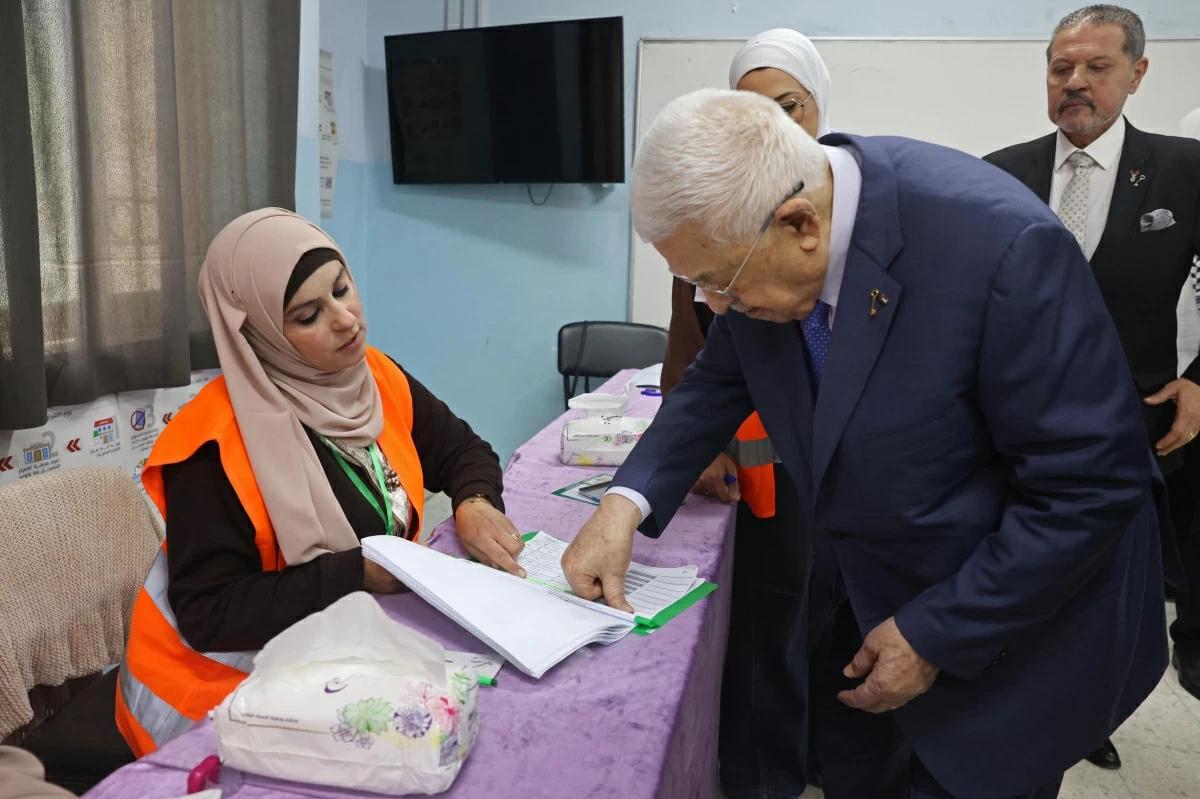
i24NEWS reported that the Palestinian Central Elections Committee announced about 1.5 million voters eligible to vote in the West Bank, in addition to roughly 70,000 voters in Deir al-Balah, and it said initial results showed a broad victory for Fatah-backed lists.
WAFA and PNN, describing final results, emphasized integrity and transparency, with WAFA saying Hamdallah told a press conference in Al-Bireh that the process was completed with integrity and transparency.
WAFA reported that women’s representation among winners reached 33 percent and that voter turnout reached 23 percent in Deir al-Balah, while turnout in the West Bank reached 56 percent.
The Media Line emphasized the election’s symbolic and practical value, saying local councils oversee “water, roads, electricity, waste collection, and building permits,” and it said voting was orderly with no major violations recorded.
Turnout figures varied across reports, with Anadolu Ajansı describing Deir al-Balah turnout as about 25% while Agenzia Nova reported 22.6 percent.
Results, representation, and next steps
As counting and results progressed, outlets described both the announced outcomes and the political and administrative steps expected afterward, tying the vote to longer-term questions about Palestinian unity and governance.
WAFA reported that the Central Elections Commission announced final results of local elections held in 183 local councils in the West Bank and in the city of Deir al-Balah in the Gaza Strip, and it said Hamdallah spoke during a press conference in Al-Bireh.

WAFA said voter turnout reached 23 percent in Deir al-Balah and that women’s representation among winners reached 33 percent, alongside invalid ballots at 4 percent, blank ballots at 1 percent, and valid ballots at 95 percent.
Prime Minister Mohammed Mustafa, according to WAFA, said the Ministry of Local Government will continue to support elected local councils and stressed that the Gaza Strip is an integral part of the State of Palestine and its people.
PNN echoed the final-results framing, saying Hamdallah said the commission treated the West Bank and Gaza Strip as a single geographic unit despite major challenges.
Anadolu Ajansı described the immediate administrative timeline, saying results from each polling station would be published, then consolidated and verified at central headquarters in Al-Bireh before being officially announced Sunday.
i24NEWS and The Media Line described the stakes differently, with i24NEWS emphasizing internal political boost and reduced competitiveness, while The Media Line emphasized practical governance importance under war and Israeli movement restrictions.
More on Gaza Genocide
Israeli Attacks Kill At Least Four Palestinians Across Gaza Despite Ceasefire
15 sources compared

Israel Prevents Essential Materials as Aid Trucks to Gaza Fall After Iran War
11 sources compared

Israel Strikes Continue as Iran, Hezbollah, and Hamas Remain Degraded Under Conditional Ceasefires
23 sources compared
Israeli Police Detain Alex Sinclair, Cut Palestinian Flag From Kippah in Modi'in
11 sources compared