Pentagon Announces U.S. Will Withdraw About 5,000 Troops From Germany in Six To Twelve Months
Key Takeaways
- The Pentagon will withdraw about 5,000 U.S. troops from Germany within 6–12 months.
- Trump says the cut will be far more than 5,000, signaling broader Europe retrenchment.
- NATO and Germany request clarification; German defense minister calls the withdrawal foreseeable.
Pentagon orders 5,000
The Pentagon announced that the United States will withdraw about 5,000 troops from Germany in the next six to 12 months, a move tied to President Donald Trump’s dispute with German Chancellor Friedrich Merz over the U.S. war with Iran.
NPR reported that Pentagon spokesman Sean Parnell said in a statement that the decision followed a “thorough review of the Department's force posture in Europe” and was “in recognition of theater requirements and conditions on the ground.”
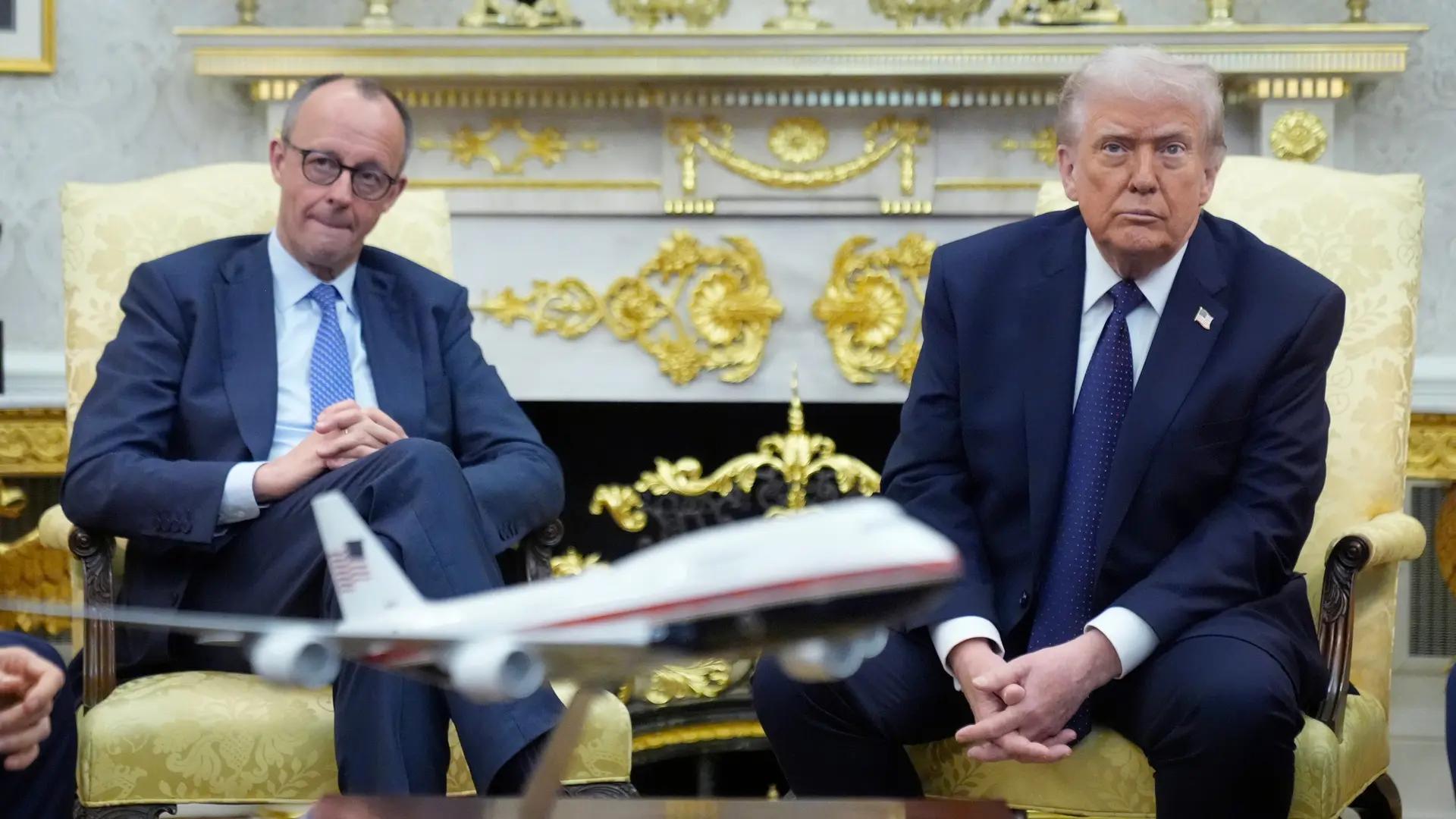
CBS News similarly said the Pentagon is planning to withdraw about 5,000 American forces from Germany and characterized it as a signal of Trump’s discontent with European assistance in the U.S.-Iran war.
CNN added that the Pentagon said the withdrawal would be completed over the next six to twelve months and quoted Parnell’s statement that “This decision follows a thorough review of the Department’s force posture in Europe.”
The NPR report placed the scale of the drawdown in context, saying the number of troops leaving Germany would be 14% of the 36,000 American service members stationed there.
BBC reported that Germany’s defense minister, Boris Pistorius, said the withdrawal was “foreseeable,” while NATO said it was seeking clarification from Washington.
In parallel, Trump escalated the rhetoric, telling reporters “We're going to cut way down, and we're cutting a lot further than 5,000,” as multiple outlets described his comments after the Pentagon announcement.
Merz, Iran, and escalation
The troop decision was framed by U.S. officials and U.S. reporting as connected to the broader Iran confrontation and the friction between Washington and Berlin.
NPR said Trump had threatened to withdraw some troops from the NATO ally earlier this week after Merz said the U.S. was being “humiliated” by the Iranian leadership and criticized Washington's lack of strategy in the war.

BBC reported that the latest spat was triggered by Merz’s comments to university students that “the Americans clearly have no strategy” and that “the entire nation” was being “humiliated” by the Iranian leadership.
CNN described Merz’s Monday accusation that the U.S. entered a war without a clear strategy, quoting Merz saying the “whole affair is ill-considered to say the least.”
CNN also said Trump responded by saying Merz “doesn’t know what he’s talking about” and that Merz was “interfering with those that are getting rid of the Iran Nuclear threat.”
In NPR’s account, Trump wrote on social media that the U.S. was reviewing possible troop reductions in Germany, with a “determination” to be made soon, and on Thursday posted that Merz should “spend more time on ending the war with Russia/Ukraine” and “fixing his broken Country” than concerning himself with Iran.
The NPR report also tied the troop withdrawal to the Pentagon’s force posture review and to “the U.S. war with Iran,” while BBC added that Trump had criticized Merz after Merz said the U.S. had been “humiliated” by Iranian negotiators.
Allies push back
Reactions from European leaders and NATO officials emphasized the alliance’s need for clarity and responsibility as the U.S. drawdown was announced.
BBC said Germany’s defense minister Boris Pistorius told DPA that the withdrawal was “foreseeable” and stressed that “the presence of American soldiers in Europe, and particularly in Germany, is in our interest and in the interest of the US.”
BBC also quoted NATO spokeswoman Allison Hart saying the alliance was “working with the US to understand the details of their decision.”
The Kyiv Independent reported that Poland’s prime minister Donald Tusk condemned the “disintegration” of NATO from within as Trump said further reductions in American troops stationed in Europe are coming, quoting Tusk: “The greatest threat to the transatlantic community are not its external enemies, but the ongoing disintegration of our alliance.”
In the same Kyiv Independent account, the U.S. Department of Defense announced May 1 that the White House will withdraw about 5,000 troops from Germany amid rising tension between Washington and Berlin over the U.S. war with Iran, and Trump said on May 2 “We're going to cut way down, and we're cutting a lot further than 5,000.”
Arab News reported NATO was seeking clarity as transatlantic rift widened and quoted NATO spokeswoman Allison Hart saying the move highlighted the need for Europe to boost defense spending and assume greater responsibility for its security.
DW added that Boris Pistorius said the announced withdrawal “was to be expected,” and DW included a military analyst, Marina Miron of King’s College London, saying there was “no way that Germany and other European countries which will be affected by this withdrawal, let's say Poland and the Baltics, can fill this capabilities gap.”
Congress and deterrence
U.S. lawmakers and defense-focused voices warned that the troop reduction could weaken deterrence and send a signal to Russia, while other analysts argued the U.S. presence supports broader power projection.
NPR reported that news of the troop withdrawal drew swift pushback from Democrats in Congress and a hawkish Washington think tank, saying Sen. Jack Reed of Rhode Island warned that the withdrawal “suggests American commitments to our allies are dependent on the president's mood.”

NPR quoted Reed saying, “The president should immediately cease this reckless action before he causes irreversible consequences for our alliances and long-term national security.”
NPR also cited Bradley Bowman, a scholar at the Foundation for Defense of Democracies, saying the U.S. military presence in Germany and elsewhere in Europe “not only strengthens deterrence against additional Kremlin aggression but also facilitates the projection of American military power into the Mediterranean, the Middle East, and Africa.”
CNN reported that Republican chairmen of the House and Senate Armed Services committees released a statement saying they were “very concerned” by the decision to withdraw 5,000 troops and urged the Pentagon to keep U.S. troops present in Europe by moving them to the east.
CNN quoted the lawmakers urging that allies “have made substantial investments to host U.S. troops … while strengthening NATO’s front line to help deter a far more costly conflict from ever beginning.”
Anadolu Ajansı reported that Sen. Roger Wicker and Rep. Mike Rogers voiced concern about the decision to withdraw a U.S. brigade from Germany, with the outlet quoting their statement that “We are very concerned by the decision to withdraw a US brigade from Germany.”
Numbers, bases, and next moves
The reporting also provided detailed figures on the U.S. footprint in Europe and described what would and would not change operationally, while other outlets discussed possible follow-on reductions beyond Germany.
“- NATO seeks clarity as transatlantic rift widens - Trump party mates warn move could embolden Russia WEST PALM BEACH, Florida: Donald Trump said Saturday the United States will cut troop numbers in Germany “way down,” signaling a deeper military pullback from Europe amid mounting tensions with allies over the Middle East war”
NPR said Germany hosts several U.S. military facilities, including the headquarters of its European and Africa commands, Ramstein Air Base and a medical center in Landstuhl, where casualties from the wars in Afghanistan and Iraq were treated, and it added that U.S. nuclear missiles are also stationed in the country.
CBS News said more than 36,000 active duty troops were assigned to bases throughout Germany as of last December, along with nearly 1,500 reservists and 11,500 civilians, and it said the withdrawals will not affect the transport or care of injured troops at Landstuhl Regional Medical Center.
CBS News also said the withdrawal will impact one brigade combat team in Germany and that a long-range fires battalion that was set to deploy to Germany later this year will also be reassigned.
BBC added that the U.S. military deployment in Germany is currently at more than 36,000 active duty troops and compared it with about 12,000 in Italy and 10,000 in the UK.
Stars and Stripes reported Trump said “Yeah, probably will” when asked whether he planned to pull some service members out of Italy and Spain, and it described Italy’s Navy European headquarters in Naples and Vicenza’s 173rd Airborne Brigade, as well as Spain’s Navy base in Rota and “the five destroyers there.”
DW reported that Ramstein-Miesenbach’s mayor said the base amounts to around 45,000 soldiers and their relatives, or some 54,000 US citizens in total, and DW said this brought some $2 billion (€1.7 billion) into the region per year.
More on USA

Former Employee Drives Explosives-Filled Car Into Multnomah Athletic Club, Kills Driver in Portland
11 sources compared

Donald Trump Reviews Iran’s 14-Point Peace Proposal as Israel Strikes Southern Lebanon
84 sources compared

Pentagon Orders Withdrawal Of 5,000 U.S. Troops From Germany
22 sources compared
Trump Pulls Casey Means Nomination, Names Nicole Saphier Surgeon General Replacement
19 sources compared