
USA · 01 May, 2026 · 6 min read
Pentagon Orders Withdrawal Of 5,000 U.S. Troops From Germany
Pentagon withdraws about 5,000 U.S. troops from Germany. Withdrawal tied to Trump-Merz dispute over Iran war policy.
Reason for the withdrawal (political feud vs. purely posture review).
10 of 12 outlets skipped it: newsweek provides a mapped, installation-by-installation accounting of U.S. sites and troop composition using Defense Manpower Data Center figures..
22outlets compared
Same story, two versions
tap a side to read it in full
BBC
“This decision follows a thorough review of the Department's force posture in Europe and is in recognition of theatre requirements and conditions on the ground,”Read the original ↗
DW
“Trump didn't like Chancellor Friedrich Merz's latest statements on the Iran war, that much was clear from Trump's recent rant on Truth Social, where he claimed the German leader "doesn't know what he's talking about!"”Read the original ↗
BBC emphasizes the Pentagon rationale (force posture and theatre requirements), while DW foregrounds the political trigger (Trump-Merz dispute), shaping how readers interpret intent and strategic seriousness.
Troops to Leave Germany
The Pentagon has ordered the withdrawal of about 5,000 U.S. troops from Germany, a move that has triggered alarm and debate across Washington and Berlin.
“The US Defence Department plans to withdraw 5,000 troops from Germany”
The BBC reported that the U.S. BDefence Department plans to withdraw 5,000 troops from Germany amid a spat between President Donald Trump and German Chancellor Friedrich Merz over the war with Iran.
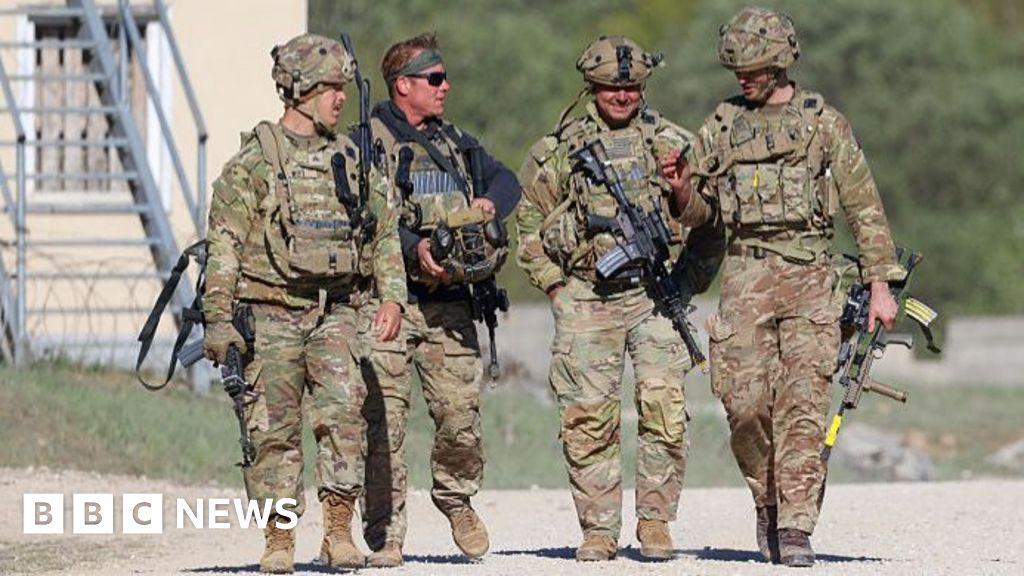
In a statement, Pentagon spokesman Sean Parnell said the order came from Defence Secretary Pete Hegseth and that it “follows a thorough review of the Department's force posture in Europe and is in recognition of theatre requirements and conditions on the ground,” with completion expected “over the next six to twelve months.”
Politico similarly said “Pentagon spokesperson Sean Parnell said in a statement that Defense Secretary Pete Hegseth ordered the withdrawal,” and quoted Parnell saying “We expect the withdrawal to be completed over the next six to twelve months.”
The Washington Post framed the decision as part of a feud between Trump and Merz over the U.S. war in Iran, saying the Pentagon is withdrawing about 5,000 troops from Germany.
DW added that by Friday, Defense Secretary Pete Hegseth had ordered the withdrawal of around 5,000 American troops over the next six to 12 months.
The scale of the drawdown is being measured against the size of the U.S. footprint, with the BBC saying there are “more than 36,000 active duty troops assigned” in Germany as of last December and dpa reporting that “around 39,000 troops are currently stationed in Germany.”B
Iran Spat and Strategic Rationale
The troop move is being tied in the reporting to a public clash over the Iran war and to Trump’s broader pressure on European allies.
The BBC said the decision came “amid a spat between President Donald Trump and German Chancellor Friedrich Merz over the war with Iran,” and described how Merz suggested the U.S. had been “humiliated” by Iranian negotiators.B

The BBC quoted Merz telling university students earlier this week that “the Americans clearly have no strategy” and that he could not see “what strategic exit” they might choose, adding that the “entire nation” was being “humiliated” by the Iranian leadership.B
Trump responded on Truth Social, where the BBC reported he said Merz thought it was “OK for Iran to have a Nuclear Weapon” and “doesn't know what he's talking about.”B
DW described Trump’s reaction to Merz’s Iran comments, saying Trump claimed the German leader “doesn't know what he's talking about!” and then threatened to reduce the U.S. troop presence in Germany.
Newsweek also said the Pentagon’s statement obtained by the outlet cited Germany’s “lack of support for the U.S. war in Iran” and said the withdrawal “follows a thorough review of the Department’s force posture in Europe.”
Politico added that the drawdown came after Trump “repeatedly complained that NATO countries had failed to assist the attack on Iran,” and that the Pentagon concluded its review of U.S. military posture earlier this year.
Berlin’s Response and NATO’s Role
German officials and NATO leaders have responded by emphasizing continuity, deterrence, and Europe’s responsibility for its own defense.
“the presence of American soldiers in Europe, and particularly in Germany, is in our interest and in the interest of the US”
The BBC quoted Defence Minister Boris Pistorius telling the German Press Agency in Berlin that “the presence of American soldiers in Europe, and particularly in Germany, is in our interest and in the interest of the US,” and it also said he made clear the decision did not come as a surprise.B
Newsweek likewise quoted Pistorius saying the “presence of American troops in Europe, particularly in Germany, serves the interests of both the U.S. and ourselves,” and it listed collaboration in Ramstein, Grafenwöhr, Frankfurt.
DW described Pistorius arguing that the American presence in Germany is “in the interest” of both parties because the troops serve for “collective deterrence” in the face of Russia’s perceived threat.
The AFP-based report in LNG in Northern BC said Pistorius commented, “It was expected that US troops would be withdrawn from Europe, and also from Germany”, and added, “We Europeans have to take greater responsibility for our security.”
NATO’s spokeswoman Allison Hart said NATO was working with the United States to understand the details, writing that it is “working with the United States to understand the details of its decision on the military device in Germany.”
The reporting also ties the German response to the broader NATO posture, with the LNG in Northern BC report saying Hart highlighted as “advance” the commitment adopted last year by European members of the Alliance to invest 5% of their respective GDPs in Defense, with the exception of Spain.
Numbers, Bases, and Competing Frames
Across outlets, the troop drawdown is described with different baselines and different emphasis on what the move means for U.S. military reach.
Politico said the drawdown “leaves about 33,000 troops there,” while the BBC said the U.S. has “more than 36,000 active duty troops assigned” in Germany as of last December and dpa said “around 39,000 troops are currently stationed in Germany.”B
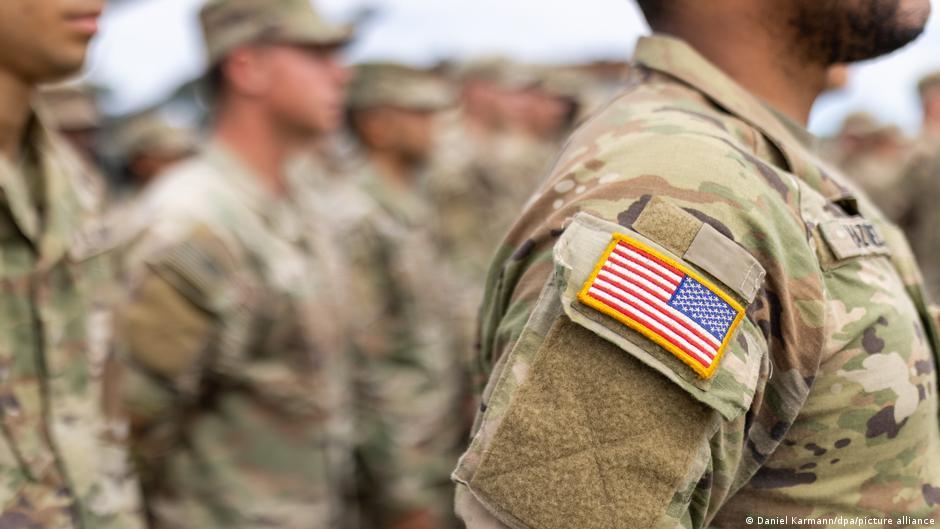
Newsweek cited U.S. Defense Manpower Data Center figures, saying “As of December 31, the U.S. Defense Manpower Data Center (DMDC) reported 36,436 active‑duty U.S. service members assigned in Germany,” and it broke that down by service, including “22,727 Army” and “12,628 Air Force.”
The Guardian provided a historical and operational framing, saying the U.S. footprint dates back to 1945 and that at the peak of the cold war the U.S. operated “about 50 major bases and more than 800 sites in Germany,” while also describing the bases as “vital forward-staging sites and logistical hubs.”
DW focused on specific installations and their functions, describing Ramstein as “the largest US military base outside the US” and as “NATO'scommand center for military airspace surveillance for all European partners,” while also describing Spangdahlem as hosting “around 20 F-16 jets.”
In contrast, the Washington Post emphasized the political dimension, saying the Pentagon’s withdrawal is “amid a feud between President Donald Trump and Chancellor Friedrich Merz over the U.S. war in Iran,” and it said the move drew “a rare rebuke from Republican lawmakers.”
Politico added that Brad Bowman said withdrawing troops would “primarily hurt the U.S. and benefit U.S. adversaries like Russia,” and it quoted Bowman saying “U.S. military posture in Europe, including in Germany, not only strengthens deterrence against additional Kremlin aggression but also facilitates the projection of American military power into the Mediterranean.”
What Happens Next
The reporting points to a defined timeline for the drawdown and to political and deterrence consequences that different actors interpret in different ways.
“We expect the withdrawal to be completed over the next six to twelve months.”
The Pentagon’s stated schedule in multiple outlets is that the withdrawal should be completed “over the next six to twelve months,” with BBC and Politico both quoting that expectation.

The BBC also reported that Trump has suggested pulling U.S. troops from Italy and Spain, saying when asked on Thursday whether he would also consider pulling U.S. troops from Italy and Spain, Trump responded: “I probably will - look, why shouldn't I?” and added, “Italy has not been of any help to us and Spain has been horrible.”B
Politico reported that Brad Bowman argued the withdrawal would “primarily hurt the U.S. and benefit U.S. adversaries like Russia,” and it quoted him saying the posture “facilitates the projection of American military power into the Mediterranean.”
At the same time, German officials and NATO leaders framed the move as a prompt for Europe to invest more in defense, with NATO’s Allison Hart saying the adjustment “underscores the need for Europe to continue investing more in Defense and assume a greater part of its responsibility for our shared security.”
The LNG in Northern BC report also said Hart highlighted as “advance” the commitment adopted last year by European members of the Alliance—except Spain—to invest 5% of their respective GDPs in Defense.
The Guardian added that under the 2026 National Defense Authorization Act, the U.S. “cannot let them fall permanently below 75,000,” underscoring that even with reductions, the U.S. posture is constrained.