Pentagon Orders Withdrawal of 5,000 Troops From Germany, NATO Seeks Details
Key Takeaways
- The United States will withdraw about 5,000 troops from Germany over the next year.
- NATO is assessing withdrawal details and working with the US on force posture in Germany.
- Germany's defense minister says the drawdown was foreseeable and Europe must bolster defense.
5,000 Troops, Europe’s Shock
The Pentagon announced it would withdraw about 5,000 troops from Germany, a move that NATO and European governments treated as a major test of transatlantic security.
“Home News Business Energy Opinion Lifestyle Sports Video Podcast Home News Business Energy Opinion Lifestyle Sports Video Podcast Close the sidebar Home News World News A Leopard 2 of the German army drives during an excercise on the Tag der Bundeswehr (Bundeswehr Day) at the Bundeswehr Logistics School at Lucius D”
NATO spokesperson Allison Hart said the alliance was “working with the U.S. to understand the details of their decision on force posture in Germany,” while the Pentagon said the decision followed a “thorough review of the Department’s force posture in Europe.”

German Defence Minister Boris Pistorius told dpa that the presence of American soldiers in Europe, and especially in Germany, is “in our interest and in the interest of the U.S.,” and he also said “We Europeans must take on more responsibility for our security.”
The withdrawal was scheduled to be completed “over the next six to 12 months,” according to the Pentagon, and multiple outlets tied the timing to the feud between Donald Trump and Chancellor Friedrich Merz over the U.S. war in Iran.
In Washington, Republican lawmakers issued a rare rebuke, with Senator Roger Wicker and Representative Mike Rogers warning that reducing American forces in Europe could “send the wrong signal” to Vladimir Putin.
In Germany, local reporting described the announcement as arriving like a “bombshell,” with Nadine Firmont saying, “I have to tell you I was honestly shocked.”
The Guardian also reported that the Pentagon’s plan would reduce troop numbers by 5,000 “in part by not deploying a battalion the Biden administration had planned to relocate there later this year.”
Iran Spat Drives the Move
The troop drawdown was presented across outlets as the product of a widening dispute between Washington and Berlin, with the Iran war at the center of the confrontation.
SWI swissinfo.ch reported that the Pentagon’s announcement followed a “cruce de declaraciones” in which Donald Trump criticized European partners for not supporting his campaign against Iran, and it described Friedrich Merz as telling Trump that Washington has “ninguna estrategia” in Iran and that Iran’s leadership has “humillado” the United States.

Trump responded by saying, “Él piensa que está bien que Irán se dote del arma nuclear. ¡No sabe ni de qué habla!,” and the same outlet said NATO was “trabajando con Estados Unidos para entender los detalles” of the decision.
Al Jazeera similarly linked the drawdown to tensions over the war on Iran, noting that Trump “feuds with European allies for not doing more to assist in the US-Israel war against Iran” and that he urged Merz to stop “interfering” over Iran.
The BBC reported that the U.S. move came after Trump criticized Merz for saying the U.S. had been “humiliated” by Iranian negotiators, and it quoted Merz’s claim that “the Americans clearly have no strategy.”
In Washington, PBS described the Pentagon’s action as fulfilling Trump’s threat as he clashed with Merz over the U.S. war with Iran, and it cited Pentagon spokesman Sean Parnell saying the decision followed a “thorough review” of force posture.
Even local German-focused coverage framed the drawdown as part of Trump’s broader pressure campaign, with Spectrum News 13 saying Trump “has lashed out at leaders like German Chancellor Friedrich Merz” over Iran.
Officials, Lawmakers, and Criticism
European leaders and NATO officials tried to frame the drawdown as manageable while insisting on greater European responsibility, but U.S. lawmakers and analysts pushed back on the message the move could send.
“NATO says it is assessing the details of the United States’s decision to withdraw about 5,000 troops from Germany, a key partner in the Western security alliance, amid tensions over the war on Iran”
Boris Pistorius told dpa that “The presence of American soldiers in Europe, and especially in Germany, is in our interest and in the interest of the U.S.,” and he added, “We Europeans must take on more responsibility for our security,” while Spectrum News 13 reported that he said the drawdown was expected.
NATO spokesperson Allison Hart echoed the same line, saying the adjustment “underscores the need for Europe to continue to invest more in defense and take on a greater share of the responsibility for our shared security,” and Al Jazeera quoted Hart saying NATO was “working with the US to understand the details.”
On the U.S. side, PBS quoted Senator Jack Reed warning that the withdrawal “suggests American commitments to our allies are dependent on the president's mood,” and it quoted Reed saying the president should “immediately cease this reckless action.”
The same PBS report included a hawkish counterpoint from Bradley Bowman of the Foundation for Defense of Democracies, who said the U.S. presence “not only strengthens deterrence against additional Kremlin aggression but also facilitates the projection of American military power into the Mediterranean, the Middle East, and Africa.”
In the Republican camp, Senator Roger Wicker and Representative Mike Rogers issued a statement opposing the decision, arguing that “Prematurely reducing America’s forward presence in Europe before those capabilities are fully realised risks undermining deterrence and sending the wrong signal to Vladimir Putin.”
NBC News added that Polish Prime Minister Donald Tusk called for reversing a “disastrous trend,” warning that “The greatest threat to the transatlantic community are not its external enemies, but the ongoing disintegration of our alliance.”
Even local German reporting captured the emotional stakes, with Nadine Firmont saying “We love our Americans” and arguing, “It would hurt.”
How Outlets Framed the Same News
While the core facts of a 5,000-troop drawdown and a six-to-12-month timeline were shared, outlets diverged in emphasis—some foregrounded the Iran dispute, others focused on deterrence signaling, and still others centered on the lived impact in German communities.
SWI swissinfo.ch foregrounded the transatlantic rupture, describing the decision as a “nuevo revés a las relaciones transatlánticas” and tying it to Trump’s criticism of European support in the campaign against Iran, while it quoted NATO’s Hart saying the shift “subraya la necesidad de que Europa siga invirtiendo más en Defensa.”
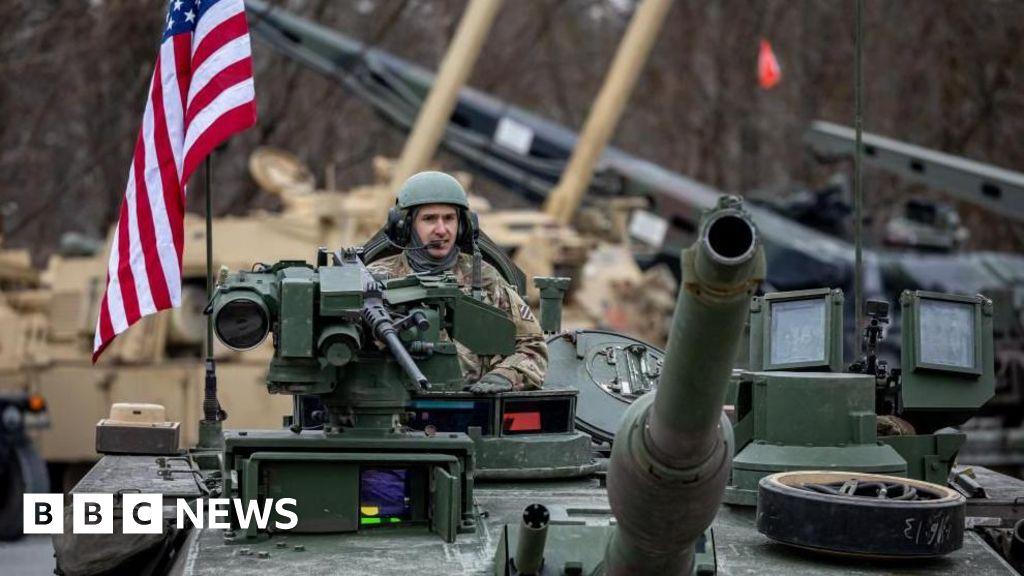
NBC News emphasized European alarm and the “disastrous trend” framing, quoting Pistorius that the withdrawal was “foreseeable” and quoting Tusk that “The greatest threat to the transatlantic community are not its external enemies, but the ongoing disintegration of our alliance.”
The Guardian, by contrast, centered on Landstuhl and the American military community, describing Nadine Firmont’s shock and her insistence that “It would hurt,” and it placed the drawdown in a local setting that included the Landstuhl spring carnival.
BBC and Al Jazeera both highlighted NATO’s effort to “understand the details,” but BBC also provided comparative troop figures, saying the U.S. deployment in Germany is “by far its biggest in Europe,” compared with “about 12,000 in Italy and 10,000 in the UK.”
PBS framed the decision as fulfilling Trump’s threat amid the Iran clash and included congressional pushback, while WRAL and Spectrum News 13 stressed the friction between Europe and Trump and the tariff dispute, including Trump’s claim that “We’re going to cut way down. And we’re cutting a lot further than 5,000.”
Even POLITICO.eu focused on Pistorius’s downplaying of impact, quoting him saying “if we are to remain transatlantic, we must strengthen the European pillar within NATO,” and it reported that the drawdown would still leave around 33,000 U.S. troops in Germany.
Across these accounts, the same announcement was repeatedly positioned either as a deterrence problem, a political message, or a community shock, depending on the outlet’s lens.
What Happens Next for NATO
The next phase of the drawdown is expected to unfold over six to 12 months, but multiple outlets described uncertainty about what exactly will change and what that means for NATO posture.
“Germany says US troop withdrawal 'foreseeable' as Nato seeks clarification Germany's defence minister has said the US decision to withdraw 5,000 troops from his country was "foreseeable", as the Nato military alliance says it is seeking clarification from Washington”
NATO’s Hart said the alliance was “working with the U.S. to understand the details,” while the Pentagon said the decision follows a “thorough review” and that it is “in recognition of theater requirements and conditions on the ground.”

BBC reported that Germany’s Pistorius called the withdrawal “foreseeable” and stressed that “the presence of American soldiers in Europe, and particularly in Germany, is in our interest and in the interest of the US,” even as NATO sought clarification.
PBS and WRAL both said Trump’s move would be completed over the next six to 12 months, and WRAL added that the Pentagon offered few details about which troops or operations would be affected.
The Guardian provided a local consequence lens, describing Landstuhl as hosting the largest overseas US hospital and placing the drawdown in a community of about 50,000 soldiers, support staff and family members, while it also said the U.S. had 68,000 active-duty military personnel assigned permanently in its overseas bases in Europe at the end of last year.
In Washington, PBS warned that the withdrawal could have “irreversible consequences for our alliances and long-term national security,” quoting Sen. Jack Reed, while Al Jazeera reported that Donald Jensen said the move could signal “a permanent change in that security architecture [of Europe].”
In Germany, the Jerusalem Post reported that the Pentagon’s decision means one full brigade will leave Germany and that a long-range fires battalion scheduled for deployment later this year will be canceled, framing the loss as a “particular blow to Berlin.”
Across these accounts, the stakes were presented as both operational—what changes in force posture—and political—whether the alliance’s deterrence message holds as the U.S. adjusts its footprint.
More on Europe
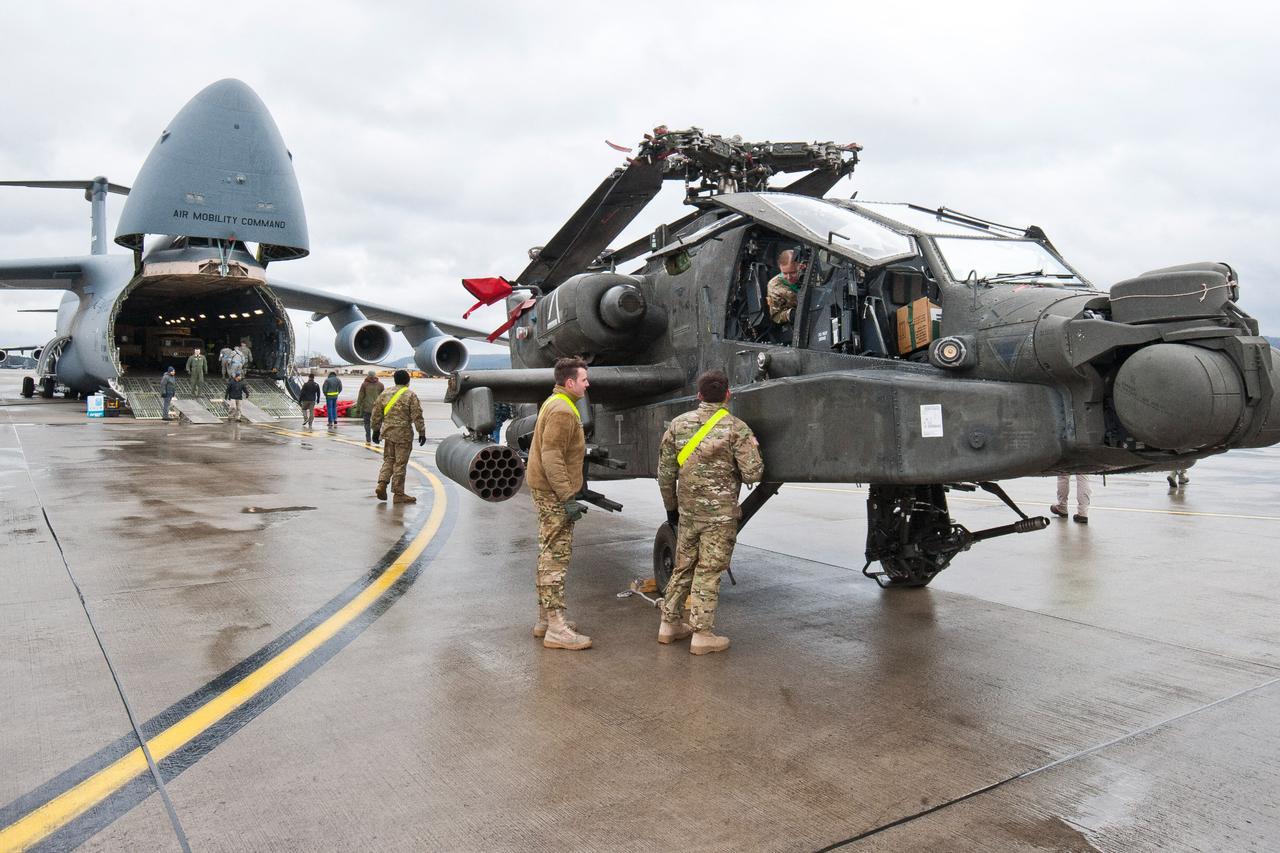
Boris Pistorius Says US Drawdown Of 5,000 Troops From Germany Should Spur Europe
11 sources compared

NATO Assesses US Plan To Withdraw 5,000 Troops From Germany Amid Trump Threats
26 sources compared
Tangier Med Port Prepares More Ship Arrivals as Strait of Hormuz Crisis Reroutes Traffic
12 sources compared

Venice Biennale Jury Resigns Nine Days Before Opening Over Russia and Israel Awards Ban
24 sources compared