
Pentagon Deploys Marines and USS Tripoli to Middle East After Iran Blocks Strait of Hormuz
Key Takeaways
- USS Tripoli and its attached 31st Marine Expeditionary Unit are heading to the Middle East
- Sources vary on force size, reporting between ~2,200 and up to 5,000 Marines deployed
- Deployment authorized after Iran's increased attacks and disruptions in the Strait of Hormuz
Deployment announced
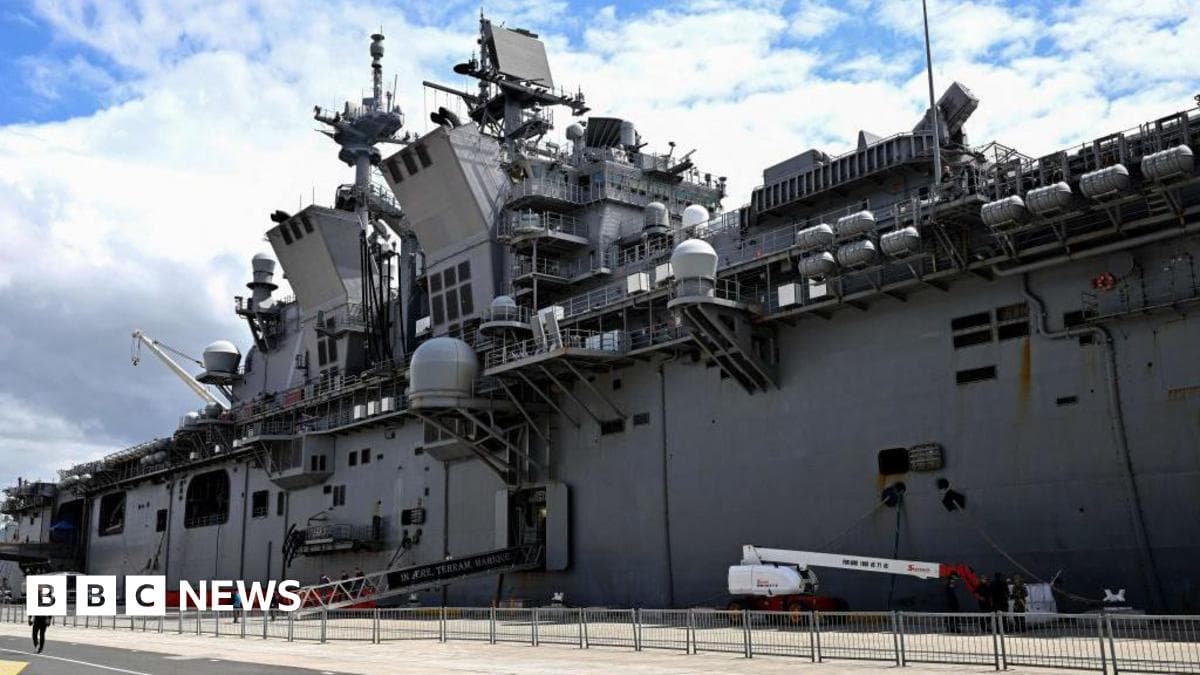
Multiple U.S. outlets and international wire services reported that the Pentagon is moving the Japan‑based amphibious assault ship USS Tripoli and an attached Marine Expeditionary Unit toward the Middle East in response to rising tensions with Iran.
“Pentagon moving more marines, warships to Middle East: Report Japan-based USS Tripoli and its attached Marines are now headed for Middle East, Wall Street Journal reports, citing 3 US officials WASHINGTON The Pentagon is weighing sending additional warships to the Middle East as Iran steps up its attacks in the Strait of Hormuz, the Wall Street Journal reported Friday”
The move was reported as a Pentagon deployment of the USS Tripoli and “thousands of military service members” to the region and was confirmed by a U.S. defense official to Fox News and Reuters‑style accounts, with most outlets saying the force package centers on the 31st Marine Expeditionary Unit and an amphibious ready group.

Defense leaders are said to have approved sending an element of an ARG and MEU after a request from U.S. Central Command, while the Pentagon declined to discuss operational movements publicly.
Reason: Hormuz attacks
The deployment is explicitly tied in reports to Iran’s stepped‑up attacks and disruptions in the Strait of Hormuz, a vital global energy chokepoint.
Outlets cite CENTCOM and U.S. officials saying Iran’s actions have ‘contested’ the strait and disrupted commercial traffic, with defence sources framing the naval movement as aimed at ensuring the strait does not “remain contested” and at restoring safe passage for merchant shipping.
Independent maritime data cited by European press show a collapse in normal transits through Hormuz since hostilities began, underlining the economic stakes behind the military repositioning.
Scale and uncertainty
Published reporting stresses uncertainty about the exact scale and composition of the movement: some accounts say roughly 2,200–2,500 Marines and the USS Tripoli are en route,
“It's only a few hours since a similar warning, when Iran and Hezbollah launched a joint strike”
while others note that an amphibious ready group and its attached MEU can typically be a larger, multi‑ship formation of about 5,000 Marines and sailors.
Several outlets flagged it was unclear whether the full Tripoli Amphibious Ready Group (all three ships) was moving together or whether only elements were being sent, and the Pentagon declined to confirm detailed movements for operational security.
Mission and capabilities
Reporting from U.S. and international outlets emphasized the flexibility and options a Tripoli‑based MEU provides: aviation‑heavy Tripoli decks can host F‑35s and helicopters for strike, sea control and air‑assault tasks,
while the MEU provides crisis response, evacuations and raids.

U.S. officials framed the move as giving commanders more options amid attacks on shipping and regional bases, and senior defence figures repeatedly said the United States has plans to keep the strait open and to respond to threats with the full range of maritime and expeditionary capabilities.
Regional impact
Beyond the military rationale, outlets highlighted immediate regional and economic effects: reporters linked the deployments to spikes in oil prices, a sharp drop in transits through Hormuz, cancelled regional sporting events, and rising casualty figures across multiple theatres.
“relations with regional allies and adversaries alike”
European and regional sources quantified the near‑shutdown of normal shipping through Hormuz and several outlets cited the wider human toll and instability since the wider conflict began two weeks earlier.

More on USA

US KC-135 crashes in western Iraq; six crew members killed, CENTCOM says
25 sources compared

FAA Orders Ground Stops at D.C.-Area Airports Over Strong Chemical Smell at Federal Aviation Facility
10 sources compared
FAA Grounds Flights at BWI, DCA, IAD After Strong Chemical Smell at Federal Facility
12 sources compared

Judge James Boasberg Blocks DOJ Criminal Probe of Federal Reserve, Deems It Trump Pressure Campaign
15 sources compared