USA25 April, 20268 min read
Pentagon Email Outlines US Plan To Suspend Spain From NATO Over Iran War Access
Pentagon email floated suspending Spain from NATO over its Iran-war stance. Memo proposed reviewing Britain's Falkland Islands claim amid Iran-related tensions.
New York Post was read line by line by the Watchdog: 2.0. See the score →
Pentagon email targets NATO
The dispute centers on an internal Pentagon email that, according to Reuters, outlines options for the United States to punish NATO allies it believes failed to support American operations in the war with Iran. The proposals discussed include suspending Spain from the alliance and reviewing the US position on Britain’s claim to the Falkland Islands, with the email describing access, basing and overflight rights as “just the absolute baseline for NATO.” Reuters reported that the note expresses frustration at allies’ reluctance or refusal to grant the US access, basing and overflight rights—known as ABO—for the Iran war.
“NATO WASN'T THERE WHEN WE NEEDED THEM, AND THEY WON'T BE THERE IF WE NEED THEM AGAIN.”
Pentagon Press Secretary Kingsley Wilson did not deny the existence of the email, stating, “As (US) President (Donald) Trump has said, despite everything that the United States has done for our NATO allies, they were not there for us.” Wilson added, “The War Department will ensure that the president has credible options to ensure that our allies are no longer a paper tiger and do their part.”
The BBC also framed the reported Pentagon memo as part of a broader pattern of attacks on the organisation by US President Donald Trump, including his questioning of NATO’s effectiveness and calling it a “paper tiger.” In parallel, the BBC said Trump posted on Truth Social after a meeting with NATO Secretary General Mark Rutte, writing: “NATO WASN'T THERE WHEN WE NEEDED THEM, AND THEY WON'T BE THERE IF WE NEED THEM AGAIN.”
Spain, ABO and the Iran war
Spain became the focal point of the reported punishment options after it refused to allow US aircraft to use its bases and airspace for attacks on Iran.
DW reported that Spain, along with Italy and France, did not allow US aircraft to use its bases or airspace to attack Iran, and it said Spanish Prime Minister Pedro Sanchez told reporters, “We do not work off emails. We work off official documents and government positions, in this case of the United States.”
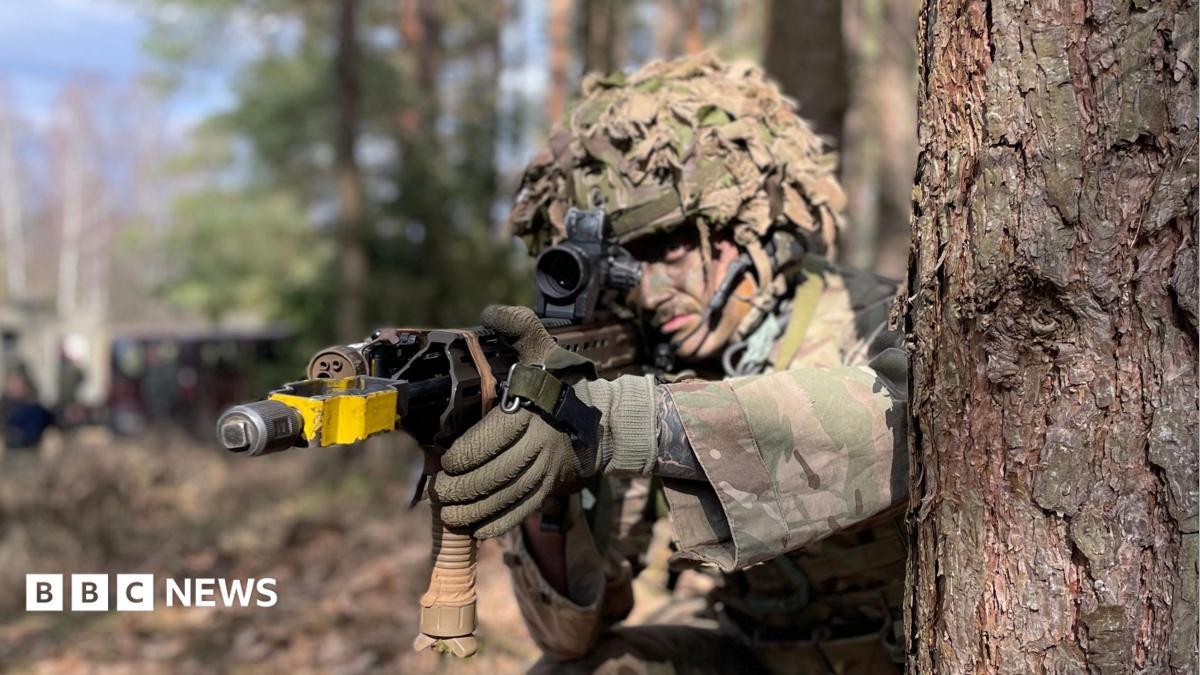
Euronews added that Defence Minister Margarita Robles and Foreign Minister José Manuel Albares confirmed publicly in early March that “the bases are not being used for this military operation,” with Albares telling Spanish public television on 2 March, “We will not lend our bases for anything that is not in the Treaty or consistent with the UN Charter.”
Euronews reported that Madrid later closed its airspace to all US aircraft involved in the war, and Robles said, “Neither the bases are authorised, nor, of course, is the use of Spanish airspace authorised for any actions related to the war in Iran.”
The same reporting tied the punishment discussion to the Strait of Hormuz, saying Trump criticized NATO allies for not sending their navies to help reopen the Strait of Hormuz, which was closed to global shipping following the start of the Iran war on 28 February.
Foreign Policy described the US military’s access to two key Spanish bases—Naval Station Rota and Morón Air Base—while noting that Spain refused to let US forces use their bases to launch attacks on Iran.
In the BBC’s account, Trump’s criticism followed “a series of attacks on the organisation” after the US and Israel attacked Iran in late February and Iran subsequently restricted shipping through the key Strait of Hormuz route.
NATO treaty limits and reactions
As the reported options circulated, multiple sources emphasized that NATO’s founding charter does not provide a mechanism to suspend or expel a member state.
“The alliance's founding charter provides no mechanism for expelling or suspending a member state.”
DW said, “Given that NATO operates by consensus, it is not clear how a potential suspension would work, as there is no mechanism to allow for such a step,” and it added that “According to NATO officials, the NATO treaty contains no provision for the suspension or expulsion of one of the alliance's members.”
Euronews similarly stated that “The alliance's founding charter provides no mechanism for expelling or suspending a member state,” and it pointed to Article 13 as the only article addressing exit, allowing voluntary withdrawal.
The BBC’s explainer on NATO’s core principles also described Article 5 and Article 4, noting that Article 5 says an armed attack against one or more members will be considered an attack against all, and it described Article 4 as a channel for members to bring issues of concern to the North Atlantic Council.
In response to the report, Spain’s leadership insisted the issue was not about emails, with Sanchez saying, “We do not work off emails. We work off official documents and government positions, in this case of the United States,” and he added, “Spain is a reliable member within NATO,” while also telling reporters, “As a result, I am absolutely not worried.”
DW reported that a German government spokesperson said, “Spain is a member of NATO. And I see no reason why that should change,” and it quoted Italian Prime Minister Giorgia Meloni saying NATO “must remain united.”
On the US side, Pentagon press secretary Kingsley Wilson framed the reported punishment as ensuring allies “do their part,” telling Reuters, “The War Department will ensure that the President has credible options to ensure that our allies are no longer a paper tiger and instead do their part.”
Falklands sparks UK-Argentina clash
The reported punishment options also reached beyond NATO’s internal politics into the Falkland Islands dispute, where multiple sources described a potential US review of support for Britain’s claim as retaliation for the UK’s lack of support during the Iran war.
Euronews said the internal Pentagon email outlined options including reviewing the US position on Britain’s claim to the Falkland Islands, and it reported that the email suggested putting US support for the UK’s claim up for review after the UK’s initial refusal to allow US aircraft deployed in the Iran war to use its bases.
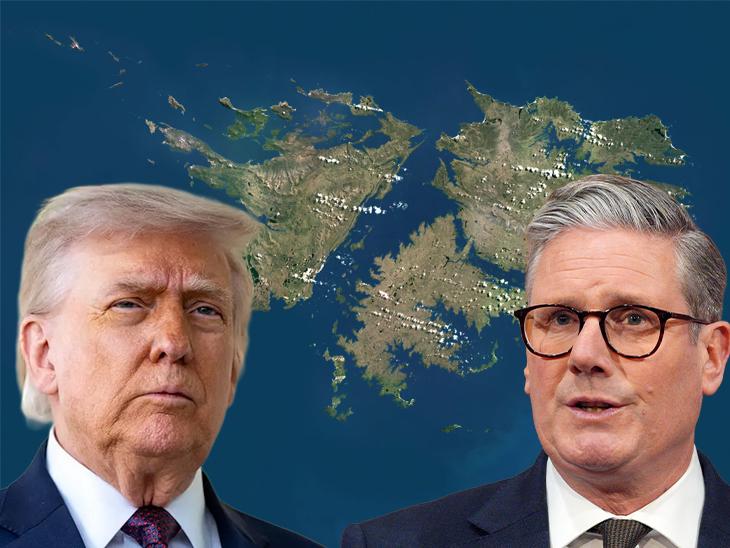
DW reported that a UK spokesperson said, “We could not be clearer about the UK's position on the Falkland Islands. It is long standing, it is unchanged,” adding, “Sovereignty rests with the UK and the islands' right to self-determination is paramount.”
The North Wales Chronicle described Argentina renewing calls for Falklands talks after reports the US could review its position in retaliation for Sir Keir Starmer’s lack of support for the war in Iran, and it quoted a Downing Street spokesman insisting, “The Falkland Islands have previously voted overwhelmingly in favour of remaining a UK overseas territory, and we’ve always stood behind the islanders’ right to self-determination and the fact that sovereignty rests with the UK.”
In the same reporting, Argentina’s foreign minister Pablo Quirno posted on X, saying: “The Argentine Republic once again expresses its willingness to resume bilateral negotiations with the United Kingdom that will allow for finding a peaceful and definitive solution to the sovereignty dispute and bring an end to the special and particular colonial situation in which they are immersed.”
The Falkland Islands government said it had “complete confidence in the commitment made by the UK Government to uphold and defend our right of self-determination,” and the North Wales Chronicle included comments from Falklands war veteran Simon Weston, who told BBC Newsnight: “I would hope that he would just kind of get him to back down and calm down over the Falklands.”
Foreign Policy added that the response to the Pentagon’s Falkland Islands threat appeared “more worrisome,” and it quoted a Starmer spokesperson: “Sovereignty rests with the U.K., and the islands’ right to self-determination is paramount,” while also reporting that far-right Argentine President Javier Milei said, “We are doing everything humanly possible so that the Argentine Malvinas, the islands, the entire territory return to the hands of Argentina.”
Stakes: alliance cohesion and leverage
The reported punishment plans raise stakes for alliance cohesion because they tie NATO membership and diplomatic support to wartime access decisions, while also colliding with the treaty’s lack of a suspension mechanism. Euronews described the email as “neither an official memo nor an executive order, but its contents carry weight as it circulates among senior commanders,” and it said one option envisioned suspending “difficult” countries from important or prestigious positions at NATO. Foreign Policy reported that the email was prepared by the Pentagon’s chief policy advisor Elbridge Colby and that it was not independently confirmed by the outlet, while also quoting Pentagon press secretary Kingsley Wilson’s response that allies “were not there for us.”
“The document is neither an official memo nor an executive order, but its contents carry weight as it circulates among senior commanders.”
DW emphasized that NATO operates by consensus and that there is “no mechanism to allow for such a step,” while also reporting that a German government spokesperson said Spain’s membership was not in question. At the same time, the dispute is framed as part of a broader US posture toward NATO, with the BBC saying Trump has questioned NATO’s effectiveness, calling it a “paper tiger,” and it described his Truth Social post after meeting Mark Rutte.

The Foreign Policy report also described how Trump’s threats and the email’s Falklands angle intersect with the UK’s hesitancy to grant access, noting that Keir Starmer ultimately relented to allow access for defensive missions, but that the hesitancy did not go unnoticed by Trump. The North Wales Chronicle added that Downing Street said it was confident the King and Queen’s state visit would “showcase the very best of the UK-US bilateral relationship,” even as it quoted political figures reacting to the US stance.