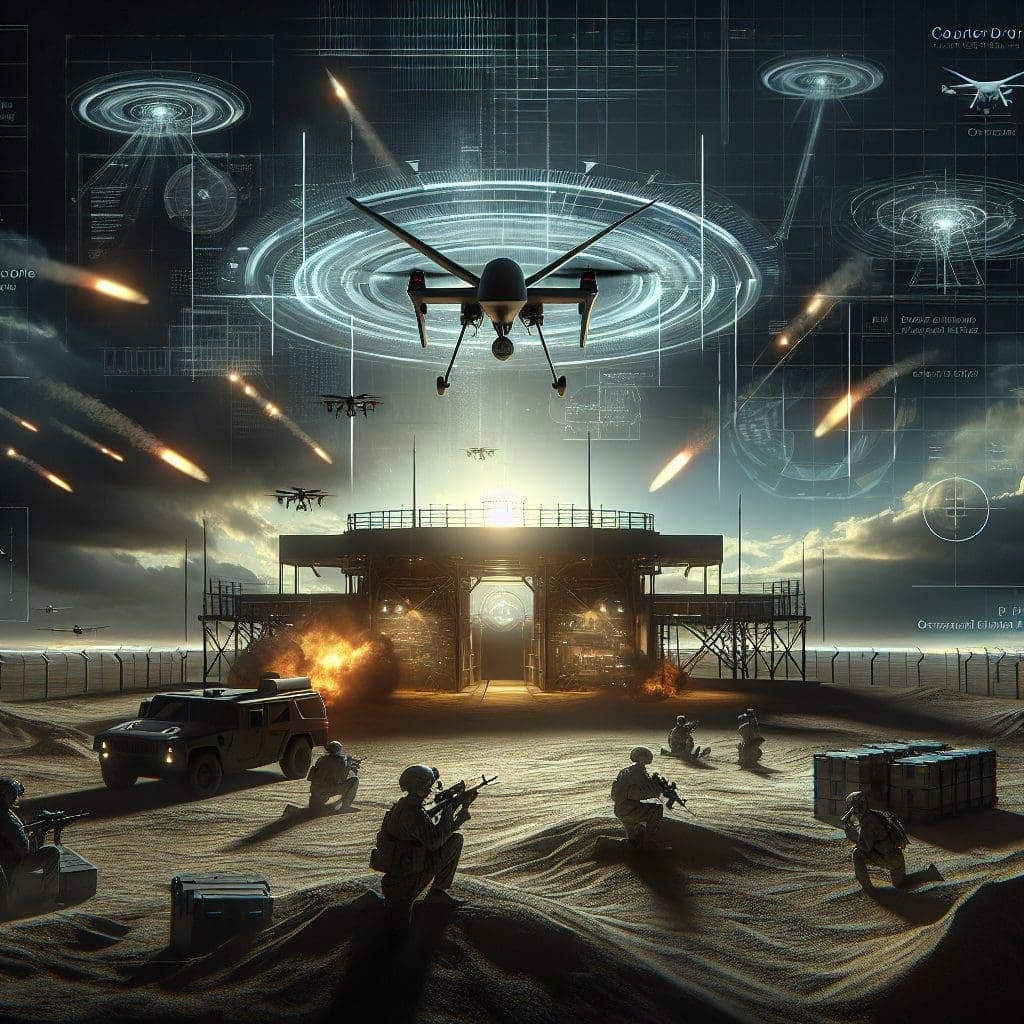
Pentagon Expedites Counter-Drone Technology Amid Iranian Swarms Challenging Missile Defenses and Other Major News Stories
Key Takeaways
- Pentagon expedites development and deployment of advanced counter-drone technologies.
- Intelligence reports say Iranian drone swarms have become increasingly sophisticated.
- U.S. program aims to bolster missile defenses against swarm and unmanned aerial threats.
Pentagon Response Launched
The Pentagon has expedited the development and deployment of advanced counter-drone technologies in response to increasing threats from Iranian drone swarms.
The initiative began this month and aims to bolster U.S. missile defense capabilities after intelligence reports highlighted the growing sophistication of Iranian unmanned aerial vehicles (UAVs).
Threats and Capabilities
Incidents involving Iranian drones targeting U.S. interests have led military officials to reassess existing defense strategies.
The proliferation of drone warfare has emerged as a game-changer, with adversaries using drones for reconnaissance and offensive operations that can circumvent traditional air defenses.
Pentagon sources say the acceleration involves enhancing existing missile systems, developing electronic warfare capabilities, and deploying directed-energy weapons because high-ranking military officials have expressed concern that existing missile defenses may struggle to cope with swarming tactics.
David D. Smith, a defense analyst at the Brookings Institution, said, "Iran has mastered the use of drones not just for surveillance but for multi-target strikes.
This calls for an urgent innovation in how we understand air defense."
The U.S. Department of Defense reports that Iranian UAVs have evolved to carry explosive payloads and have been used effectively in conflicts involving Hezbollah, the Houthis in Yemen, and others aligned with Iran, showcasing the pressing need for a comprehensive countermeasure strategy.
Technology and Allies
The Pentagon's campaign is supported by advancements in artificial intelligence and machine learning, which are crucial for developing systems capable of identifying, tracking, and neutralizing drone swarms through real-time data analysis.
The U.S. military is seeking partnerships with private tech firms to accelerate development.
International allies in Europe and the Asia-Pacific are developing similar capabilities, and NATO member states have reaffirmed their commitment to strengthening cooperative defense mechanisms against emerging aerial threats, underscoring a growing consensus on the need for adaptive forces.
Costs, Ethics, Implications
Budgetary concerns remain a significant challenge even as development is prioritized; the Pentagon's 2024 budget proposal allocates a more substantial portion of funding towards R&D in drone defense systems to keep pace with emerging technologies.
Experts emphasize that it's not just about technology but operational strategy—"It’s not just about technology; it’s also about operational strategy," says former Major General Alex Turner.
Policymakers and human rights organizations debate the ethical implications of counter-drone technologies, including the use of lethal autonomous weapons and the potential for collateral damage.
Following the Biden administration's decision to resume diplomatic talks with Iran on its nuclear program, tensions have heightened over concerns of Iran's missile capabilities, and U.S. officials aim to ensure that any agreements do not inadvertently empower Iran's drone manufacturing efforts.
The outcome of these developments will likely reshape not only U.S. defense postures but broader international security dynamics in the years to come.
More on Iran

Trump Says U.S. Bombed Military Sites on Kharg Island, Iran's Oil Hub
14 sources compared
FBI Warns of Iranian Drone Plot Based on Unverified Tip; California Says No Credible Threat
10 sources compared

White House Demands ABC Retract Report Claiming Iran Sought To Launch Drone Attacks On California
11 sources compared

Iranian Proxy Claims It Shot Down US Refueling Plane in Iraq; US Military Says Otherwise
17 sources compared