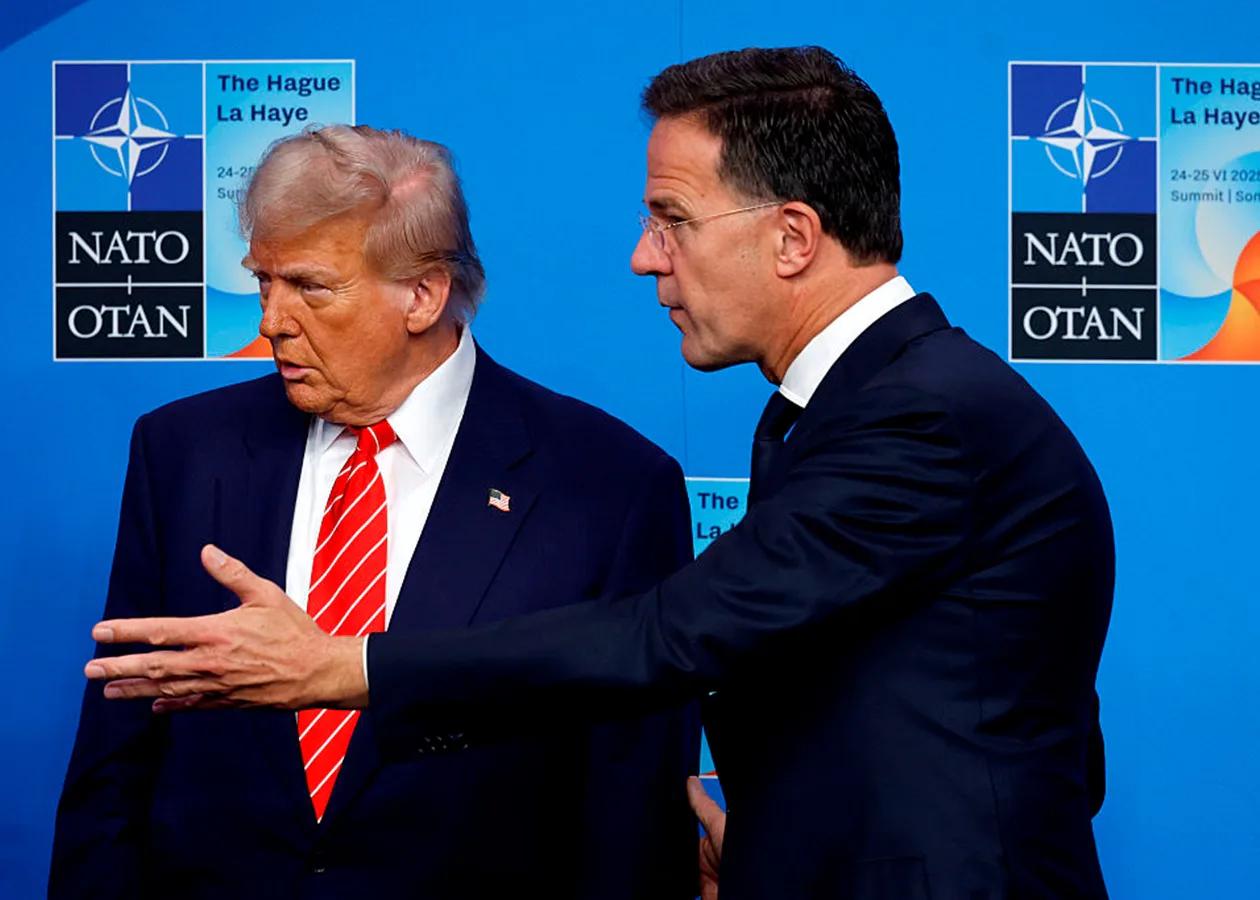
Pentagon Considers Suspending Spain From NATO Over Iran Disagreements, Sanchez Says
Key Takeaways
- Leaked Pentagon email floated suspending Spain from NATO over Iran stance.
- Spain's prime minister Sánchez downplayed the threat, calling Spain a reliable NATO member.
- NATO says there is no mechanism to suspend or expel members.
Spain rejects NATO suspension
A leaked internal Pentagon email has prompted a fresh dispute inside NATO after a report said the United States is considering punitive measures against allies it views as uncooperative over the war with Iran, including the possibility of suspending Spain from the alliance.
Spanish Prime Minister Pedro Sanchez said he was “not worried” and insisted, “We do not work off emails. We work off official documents and government positions, in this case of the United States,” ahead of an EU leaders summit in Cyprus.
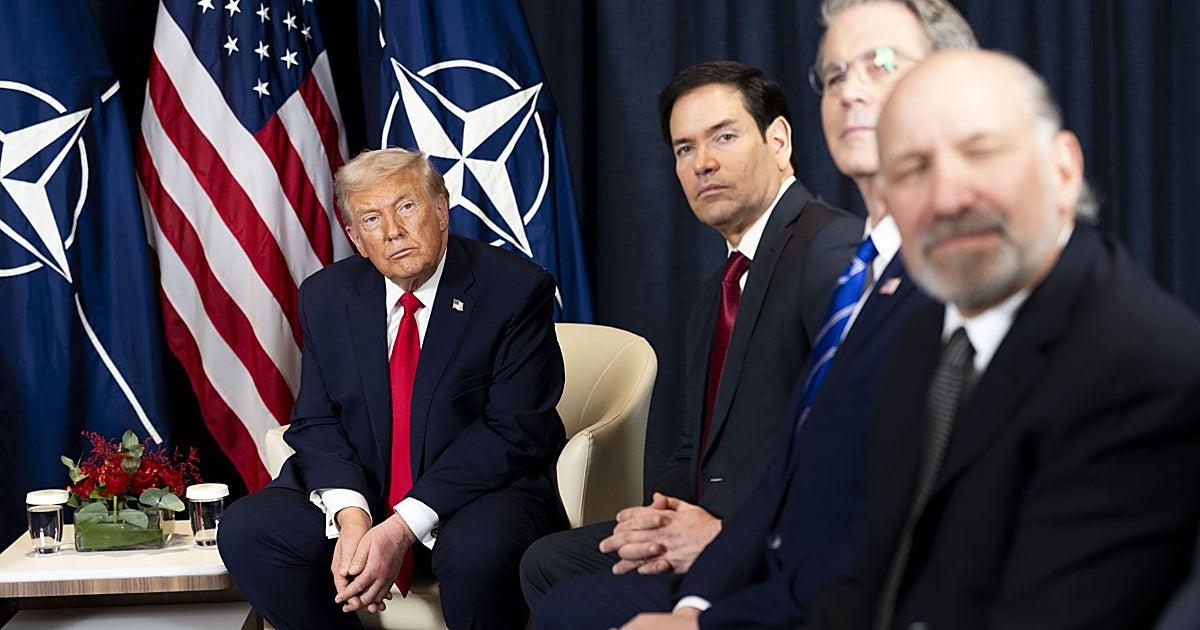
In Nicosia, Cyprus, Sanchez similarly told reporters, “We don’t base our decisions on emails; we base them on official documents and government positions,” while stressing Spain is a “loyal partner” that meets its “responsibilities” within the Alliance.
The BBC reported that NATO said there is “no provision” for member states to be suspended or expelled, quoting a NATO official that the alliance’s founding treaty “does not foresee any provision for suspension of Nato membership, or expulsion.”
Pentagon press secretary Kingsley Wilson responded to the report by saying, “As President Trump has said, despite everything that the United States has done for our NATO allies, they were not there for us,” and added, “We have no further comment on any internal deliberations to that effect.”
A German government spokesperson also said Spain’s NATO membership was not in question, telling reporters, “Spain is a member of NATO. And I see no reason why that should change,” as Italian Prime Minister Giorgia Meloni urged, “NATO must remain united.”
Iran war access and ABO
The reported Pentagon options are tied to disputes over access, basing, and overflight rights—known in the reporting as ABO—after Spain, along with Italy and France, did not allow US aircraft to use its bases or airspace to attack Iran.
DW said Spain “— along with Italy and France — did not allow US aircraft to use its bases or airspace to attack Iran,” and described the internal Pentagon email as outlining possible measures targeting NATO allies perceived as uncooperative.

Euronews said the leaked email described Washington’s “well-vented frustration in Washington with some NATO countries for blocking US forces from using air bases in their territories to refuel military aircraft, and from their airspace while en route to bomb Iran,” and it quoted an unnamed official saying the refusal for access to basing and overflight rights is “just the absolute baseline for NATO.”
Foreign Policy reported that the email, prepared by the Pentagon’s chief policy advisor Elbridge Colby, framed the access, basing, and overflight rights as “just the absolute baseline for NATO,” and said the punishments would respond to European nations’ reluctance or refusal to allow U.S. forces to use their bases to launch attacks on Iran.
The BBC added that Spain refused to allow the use of air bases on its territory for attacks on Iran, and it noted that the US has two military bases in Spain, Naval Station Rota and Morón Air Base.
In response to the broader pressure, Euronews said Spain denied the US access to use jointly-operated military bases on Spanish territory and rebuked the attacks in Iran as “unjustified and dangerous military intervention.”
Falklands as a retaliatory lever
Alongside the reported Spain-specific option, the Pentagon email also raised the prospect of reviewing US support for the UK’s claim to the Falkland Islands, a move framed as retaliation after the UK initially refused to allow US aircraft deployed in the Iran war to use its bases.
“An email has circulated within the United States Department of Defense laying out potential measures Washington could take against NATO allies it believes have not sufficiently supported its war on Iran, such as Spain and the United Kingdom, according to a US official quoted by the Reuters news agency”
DW said the email suggested “a review of the US stance on Britain's claim to the Falkland Islands,” and it described the context as the UK’s initial refusal to allow US aircraft to use its bases for the Iran war before London later granted permission for “defensive” missions.
The Reuters-based reporting in EL PAÍS similarly said the message “also suggested the United States could review its position on the British claim to the Falkland Islands, a U.S. official told the news agency,” and it described the frustration as tied to access and overflight rights.
Euronews said the leaked email “hints at pressure over defence spending” and that it considers “undermining US support for the UK's territorial control of the Falklands,” while also describing the Falklands as “longstanding European ‘imperial possessions’” in the broader framing.
POLITICO reported that the leaked Pentagon email suggests Washington could review its position on Britain’s claim to the Falkland Islands in retaliation for the U.K.’s refusal to participate in the war in Iran, and it quoted a Downing Street spokesperson saying the islands had “hugely voted overwhelmingly in favor of remaining a UK overseas territory.”
The BBC included a direct statement from a UK spokesperson insisting, “Sovereignty rests with the UK and the islands' right to self-determination is paramount,” and it added that the Falklands are known in Argentina as the Malvinas.
Legal limits and NATO unity
Multiple outlets emphasized that NATO’s founding treaty does not provide a mechanism to suspend or expel a member, even as the Pentagon email floated the idea of suspending Spain.
The BBC said a NATO official told it that the alliance’s founding treaty “does not foresee any provision for suspension of Nato membership, or expulsion,” and it added that NATO’s founding treaty has no mechanism for suspending or ejecting any of the members.
WTOP likewise said NATO operates by consensus and that “all 32 member countries must agree for it to act,” while noting that the trans-Atlantic alliance’s founding treaty has no mechanism for suspending or ejecting any members and that nations may leave of their own accord one year after notifying the other allies.
DW reported that “NATO operates by consensus,” and it said it was “not clear how a potential suspension would work,” because “the NATO treaty contains no provision for the suspension or expulsion of one of the alliance's members.”
TIME quoted a NATO official saying, “NATO’s Founding Treaty does not foresee any provision for suspension of NATO membership, or expulsion,” and it added that NATO has said there are no provisions to expel members.
Against that legal backdrop, leaders stressed unity: Giorgia Meloni told reporters, “NATO must remain united,” and Kaja Kallas said she was “puzzled” by US criticism and argued the bloc had met US requests with “exactly what we are able to offer.”
Consequences for Europe’s planning
The reported email and the public back-and-forth are unfolding as NATO and European leaders debate how to respond to the Iran war and how to plan for security without assuming US support will be automatic.
DW said Sanchez was one of the few European leaders to criticize the US-Israeli attack on Tehran that sparked the war, condemning it as a breach of international law, and it reported that Sanchez said Spain would cooperate “always within the framework of international legality.”
WTOP described the broader context as the EU leaders debating how best to use European laws to come to each other’s aid should one member come under attack, with Cypriot President Nikos Christodoulides saying leaders tasked the European Commission to “prepare a blueprint on how we respond” under Article 42.7 of the EU treaties.
WTOP added that Article 42.7 had only been used once, by France after the Paris terror attacks in 2015, and it said EU envoys and ministers were set next month to conduct “table-top exercises.”
In parallel, BBC reported that US Defence Secretary Pete Hegseth used a news conference to again take aim at European allies, saying, “We are not counting on Europe, but they need the Strait of Hormuz much more than we do,” and he added, “Europe and Asia have benefitted from our protection for decades, but the time for free riding is over.”
TIME similarly warned that even the suggestion of a US exit “has caused a lot of damage,” quoting Ilaria Di Gioia saying, “The very idea of a U.S. exit erodes trust, cohesion, and the credibility of collective defense.”
More on Europe

Russia Suspends Kazakh Oil Transit to Germany via Druzhba Pipeline Starting May 1
13 sources compared

EU Foreign-Born Population Reaches Record 64.2 Million in 2025, Germany Hosts Nearly 18 Million
10 sources compared

Germany and Italy Block EU Push to Suspend Israel Association Agreement in Luxembourg
20 sources compared

European Court Of Justice Strikes Down Hungary’s 2021 Anti-LGBTQ Law For Breaching EU Values
21 sources compared