Other21 April, 20268 min read
Pentagon Seeks $1.5 Trillion for Golden Dome, Drones, and Counter-Drone Systems in Fiscal 2027
The FY2027 request totals $1.5 trillion, the largest in US modern history. Drones and counter-drone systems receive the biggest investment, including AI-enabled warfare tech.
Pentagon’s Drone Budget Surge
The Pentagon is seeking a record $1.5 trillion defense budget request for fiscal 2027, and multiple outlets tie the centerpiece of that plan to a major expansion of drone warfare and counter-drone technology. Ars Technica says the request includes “the largest investment in drone warfare and counter-drone technology in US history,” and it specifies that the Pentagon is requesting $53.6 billion for autonomy, drone platforms, and contested logistics, plus $21 billion for munitions and counter-drone systems. DefenseScoop similarly reports that the Pentagon asks Congress to approve $1.5 trillion in total funding, including $1.15 trillion through yearly appropriations and $350 billion via reconciliation, while emphasizing that “Drone warfare is rapidly reshaping the modern battlefield.”
AP frames the same push as a drive to “triple spending on drones and related technology to more than $74 billion,” and it links the drone push to air defenses and fighter jets used in the Iran war. The Hill adds that the request includes a new “presidential priorities” category and says the budget “will be the largest investment in military capabilities in over a generation,” with Hurst describing it as steering “our homeland and military advantage” through Golden Dome, drone dominance, and space superiority.
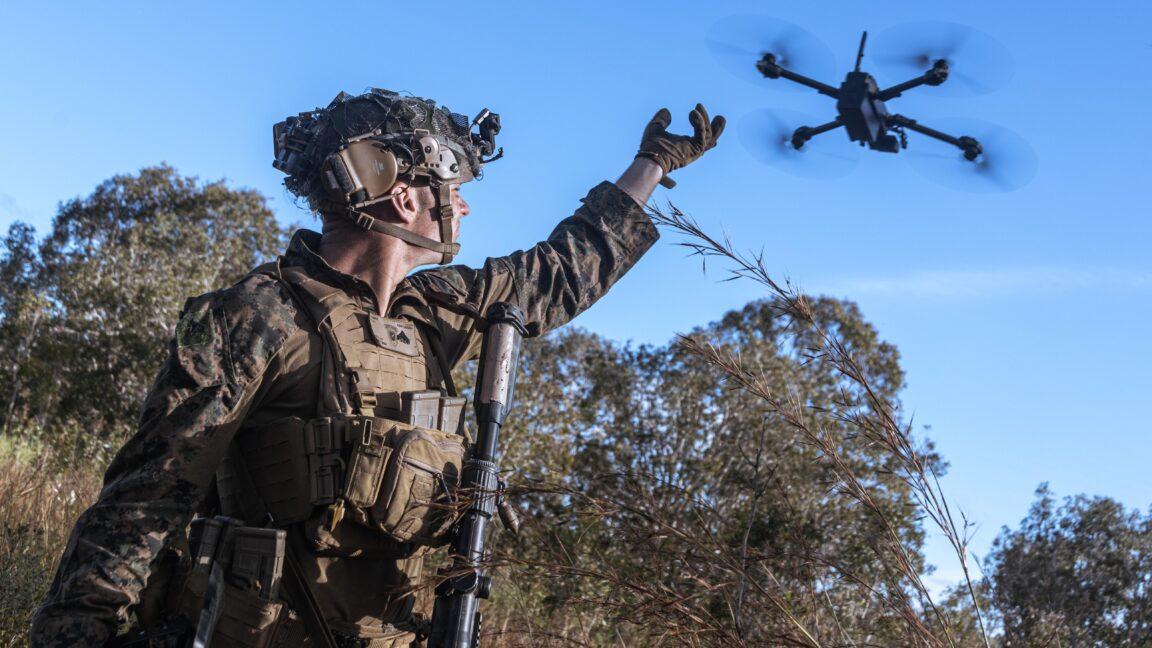
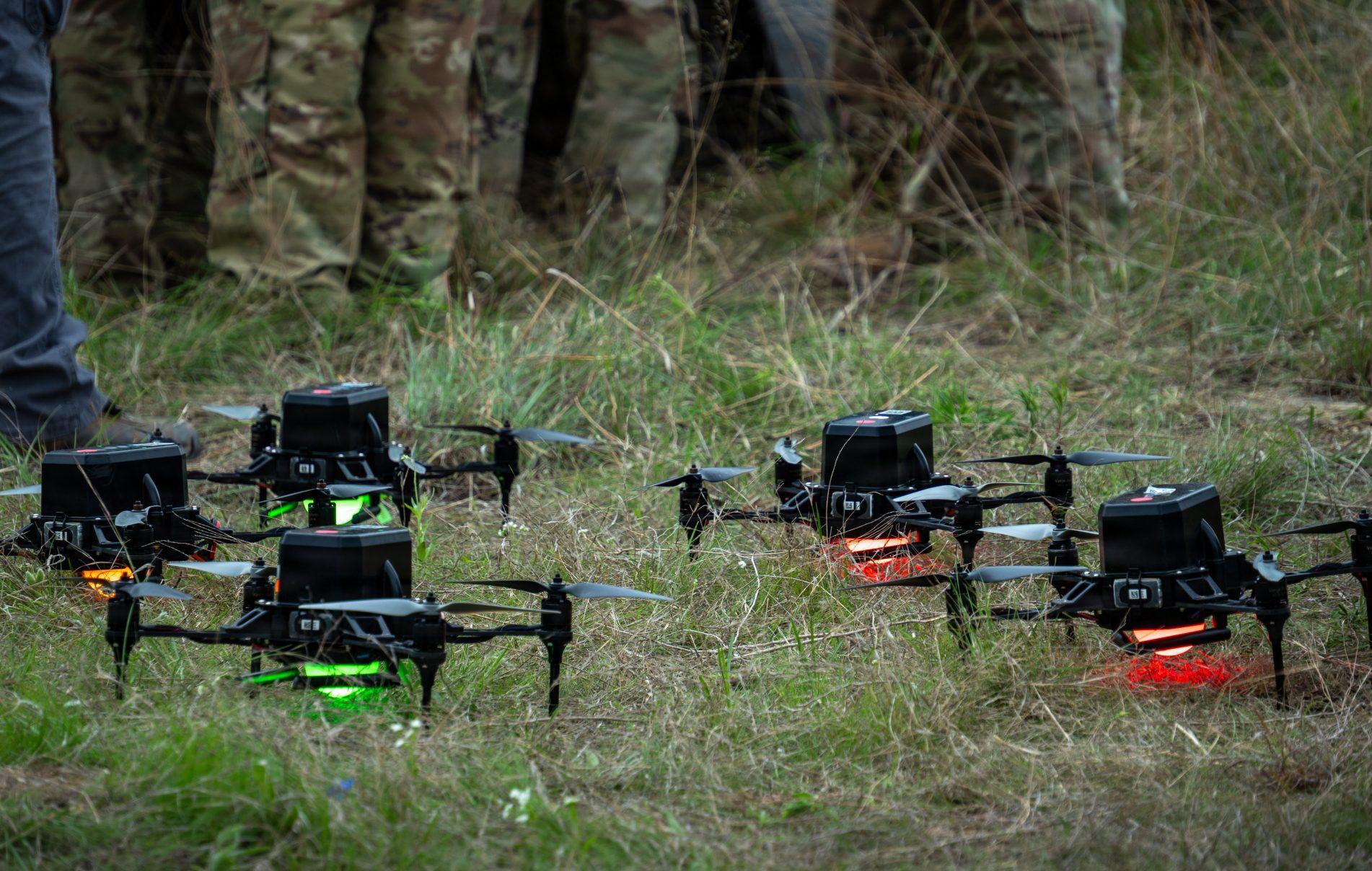
In the middle of these figures, several outlets converge on the Defense Autonomous Warfare Group (DAWG) as the mechanism for the drone push, with Ars Technica describing DAWG as a “pathfinder” and DefenseScoop and Breaking Defense describing it as a replacement for the Biden-era Replicator initiative. Across the coverage, the Pentagon’s drone plan is presented as both a procurement and integration effort, with officials describing rapid iteration and testing alongside companies rather than only long-horizon research.
DAWG, Replicator, and Numbers
A central thread across the reporting is that DAWG is being funded far more heavily than it received in fiscal 2026, and outlets provide competing but related figures for the scale of the increase. Ars Technica says DAWG was “established in late 2025” and that it would see a massive budget increase after receiving “about $226 million in the 2026 fiscal year budget,” while also stating that the FY2027 request includes $53.6 billion for drone and autonomy technologies under the FY2027 budget proposal. DefenseScoop and Breaking Defense both describe a more dramatic percentage jump, with DefenseScoop saying a document reveals a “more than 24,000% boost” for DAWG from $225.9 million received in fiscal 2026 to up to $54.6 billion requested in fiscal 2027.
Breaking Defense puts the DAWG request at “$54.6 billion ask for research and development dollars in the FY27 budget request,” specifying “$1 billion in the base budget and the remaining $53.6 billion coming from the more flexible future reconciliation pot.” Advisor Perspectives, drawing on Bloomberg News, describes the Pentagon’s largest-ever budget request as earmarking $75 billion for drones and counter-drone technologies and says DAWG would receive $54.6 billion from just $225.9 million this year, calling it “the largest single year-over-year boost of any defense program or office.” Ars Technica also quotes Jules Hurst describing DAWG as “a pathfinder—they’re out there finding the best technology for us and working on integration,” and it adds that DAWG is “with these companies, live right now, testing different systems and orchestration tools for autonomy, and they’re giving them live feedback.”
DefenseScoop similarly quotes Hurst saying “I think of the DAWG as a pathfinder,” and it adds that Whitney said the department is funding DAWG with “research and development-type money” because the hub is focused on “incremental capability.” The coverage also ties DAWG to the Biden-era Replicator initiative, with DefenseScoop describing DAWG as a successor to facilitate accelerated plans to purchase and deploy thousands of attritable drones, while Breaking Defense says DAWG “essentially absorbed the Biden-era Replicator initiative designed to acquire thousands of low-cost ‘attritable’ drones.”
Iran War Link and Air Defenses
Several outlets explicitly connect the drone and counter-drone spending to the Iran war, while others emphasize that the budget blueprint was developed before the conflict.
AP says the spending blueprint was developed before the conflict in the Middle East and that officials “did not discuss how much they will request in additional funds for the war,” while still describing the drone and air-defense systems as “a key part of fighting the Iran war.”
AP also identifies missile interceptors under strain, saying the Patriot and the Terminal High Altitude Area Defense, or THAAD, air defense systems are “the missile interceptors whose numbers are under the most strain,” and it adds that both were used “to shoot down cheap Iranian drones.”
AP further states that the $30 billion budget item would aim to purchase long-range Precision Strike Missiles and Mid-Range Capability missile systems used by the U.S. Army, and it says the proposal would allocate nearly $54 billion for military drones and related technology plus $21 billion for weapons systems designed to take down enemy drones.
The Hill similarly says the budget “notably does not include funding for the ongoing war in Iran as it was formulated before the U.S. went into the conflict,” and it quotes Hurst saying it was not reflected in the request.
Military Times adds that the funding surge was drawn up prior to Operation Epic Fury on Feb. 28 and therefore is “not expected to focus on the needs of the campaign against Iran,” while also noting Defense Secretary Pete Hegseth has indicated the Pentagon would seek roughly $200 billion in supplemental funding to sustain the Iran operation and replenish inventories.
The Hill also states that Trump is expected to request between $80 billion and $100 billion in supplemental funding for Iran operations, and it reports that the conflict began on Feb. 28 and is “in the midst of a ceasefire” that Trump extended on Tuesday.
Congressional Path and Scrutiny
The drone spending surge is also portrayed as a political and procedural challenge for Congress, especially because parts of the DAWG request are placed into reconciliation rather than regular appropriations. Advisor Perspectives says the Pentagon is requesting $1 billion in regular discretionary spending while “the rest of the funding is requested as mandatory spending,” and it explains that Congress would have to include the funding in a budget reconciliation bill that a Republican majority could pass on a party-line vote. Breaking Defense similarly describes the DAWG request as split between “$1 billion in the base budget” and “the remaining $53.6 billion coming from the more flexible future reconciliation pot,” and it frames this as a gamble because mid-term elections could change the prospects for future reconciliation bills.
DefenseScoop adds that officials have been tight-lipped about DAWG’s progress and functions since it was established in 2025, and it notes that the DAWG boost is likely to draw scrutiny because it is a more than 24,000% increase. Advisor Perspectives quotes Todd Harrison of the American Enterprise Institute saying, “The first thing I will be looking for” in the new information “is a better description of what specifically” the working group will actually spend that money on. The Hill describes the overall structure of the budget request as $350 billion pushed through in the reconciliation process and $1.15 trillion in the base defense budget of the upcoming National Defense Authorization Act, and it also notes that the budget includes a new “presidential priorities” category.
Military Times adds that the budget request is expected to face “fierce congressional debate in the weeks to come,” and it reports that a coalition of 289 groups sent a letter to lawmakers urging them to reject Trump’s “grossly irresponsible” budget request. In the same vein, Military Times reports Trump defended the Pentagon budget at a closed-door Easter lunch, telling guests, “We’re fighting wars,” and it says the White House video was published and later deleted.
Broader Budget and Next Steps
While the drone plan dominates the headlines, the sources also place it inside a wider set of budget priorities that include Golden Dome missile defense, shipbuilding, aircraft procurement, troop growth, and pay raises.
Military Times says the Pentagon unveiled a $1.5 trillion budget proposal for fiscal 2027 and quotes Jules J. Hurst III saying, “We’re facing one of the most complex and dangerous threat environments in our nation’s 250-year history,” while also stating that President Donald Trump’s key priorities include “Golden Dome” and drone warfare, artificial intelligence, data infrastructure, and the defense industrial base.

The Hill reports that the budget request includes $102 billion for aircraft procurement and research and development, nearly $75 billion for drones and counter-drone and technologies, and $65 billion to build 18 Navy warships and 16 support ships as part of the “Golden Fleet” initiative, and it adds that the Pentagon wants 85 F-35 aircraft per year.
Ars Technica says the request includes another $20.6 billion to purchase one-way attack drones and drone aircraft developed through the US Air Force’s Collaborative Combat Aircraft program, and it also describes defensive systems for countering small drones and the US Navy’s Boeing MQ-25 drone designed to perform midair refueling.
AP adds that the Pentagon intends to grow the military by 44,500 troops, spend more than $2 billion on operations on the U.S.-Mexico border, and make the largest shipbuilding request since 1962, while also describing the Navy’s Tomahawk cruise missile increase from 55 missiles last year to 785 in this year’s budget.
The Economic Times reports that the budget includes over $65 billion to procure 18 warships and 16 support ships, ramps up Lockheed Martin F-35 procurement to 85 aircraft per year, and requests $6.1 billion for Northrop Grumman’s B-21 bomber, while also stating that the DAWG would see its funding balloon to approximately $54 billion.
Breaking Defense adds that the DAWG dollars are part of a larger plan to spend at least $1.5 trillion with $1.15 trillion in the base budget request and an additional $350 billion from a forthcoming reconciliation bill, and it notes that there could also be a separate supplemental spending bill for operations in the Middle East.
Across these accounts, the immediate next step is the Pentagon’s rolling release of additional budget materials and briefings, with DefenseScoop saying the Pentagon is expected to release additional budget materials on a rolling basis and with AP and others describing Tuesday briefings by Pentagon officials.