
Crypto · 03 May, 2026 · 6 min read
Politico Poll Finds Americans Skeptical of Crypto and AI as PACs Pour Money Into 2026 Midterms
Politico poll shows broad voter skepticism toward crypto and AI influence in politics. Only 1% of voters list cryptocurrency as a top midterm issue.
How much attention crypto gets as a midterm issue.
5 of 8 outlets skipped it: issue ranking specifics: crypto is bottom priority—only 1% name it as most important (CoinDesk-commissioned survey)..
9outlets compared
Same story, two versions
tap a side to read it in full
WEEX
““only 1% of respondents listed cryptocurrency as the most important issue in the 2026 U.S. midterm elections, ranking almost last among all concerns.””Read the original ↗
Politico
““A 45 percent plurality of Americans say investing in cryptocurrency is not worth the risk, even if it can yield high returns,””Read the original ↗
The two stories emphasize different aspects of public opinion: WEEX stresses crypto’s low salience as an election issue, while Politico stresses crypto’s negative risk perception that could still affect candidate choices even if voters don’t rank crypto as a top priority.
Money Meets Skepticism
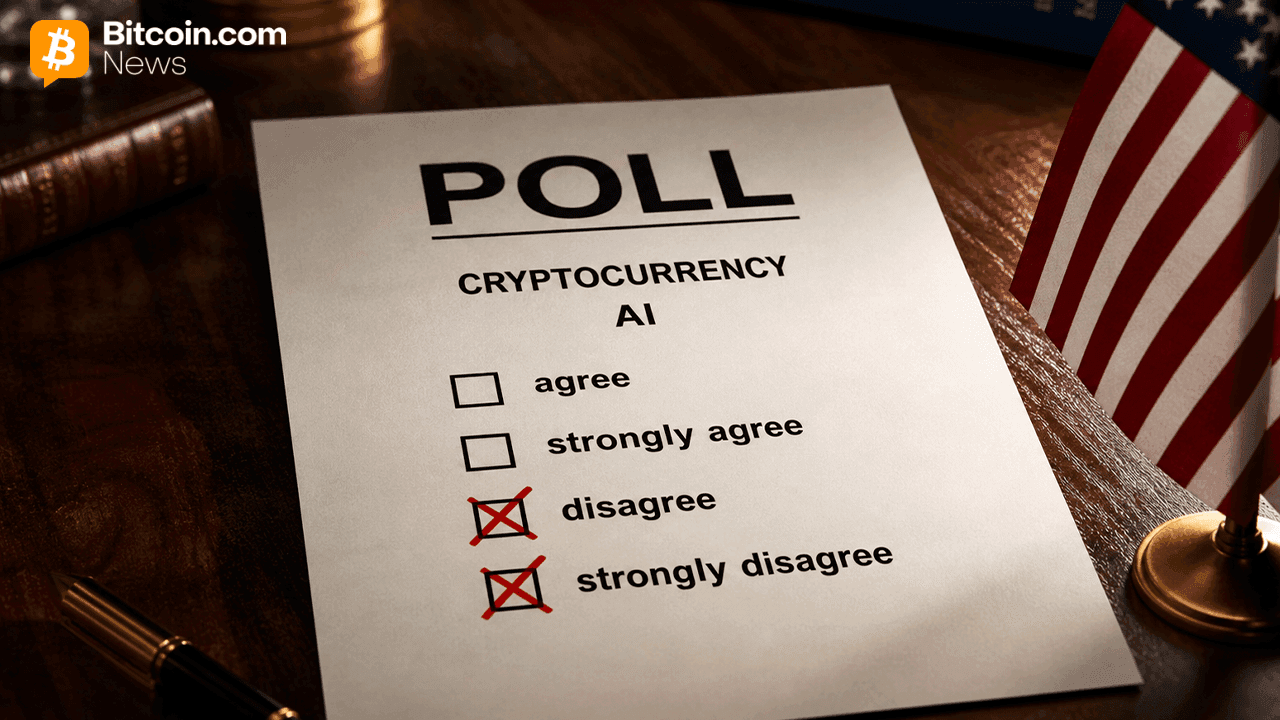
A Politico poll tied to the 2026 U.S. midterm election finds that Americans are broadly skeptical of both cryptocurrency and artificial intelligence, even as deep-pocketed political groups tied to those industries pour money into competitive races. The Politico reporting says a 45% plurality of Americans view investing in cryptocurrency as “not worth the risk,” while 44% say AI is developing “too quickly,” according to an April survey conducted by independent firm Public First. PThe same POLITICO Poll says nearly half of Americans trust a traditional bank with their money more than a cryptocurrency platform, while just 17% say the opposite.P
It also reports that two-thirds of respondents support lawmakers either imposing strict regulations or setting broad principles for the AI industry. Politico frames the tension as a challenge for candidates benefiting from an influx of contributions from the two sectors, noting that “These groups are pouring millions of dollars into competitive 2026 races.”P

The article adds that in hypothetical head-to-head matchups, poll respondents were “much less likely to choose candidates backed by a campaign group seeking looser regulations on artificial intelligence” than candidates backed by groups advocating for more stringent rules. The poll’s findings are echoed in other coverage, including a Crypto Breaking News post that says the Politico report found “45% of Americans say investing in cryptocurrency is not worth the risk” and “44% believe AI is developing too quickly.”P
Super PACs and Lobbying
The Politico poll coverage places the skepticism alongside a detailed account of how crypto and AI-aligned groups are spending in the 2026 cycle, and it names the super PACs and donors behind that spending. Politico says Leading the Future, a pro-AI super PAC founded in August, has “raised more than $75 million since its launch,” and that it deployed money on primaries in “North Carolina, Texas, Illinois and New York.” PIt also says Fairshake, a pro-crypto group “primarily funded by Coinbase, Andreessen Horowitz and Ripple Labs,” has “already spent $28 million across several competitive primaries.”
The article adds that both industries are spending on Washington lobbyists, and it cites lobbying spending by OpenAI and Anthropic in “the first quarter of 2026.” Politico reports that the crypto industry’s super PAC spending is aimed at pushing through a market-structure bill called the CLARITY Act, which is “pending in the Senate.”P
It describes industry executives’ hope that the proposed law would give the industry “a stamp of legitimacy from Washington” and “deliver long-term certainty about how digital tokens will be overseen by market regulators.” A separate Crypto Breaking News post repeats the same core spending figures and names, including that Leading the Future “has raised more than $75 million” and that Fairshake “has spent about $28 million.”
Who Trusts Whom
Other polling cited in the source set focuses on how Americans place trust between banks and crypto and how that skepticism intersects with political priorities. A CoinDesk-commissioned survey described by Moomoo says that when asked which they trusted more between banks and crypto for financial inclusion, “65% of respondents” said banks and “only 5% favored crypto.” The same Moomoo account says the survey found “60% think crypto will be a mostly negative force in the economy,” and it reports that “about one in four people say they've invested in crypto (27%),” while “only 2% say they have more than $10,000 in digital assets.”
It also says “more than half (53%)” of respondents got “a less favorable impression of the industry in recent news coverage.” CoinDesk’s separate poll coverage in the source set says “62% saying they don't trust his administration” to oversee the crypto industry, and it frames that distrust around President Donald Trump’s crypto agenda and personal stakes.
In that CoinDesk account, it says “Almost half of the respondents (45%) are also aware that the president and his family have built a profitable personal stake in the crypto industry,” and it reports “73% of the public opposes its senior government officials — without identifying any in particular — having personal business dealings in the industry.” Separately, a CoinDesk poll summarized by Bitget says only “1%” of respondents ranked cryptocurrency as the most important issue in the 2026 midterm elections, while cost of living and jobs and the economy were higher.
Democrats, Outside Money, and AIPAC
The source set also connects crypto spending to broader Democratic Party disputes over outside money in primaries, including groups tied to the U.S.-Israel Public Affairs Committee (AIPAC) and groups tied to cryptocurrency and artificial intelligence.
Independent en Español reports that Democrats are struggling to recover after outside groups “flooded their first round of midterm primary elections with campaign money,” and it says groups tied to AIPAC, cryptocurrency, and artificial intelligence “have dominated the landscape.”

The article quotes Democratic pollster Zac McCrary describing the dynamic as “proxy wars, and the candidates are almost an afterthought in larger skirmishes.”
It adds that the Democratic National Committee is pushing a resolution at its spring meeting in New Orleans to condemn the spike in spending, with “A final vote is expected Friday.”
The Independent en Español report says that in Illinois there was “more than $125 million in outside spending in five open-seat Democratic primaries,” and it states that “In nearly 40 seats, more than $1 million in outside spending has already been recorded.”
It also says that in Illinois, “the top three spenders in U.S. House contests were groups tied to AIPAC,” followed by Fairshake affiliated with the cryptocurrency sector.
The report includes quotes from Ken Martin, Ruben Gallego, and Ro Khanna about repudiating industry-focused spending and limiting super PACs in Democratic primaries.
What Comes Next
The sources tie the political spending and public skepticism to concrete legislative and electoral timelines, including the CLARITY Act’s path in the Senate and the possibility that voter backlash could follow heavy spending.
Politico says the crypto industry’s super PAC spending is aimed at pushing through the CLARITY Act, described as “pending in the Senate,” and it frames industry hopes for “long-term certainty about how digital tokens will be overseen by market regulators.”P
It also says the AI groups’ spending is aimed at ensuring federal rules rather than a “state-by-state patchwork,” and it notes that the polling suggests efforts may run into “broader public skepticism regarding job security and safety.”
The Politico article quotes Sen. PChris Murphy (D-Conn.) saying, “Democrats’ best approach is to make their spending an issue,” and it reports that a 41% plurality say “special interest groups have too much influence over politics in the U.S.”
In the CoinDesk poll coverage, it says the Clarity Act has “already passed the U.S. House of Representatives and remains a few steps away in the Senate,” and it adds that “one of the last sticking points” is a Democratic request for a ban on personal crypto ties.
CoinDesk’s account also says the bill will need “plenty of Democrats,” and it describes “bipartisan talks” over the bill’s potential form that have stretched across months.
Across the sources, the political stakes are presented as both regulatory and electoral: the super PACs are trying to shape the regulatory narrative before legislation gains traction, while polling suggests that candidates aligned with looser AI rules could face resistance.