Pope Leo XIV Condemns Migrants Treated Worse Than House Pets On Flight To Rome
Key Takeaways
- Pope Leo XIV denounced migrants and refugees as being treated worse than house pets.
- Remarks delivered during an in-flight press conference aboard the papal flight from Africa to Rome.
- Topics included migration, same-sex blessings, war, and the Holy See's stance toward authoritarian regimes.
Pope’s Migration Critique
Pope Leo XIV used a press conference aboard his return flight to Rome to condemn how migrants and refugees are treated, saying they are often viewed as “worse than house pets or animals.”
“Pope Leo has criticised the world’s treatment of migrants and refugees, claiming that they are often viewed as “worse than house pets or animals””
In the account carried by Al Jazeera, the pope said, “They are human beings, and we have to treat human beings in a humanitarian way and not treat them worse … than house pets or animals,” while also arguing that countries have a right to control their borders.

The same report says Leo flew back to Rome on Thursday following a four-nation Africa tour, and that he did not reference any specific country when calling out ill-treatment of immigrants.
The Detroit Catholic report similarly places the pope’s remarks on the papal flight from Malabo to Rome, describing him as condemning unjust taking of life by governments as violence continues in Iran, while also addressing migration and same-sex blessings during the in-flight press conference.
Catholic World Report frames the migration exchange as part of a roughly 20-minute in-flight press conference from Malabo, Equatorial Guinea, to Rome, and it quotes the pope saying, “Evidently, the issue of migration is very complex and affects many countries, not only Spain, not only Europe, but also the United States; it is a global phenomenon.”
America Magazine adds that the pope’s migration question was raised by Eva Fernandez of Cope Radio in Spain, and it quotes Leo saying migration is “very complex” and affects “many countries, not only Spain, not only Europe, but also the United States.”
Across the accounts, the pope’s position is consistent: he says states can regulate borders, but he insists migrants must be treated with dignity and that richer nations must address deeper causes driving people to leave poorer countries.
Iran, U.S. Strikes, and Condemnation
The pope’s migration remarks came alongside a direct condemnation of state violence as he addressed the Iran conflict during the same in-flight press conference, with multiple outlets tying his comments to the United States and Israel.
Detroit Catholic says the pope spoke April 23 aboard the papal flight back to Rome after an 11-day trip to Africa, and it anchors his remarks to the start of the conflict Feb. 28, when “the United States and Israel launched strikes in Iran.”

It reports that “more than 3,000 people have been killed, including an estimated 1,700 civilians,” citing “human rights groups and Iranian media,” and it notes that a fragile ceasefire remains in place while tensions rattle global markets and oil flows through the Strait of Hormuz.
In that same account, the pope said, “As a shepherd I cannot be in favor of war,” and he argued that the key question is how to promote values “without the death of so many innocents,” quoting him: “If there is regime change or no regime change, the question is how to promote the values in which we believe without the death of so many innocents.”
Catholic World Report similarly quotes Leo’s condemnation, including the line, “I condemn all actions that are unjust, I condemn the taking of people’s lives. I condemn capital punishment,” and it adds that he said, “I believe that human life is to be respected, and that all people from conception to natural birth, their lives should be respected and protected.”
Al Jazeera’s account, while focused on migration, also describes Leo’s earlier criticism of the Iran war and quotes him condemning “the taking of people’s lives” in response to reports that Iran killed thousands of anti-government protesters in January.
America Magazine frames the in-flight press conference as Part II, noting that Part I covered the pope’s comments on Iran, and it situates the pope’s broader approach as rooted in peace and dialogue rather than direct engagement with political controversy.
Trump Attacks and Leo’s Response
Several outlets describe how Pope Leo XIV’s Iran comments intersected with criticism from U.S. President Donald Trump, and they record the pope’s refusal to debate the U.S. president directly.
“ABOARD THE PAPAL FLIGHT — Pope Leo XIV spoke bluntly about war, migration, same-sex blessings, and the Holy See’s relations with authoritarian governments during a roughly 20-minute in-flight press conference with journalists traveling with him from Malabo, Equatorial Guinea, to Rome after his apostolic journey to Africa”
Detroit Catholic says the pope’s remarks came after a week of criticism from Trump, who said the pope was “terrible for foreign policy” and questioned his stance on the conflict, and it reports that Leo declined to engage directly, saying, “I have no intention of getting into a debate.”
Al Jazeera likewise recounts that Leo was attacked by Trump on social media as “terrible” on April 12, after the pope emerged as an outspoken critic of the Iran war, and it quotes Trump asking “will someone please tell Pope Leo” about the deaths of Iranian protesters in a post two days later.
In Al Jazeera’s account, Leo said he did not wish to “debate” Trump and that he did not fear the Trump administration, adding, “I will continue to speak out loudly against war, looking to promote peace, promoting dialogue and multilateral relationships among the states to look for just solutions to problems.”
Catholic World Report presents the pope’s in-flight remarks as a call for a “culture of peace,” quoting him saying, “Many times when we evaluate certain situations, the immediate response is that we must enter with violence, with war, by attacking, and we have seen that many innocent people have died.”
America Magazine adds context by describing the pope’s awareness of political interpretations, including the question of whether meeting authoritarian leaders gives them moral legitimacy, and it quotes Leo acknowledging that “the presence of a pope with any head of state can be interpreted in different ways.”
While the migration and Iran topics differ, the through-line across the reports is Leo’s insistence on moral condemnation and peace advocacy rather than direct political sparring.
Authoritarian Meetings and Diplomatic Logic
Beyond migration and Iran, the in-flight press conference also addressed how Pope Leo XIV justifies meeting authoritarian leaders and maintaining diplomatic relationships, with America Magazine and Al Jazeera offering overlapping details.
America Magazine reports that a Paris Match correspondent, Arthur Herlin, asked whether Leo’s meeting with the authoritarian presidents of Cameroon and Equatorial Guinea gave them a kind of moral legitimacy, describing it as “pope washing.”
It quotes Leo thanking the journalist and acknowledging the interpretive problem, saying, “Certainly, the presence of a pope with any head of state can be interpreted in different ways,” and it records his explanation that “It can be interpreted and has been interpreted by some as, ‘Ah! The pope or the church is saying it’s OK that they live like that.’”
America Magazine then quotes Leo’s counterpoint that “others may say things differently,” and it adds that Leo said the primary mission of a papal trip is to “announce the Gospel, to proclaim the message of Jesus Christ.”
Al Jazeera similarly says Leo defended his decision to visit countries known for having authoritarian leaders, with both Equatorial Guinea and Cameroon governed by long-term leaders, and it quotes him saying, “We don’t always make great proclamations … but there’s an awful lot of work that goes on behind the scenes to promote justice,” while also stating, “The Vatican maintains diplomatic relationships with the governments in those countries.”
Catholic World Report adds a related diplomatic framing, quoting the pope’s argument that the presence of the Holy See’s engagement can create opportunities to advocate privately for justice and humanitarian concerns, and it includes the pope’s claim that the Holy See “maintains diplomatic relationships” with 184 countries.
Taken together, the reports show Leo positioning diplomacy and pastoral travel as mechanisms for justice advocacy, while acknowledging that his meetings can be interpreted as conferring legitimacy.
Same-Sex Blessings and Church Unity
The in-flight press conference also returned to the Vatican’s approach to same-sex blessings, with Detroit Catholic and America Magazine describing how Pope Leo XIV framed the policy and its limits.
“Pope Leo has criticised the world’s treatment of migrants and refugees, claiming that they are often viewed as “worse than house pets or animals””
Detroit Catholic says the pope reaffirmed the position spelled out in the Dicastery for the Doctrine of the Faith’s publication of “Fiducia Supplicans” (“Supplicating Trust”), which “allows Catholic priests to bless a same-sex or other unmarried couple,” while specifying that it “cannot be a formal liturgical blessing, nor give the impression that the church is blessing the union as if it were a marriage.”
It reports that the pope was asked how he intended to preserve unity of the global church on the matter, given a decision by Cardinal Reinhard Marx of Munich and Freising to allow priests to bless same-sex couples in his archdiocese and opposition by church leaders, particularly in Africa.
Detroit Catholic quotes Leo saying, “First of all, I think it's very important that the unity or division of the church should not revolve around sexual matters,” and it adds his argument that “We tend to think that when the church is talking about morality, that the only issue of morality is sexual, and in reality, I believe there are greater and more important issues, such as justice, equality, freedom of men and women, freedom of religion, that would all take priority before that particular issue.”
It also quotes Leo underlining that the Vatican does not agree with more “formalized” blessings of homosexual couples or couples in “irregular situations,” as spelled out in the Vatican document.
America Magazine, in its Part II framing, says the pope answered questions on “the blessing of same-sex couples,” and it situates the discussion within a broader set of themes that included governance, migration, and authoritarian encounters.
Across the accounts, Leo’s message is that the church can welcome and invite people while maintaining boundaries around how blessings are understood, and Detroit Catholic records his reference to Pope Francis’ expression “todos, todos, todos,” meaning “everyone,” as being “an expression of the church's belief that all are welcome, all are invited, all are invited to follow Jesus, and all are invited to look for conversion in their lives.”
More on USA

Kathy Hochul Bans New York State Employees From Prediction-Market Betting
15 sources compared

DOJ Inspector General Probes Justice Department Compliance With Epstein Files Transparency Act
14 sources compared
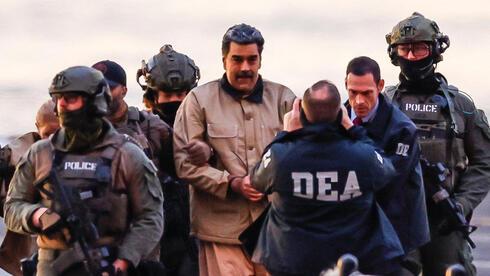
Gannon Ken Van Dyke Arrested Over Classified Bets on Operation Absolute Resolve Capture of Nicolás Maduro
31 sources compared

Two Groups Exchange Gunfire at Mall of Louisiana in Baton Rouge, Killing 1
19 sources compared