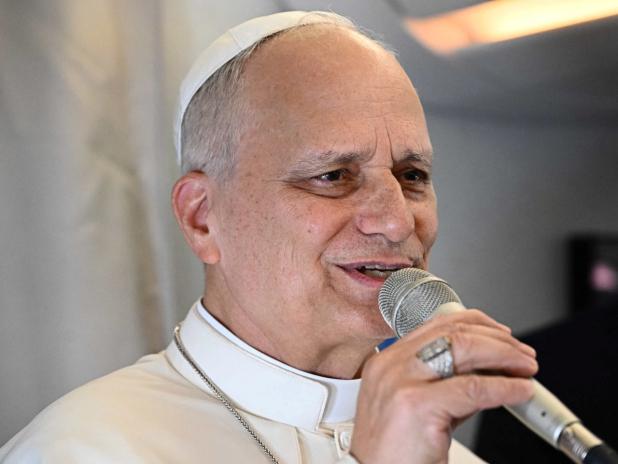
Pope Leo XIV Condemns War After Strait Of Hormuz Ceasefire Tested
Key Takeaways
- Pope Leo XIV cannot be in favor of war; innocents have died.
- Remarks delivered aboard his papal flight returning from Africa.
- Comments intensify a public rift with Trump over papal diplomacy.
Pope’s Africa trip, war focus
Pope Leo XIV returned to the Vatican from a 11-day trip to Africa on Thursday, and the Washingtonpost described his papacy as “seemingly transformed,” with the pontiff “suddenly demonstrating an ability to roar.”
“In an 18-minute press conference on the flight from Equatorial Guinea to Rome, Pope Leo XIV was asked two questions about Iran: the first, regarding his position on regime change there and on the confused state of its negotiation with the United States; the second, whether he would condemn Iran for the execution of opposition figures and the killing of thousands of protestors”
On the flight back, NBC News reported that Leo expressed frustration that U.S. and Iranian leaders have not been able to get diplomatic efforts to end the war back on track, saying, “One day Iran says 'yes,' the United States says 'no,' and vice versa.”
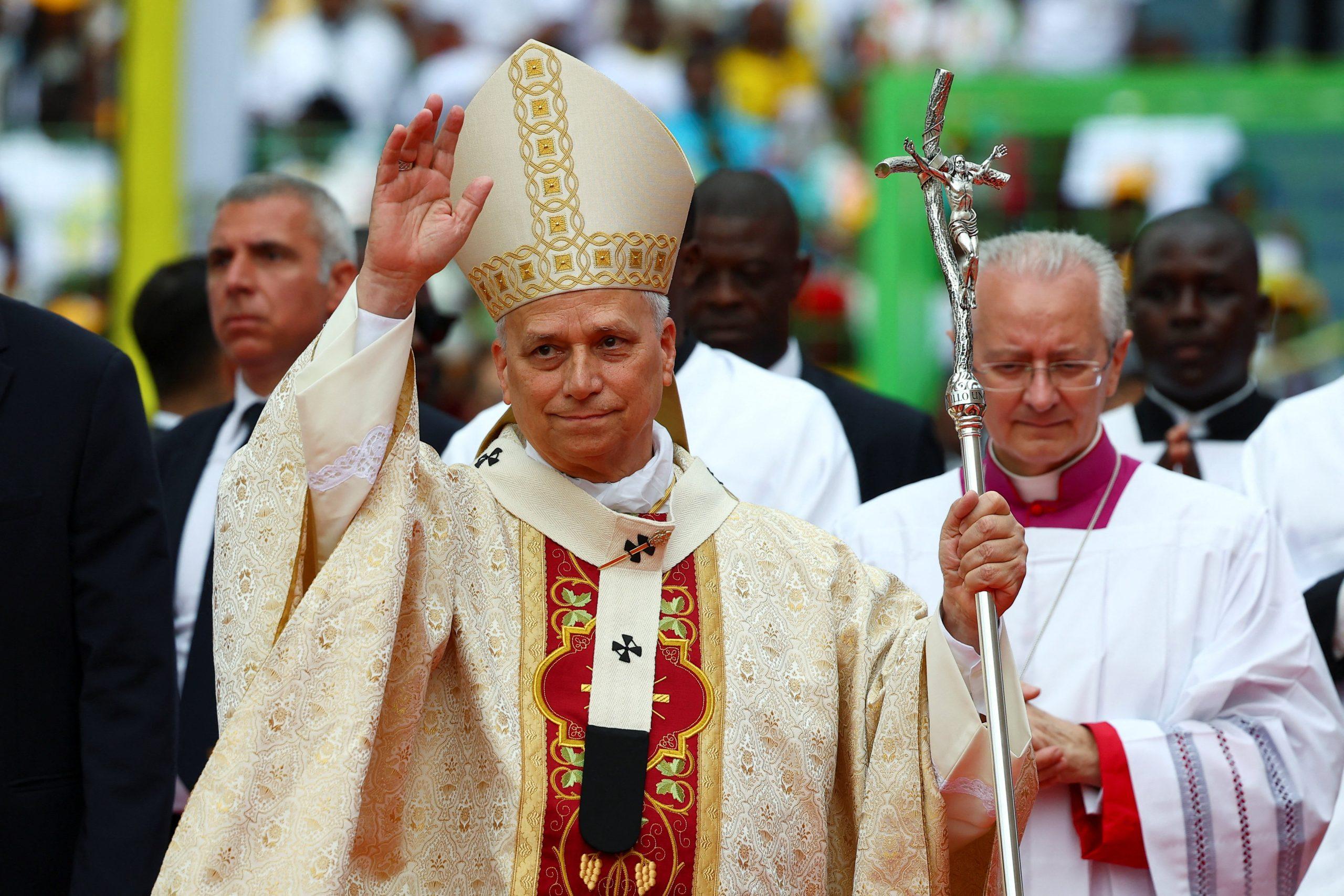
NBC News also tied Leo’s comments to the testing of “the fragile ceasefire that has been in place since April 8,” which was being tested anew by the standoff over the strategic Strait of Hormuz.
The same report said the narrow waterway between Iran and Oman, through which “up to 20% of the world’s oil supply is shipped,” was “effectively shut down in early March” after Iran imposed a blockade and then the U.S. imposed its own by barring ships from entering or exiting Iranian ports.
NBC News further reported that President Donald Trump declared Thursday on Truth Social that “Iran is having a very hard time figuring out who their leader is” and insisted that the U.S. has “total control over the Strait of Hormuz.”
In response, NBC News said Iran’s Foreign Minister Abbas Araghchi later posted on X that the country’s leadership is unified, writing, “Iran's state institutions continue to act with unity, purpose, and discipline.”
Against that backdrop, NBC News quoted Leo on the papal plane saying, “there is also the entire population of Iran, of innocent people who are suffering because of this war.”
Africa stops and criticism
NBC News said Leo began his tour of Africa on April 13 with a stop in Algeria, making him the first leader of the Roman Catholic church to visit the mostly Muslim country.
In Algeria, NBC News reported that Leo walked in the footsteps of St. Augustine by making a pilgrimage to the ruins of the ancient Roman city where Augustine lived and worked in the fifth century A.D.
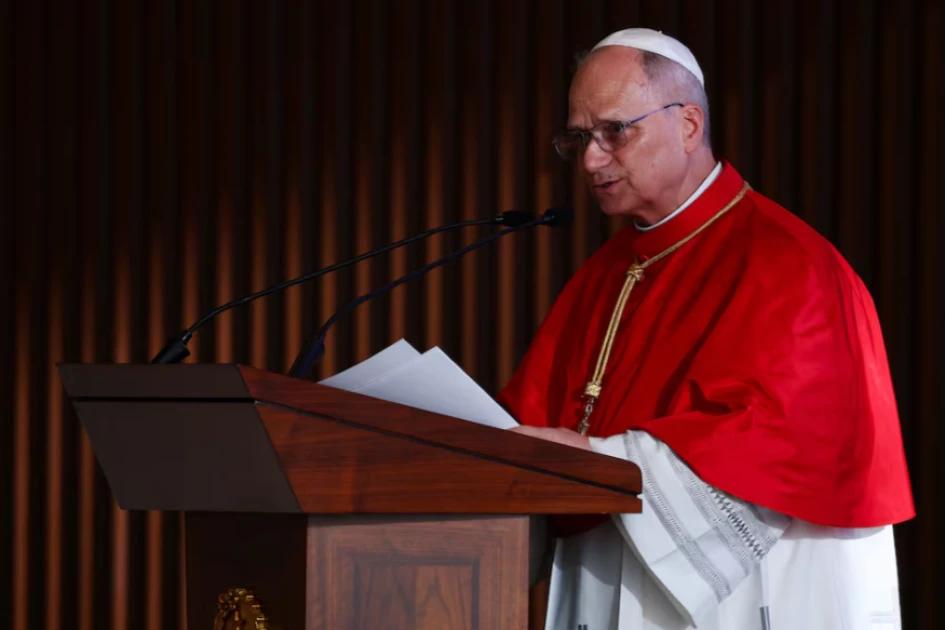
From there, NBC News said Leo flew to Cameroon, where he presided over a Mass attended by more than 100,000 people and openly criticized corruption in the presence of Cameroon's President Paul Biya.
The NBC News account described Biya as a 93-year-old president who has clung to power since 1982, in a country where 43% of the population lives in poverty.
The next stop for Leo was Angola, where NBC News said he criticized the unequal distribution of wealth in the mineral-rich country and declared that many people in the world were being “exploited by authoritarians and defrauded by the rich.”
NBC News reported that the tour ended Thursday with a Mass for thousands of people in Malabo, the former capital of Equatorial Guinea.
Vatican News described the same return flight from Malabo to Rome and said Leo answered questions from five of the roughly 70 journalists who followed the international visit.
Peace, migration, death penalty
Multiple outlets described Leo’s in-flight press conference as centering on peace and the moral limits of violence, while also addressing migration and the death penalty.
America Magazine reported that in an 18-minute press conference on the flight from Equatorial Guinea to Rome, Pope Leo XIV was asked about regime change in Iran and whether he would condemn Iran for the execution of opposition figures and the killing of thousands of protestors.
America Magazine quoted Leo responding, “I would like to begin by saying that it is necessary to promote a new attitude and culture for peace,” and later, “What we have seen is that so many innocents are dead.”
The same report said Leo referenced a mistaken air strike on Feb. 28 that killed “some 150 children at an elementary school in Iran,” and he described the letter he had “just seen” from families whose children died on the first day of the attack.
EWTN News similarly quoted Leo’s call for a new mindset, saying, “Many times when we evaluate certain situations, the immediate response is that we must enter with violence, with war, by attacking.”
EWTN News also captured Leo’s migration remarks, including “I personally believe that a state has the right to establish rules at its borders,” and his insistence that migrants “are human beings and they deserve the respect that every human being deserves because of human dignity.”
On the death penalty, EWTN News quoted Leo saying, “I condemn all actions that are unjust, I condemn the taking of people’s lives. I condemn capital punishment,” and Vatican News likewise framed Leo’s position as “As a pastor, I cannot be in favor of war; too many innocents have died.”
Different outlets, different emphasis
The sources diverged in how they foregrounded Pope Leo XIV’s Africa trip and his remarks, even when describing overlapping events.
NBC News framed the story around Leo’s frustration with U.S.-Iran diplomacy and the Strait of Hormuz, quoting Trump’s Truth Social claim that “Iran is having a very hard time figuring out who their leader is” and pairing it with Leo’s comment that “there is also the entire population of Iran, of innocent people who are suffering because of this war.”
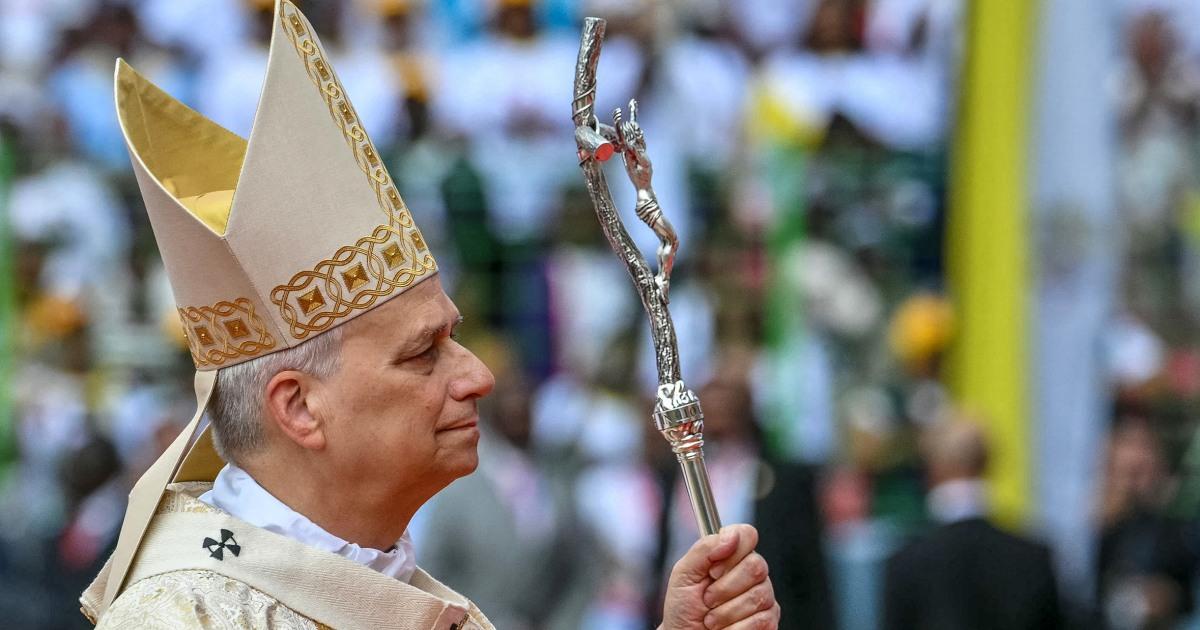
Washingtonpost similarly described the pontiff’s return from Africa as a transformation in tone, saying Pope Leo XIV returned with his papacy “seemingly transformed” and “suddenly demonstrating an ability to roar,” but it did not, in the provided text, detail the specific quotes about Iran.
America Magazine and EWTN News both centered on the content of Leo’s in-flight press conference, but they selected different emphases: America Magazine highlighted the questions about regime change and the mistaken air strike on Feb. 28 that killed “some 150 children,” while EWTN News highlighted Leo’s condemnation of the death penalty and his migration framing.
Vatican News presented a working English transcription and translation of the press conference, including Leo’s statement that “the journey should be understood above all as an expression of the desire to proclaim the Gospel,” and it included the exchange with Ignazio Ingrao about “Negotiations over the Iran conflict are in chaos.”
EWTN News, by contrast, described the press conference as “roughly 20-minute” and said Leo stressed that the “primary purpose of a papal trip is pastoral rather than political,” while also quoting him on migration and authoritarian governments.
Even within the shared themes, the quoted language varied by outlet, shaping how readers understand what Leo emphasized most after Africa.
What comes next
The sources also linked Leo’s Africa remarks to immediate geopolitical and diplomatic stakes, especially around the Iran war and the Strait of Hormuz, while also pointing to broader questions of migration and international law.
“ABOARD THE PAPAL FLIGHT — Pope Leo XIV spoke bluntly about war, migration, same-sex blessings, and the Holy See’s relations with authoritarian governments during a roughly 20-minute in-flight press conference with journalists traveling with him from Malabo, Equatorial Guinea, to Rome after his apostolic journey to Africa”
NBC News said Leo spoke out as “the fragile ceasefire that has been in place since April 8 was being tested anew by the standoff over the strategic Strait of Hormuz,” and it described how the waterway was “effectively shut down in early March” after Iran imposed a blockade and then the U.S. imposed its own by barring ships from entering or exiting Iranian ports.

In that same reporting, NBC News quoted Leo’s framing of the crisis as “chaotic situation, critical for the world economy,” and it tied that to the pope’s call for peace rather than escalation.
America Magazine and EWTN News both quoted Leo urging dialogue and warning against violence: America Magazine said Leo encouraged “the continuation for the dialogue for peace,” and EWTN News quoted him saying, “Rather, I would encourage the continuation of dialogue for peace,” while also insisting “As Church, I say again, and as a pastor, I cannot be in favor of war.”
Vatican News added that Leo told journalists it was “very important that innocent people are protected,” and it quoted him saying “remove the threat of war, and respect international law.”
On the migration front, EWTN News quoted Leo asking, “What are we doing in richer countries to change the situation in poorer countries?” and it tied that to his Africa-focused critique of extraction.
Finally, NBC News said Leo’s public spat with Trump over advocating for an end to the war with Iran “overshadowed his pontifical tour of four African countries,” while also describing Leo trying to “dial down the tension with Trump.”
More on Africa
Nigerian Security Forces Rescue Abducted Oyo Schoolchildren And Teachers After May 15 Kidnapping
21 sources compared
UN Investigators Say RSF Tactics in El-Obeid Bear Hallmarks of Genocide
15 sources compared
Sudan Gold Mine Collapse Kills 15 Miners At Mohamed Tawfiq Mine Near Egyptian Border
11 sources compared
Abdel Fattah El Sisi Inaugurates Egypt’s “Octagon” Strategic Command Headquarters, Bigger Than Pentagon
18 sources compared