
Pope Leo XIV Rejects Donald Trump Feud, Arrives in Angola for Peace Message
Key Takeaways
- Pope Leo XIV says he is not seeking a debate with Trump.
- Arrived in Luanda, Angola, as part of an 11-day Africa tour; third stop after Cameroon.
- Stressed peace message and criticized exploitation of natural resources in Angola.
Feud spills into Africa
Pope Leo XIV’s Africa tour has become entangled with a public feud involving President Donald Trump, as the pontiff arrived in Angola for the third leg of his four-nation trip while insisting it was “not in my interest at all” to debate the U.S. president about the Iran war.
“Pope Leo says 'not in my interest at all' to debate Trump The pope spoke aboard the papal plane on his way to Angola”
On the papal plane traveling from Cameroon to Angola, Leo told reporters that “There’s been a certain narrative that has not been accurate in all of its aspects,” linking the controversy to “the political situation created when, on the first day of the trip, the president of the United States made some comments about myself.”
The Washington Post described how Josephine García and her friends in Angola contrasted their affection for “Pope Leo XIV” with their view of Trump, saying “We say that he is crazy,” “That he is sick,” and “We say that he should stop this war.”
Reuters and other outlets in the provided material frame Trump’s criticism as targeting Leo’s peace message, with ABC News and Politico both describing Trump’s repeated accusations that Leo was “weak” on crime and made false allegations about Iran.
In the same reporting thread, the BBC said Leo’s “tyrants” remarks were not aimed at Trump and that they were written “well before the president ever commented on myself.”
As the tour moved forward, multiple outlets described Leo’s effort to keep the focus on peace and the Gospel, with Politico quoting him saying “I primarily come to Africa as a pastor, as the head of the Catholic Church to be with, to celebrate with, to encourage and accompany all the Catholics throughout Africa.”
What Leo said, and when
Across the reporting, Leo’s core argument is that his remarks were misread as a response to Trump, and that he had prepared key statements before Trump’s latest social-media attacks.
ABC News and Politico both quote Leo telling reporters aboard the papal plane that “Much of what has been written since then has been more commentary on commentary, trying to interpret what has been said,” and that the controversy was triggered by “the political situation created when, on the first day of the trip, the president of the United States made some comments about myself.”

The BBC adds that Leo said his “tyrants” speech had been written “a fortnight earlier – ‘well before the president ever commented on myself’,” and Euronews similarly describes Leo regretting that speeches were interpreted as attacks on Donald Trump.
Multiple outlets also place the “tyrants” language in Cameroon, with ABC News quoting Leo’s Thursday speech to the crowd: “Woe to those who manipulate religion and the very name of God for their own military, economic and political gain, dragging that which is sacred into darkness and filth.”
The BBC further quotes Leo’s condemnation of the war logic, including “The masters of war pretend not to know that it takes only a moment to destroy, yet often a lifetime is not enough to rebuild,” and France 24 quotes Leo’s Angola-opening speech line: “How much suffering, how many deaths, how many social and environmental catastrophes are produced by this logic of exploitation!”
In the same vein, The Australian and Jang both describe Leo’s refusal to debate Trump, with The Australian quoting him saying on the plane that it was “not in my interest at all” to debate the U.S. leader.
Politico also includes Leo’s forward-looking framing, quoting him that he would “continue proclaiming the Gospel message,” and that he would keep preaching peace rather than engage in the feud.
Trump, Vance, and Vatican pushback
The feud’s public escalation is described as beginning with Trump’s social-media criticism and continuing through Vice President JD Vance’s responses, while Leo and the Vatican emphasize that the pope’s peace messaging is broader than the Iran conflict.
Politico states that Trump launched the criticism on his social media platform Truth Social on the night of April 12, when he criticized Leo’s preaching about peace as the war, which began with joint U.S.-Israeli strikes on Feb. 28 and was followed by Iran’s retaliation, raged on.
Politico also quotes Trump’s accusations that Leo was soft on crime and “catering to the Radical Left,” and it says Trump claimed the first American pontiff owed his election to Trump.
In the same package, ABC News and the BBC describe Trump’s characterization of Leo as “weak” on crime and “terrible for Foreign Policy,” with the BBC adding that Trump said, “The Pope can say what he wants, and I want him to say what he wants, but I can disagree.”
Vance’s role appears in ABC News and the BBC, with ABC News quoting Vance’s post: “I am grateful to Pope Leo for saying this,” and adding that “While the media narrative constantly gins up conflict--and yes, real disagreements have happened and will happen--the reality is often much more complicated.”
The BBC also says Vance had urged the Vatican to “stick to matters of morality” earlier in the week, and it describes Vance as having converted to Catholicism as an adult.
In response to the broader framing, Politico says the Vatican has stressed that when Leo preaches about peace, he is referring to all wars ravaging the planet, not just the Iran conflict.
Angola’s crowds and local reactions
In Angola, the dispute is filtered through local Catholic enthusiasm for Leo and skepticism toward Trump, with the Washington Post describing crowds gathering outside the airport to greet Pope Leo XIV.
The Washington Post says Josephine García and her friends waited “for hours” in an airport parking lot under a “sweltering sun” for a glimpse of Pope Leo XIV, calling him “father in faith,” and describing him as standing for “peace and unity — in Angola and everywhere.”
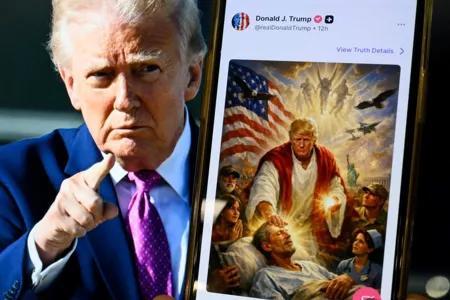
The same article records that when García was asked about “that other most influential American — President Donald Trump,” her reaction turned sharply negative, with her saying “We say that he is crazy,” “That he is sick,” and “We say that he should stop this war.”
The Washington Post also quotes Inácio Kahamba, a priest among those watching, saying, “We are so proud of him — he is a pope that stood up and had the courage to say ‘no’ to Trump,” and “He is saying that peace will reign.”
Bishop Maurício Camuto, interviewed by The Washington Post, is quoted saying Trump’s decision to go to war in Iran served as a “turning point for many in Angola,” and he adds, “Anyone who brings such suffering is not a person of goodwill.”
The Australian and Euronews both describe the scale of expected attendance, with The Australian saying “Tens of thousands of people are expected to turn out” for a mass at Kilamba and Euronews describing Leo’s arrival in Luanda and the hope for appeals for peace.
Euronews also ties the pope’s message to Angola’s economic and social conditions, saying he is expected to tackle “the economic woes of the oil- and rare-earth-rich nation” and that “a third of the population lives below the poverty line.”
In France 24, Helena Maria Miguel, a 40-year-old human resources manager, is quoted saying, “It’s as if God were very close to us,” and that “Africa thanks, Angola thanks.”
Masses, pilgrimages, and next steps
As Leo continues in Angola, the reporting emphasizes both major public religious events and the pope’s agenda of addressing exploitation, corruption, and social justice, while the Trump feud remains a parallel storyline.
The Australian says Leo will hold a “giant open-air mass” and visit “one of southern Africa's holiest Christian sites” on Sunday, describing that Leo arrived in Angola on Saturday for the third leg of a four-nation tour.

It adds that Leo will hold the mass at Kilamba on the outskirts of Luanda and that he will travel “110 kilometres (70 miles) by helicopter” to Muxima, where a “300-year-old church” overlooks a river that was once a “major slave trading route.”
The Australian provides the specific shrine context, saying the church and its “Mama Muxima” statue drew “roughly two million pilgrims a year,” and it describes Angola’s government embarking on a “massive multi-million-euro project” to build a basilica, houses, and public services in Muxima.
Euronews similarly says Leo will travel by helicopter to Muxima “around 130 kilometres south-east of Luanda,” and it frames the shrine as a Portuguese-built Marian site where enslaved people were baptised before being shipped to the Americas.
France 24 adds that Leo is expected to again draw huge crowds until his departure Tuesday morning, and it also links his visit to recent events in Angola, including “torrential rains” that have “claimed nearly 50 lives” and a “deadly civil war” that ended in 2002 after “27 years.”
In the political background described by The Australian, analysts connect unrest to dissatisfaction with Lourenco’s socialist MPLA party, which has held power since independence in 1975, and it mentions “a three-day looting spree in July last year when around 30 people were killed.”
Looking ahead, the BBC and Politico both stress that Leo’s message is meant to continue as he moves through the tour, with Politico quoting him that he will “continue proclaiming the Gospel message,” and with the BBC describing his plan to keep preaching peace while his “Africa tour includes stops in 11 cities across four countries.”
More on USA
Donald Trump Sends U.S. Delegation to Pakistan for Iran Talks, Threatens Power Plants and Bridges
47 sources compared
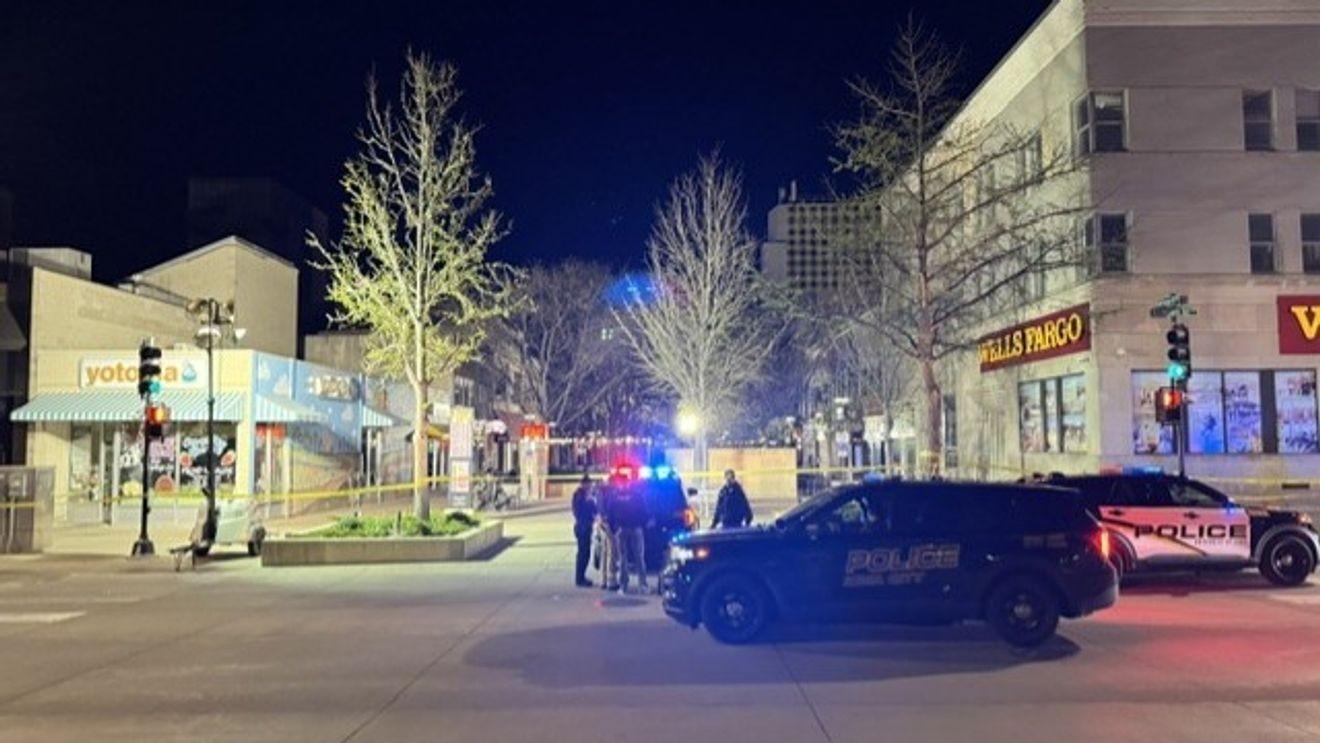
Shooting Near University of Iowa Campus Leaves Five Injured, Including Three Students
22 sources compared

United Flight 2092 Diverted to Pittsburgh After Crew Reported Possible Security Issue
12 sources compared

Pope Leo XIV Defuses Tensions With Donald Trump During Africa Tour
20 sources compared