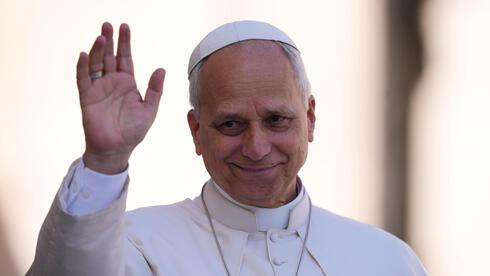
Pope Leo XIV Calls For Robust AI Regulation And Disarming Lethal Decision Systems
Key Takeaways
- Pope Leo XIV calls for robust AI regulation and developers serving the common good.
- Calls to disarm artificial intelligence and prevent autonomous weapons.
- World leaders urged to slow AI development to prevent conflict.
Pope targets AI governance
Pope Leo XIV used his first encyclical, “Magnifica humanitas: On Safeguarding the Human Person in the Time of Artificial Intelligence,” to call Monday for robust regulation of artificial intelligence and for developers to work for the common good rather than profit.
In the text, Leo denounced the “culture of power” driving the AI race, especially in developing ever more sophisticated methods of remote warfare, and he declared that it was “not permissible” to entrust irreversible, lethal decisions to AI systems.
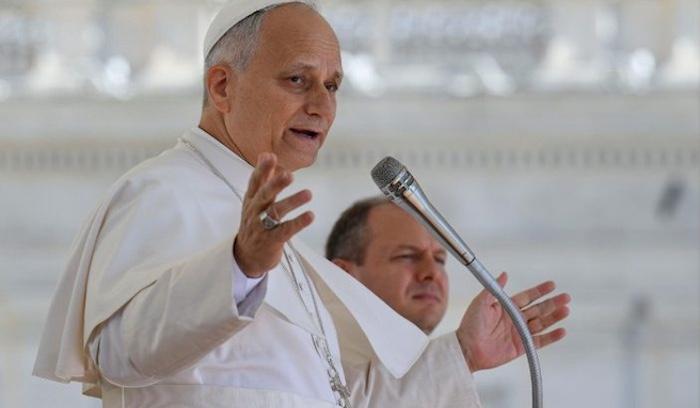
At a special Vatican presentation of the encyclical, the pope told the audience that “Artificial Intelligence now demands to be disarmed, freed from logics that turn it into an instrument of domination, exclusion and death,” linking AI governance to the prevention of harm.
The Associated Press reported that experts in the tech industry, academia and Catholic morality said the document will likely become a benchmark in the debate over AI as the technology impacts everything from work to war.
Taylor Black, a Microsoft AI executive and director of Catholic University of America’s AI institute, said the document would prompt people “at the forefront of these tools” to ask questions such as “What does it mean to be human?”
Babel, Jerusalem, and oversight
In a separate account of the encyclical’s message, the New York Post said Pope Leo XIV issued a dire warning about the threat of “anti-human” AI and compared the risk to a biblical Tower of Babel.
The pope wrote that “The primary choice is not between a ‘yes’ or ‘no’ to technology, but rather between constructing Babel or rebuilding Jerusalem,” framing AI ethics as a political and moral decision rather than a purely technical one.
The Associated Press reported that Leo called for external regulation, writing that “It is not enough to invoke ethics in the abstract; robust legal frameworks, independent oversight, informed users and a political system that does not abdicate its responsibility are required,” and warning that “A more moral AI is not enough if that morality is determined by a few.”
Christopher Olah, the co-founder of Anthropic, welcomed Leo’s criticism and said such external checks were fundamental to the technology “going well” for humankind since there is so much at stake.
Olah also told the Vatican audience, “We need more of the world — religious communities, civil society, scholars, governments — to do what His Holiness has done here: to take this seriously, to look closely, and to push events in a better direction,” tying the encyclical to broader public engagement.
Industry, litigation, and labor
The Associated Press said the Vatican launch included remarks by Anthropic co-founder Christopher Olah, with the Vatican involving Anthropic as part of its decade-long effort to engage Silicon Valley in dialogue over the human cost of AI.
The Hill reported that Olah was in attendance for the Vatican’s launch and that Anthropic is engaged in litigation with the Trump administration after Defense Secretary Pete Hegseth designated the company as a supply chain risk and President Trump directed civilian agencies to stop using Anthropic’s products.
In the encyclical, Leo repeatedly blasted the concentration of power and data in the private sector as a danger, especially to children and the most vulnerable, and called for external regulation of their work.
The Associated Press quoted Olah warning that there is “a real possibility that AI will displace human labor at a very large scale,” connecting the pope’s regulatory push to the risk of job loss.
Paolo Carozza, law professor at Notre Dame Law School and chair of the Meta Oversight Board, said the encyclical would be “a defining document for our era, a profound and prophetic document,” as the debate over AI accelerates.
More on Technology and Science

UK Heatwave Declared in Eight Southeast England Locations as Temperatures Hit 32.1C
13 sources compared

Heavy Rain Kills Three, Leaves 17 Unaccounted For in Chongqing’s Yongchuan District
11 sources compared

Gavin Newsom Declares State Of Emergency After GKN Aerospace Tank Overheats In Garden Grove
17 sources compared
SpaceX Launches Starship V3 From Starbase, Texas, Loses Super Heavy Booster In Gulf Of Mexico
15 sources compared