
President Donald Trump asks seven nations to join coalition to police Iran's Strait of Hormuz
Key Takeaways
- Trump asked about seven countries to join a coalition policing the Strait of Hormuz.
- No immediate commitments or promises from nations to join the coalition.
- Trump did not identify any participating countries and declined to discuss China’s involvement.
Trump's Coalition Demands
President Trump has demanded approximately seven countries send warships to join a coalition policing the Strait of Hormuz as oil prices soar during the Iran war.
“More Iranian strikes reported across the region More Iranian strikes were reported across the region on Monday, including in Abu Dhabi, Qatar, Kuwait, Saudi Arabia and Israel”
His appeals have yielded no commitments despite the waterway's critical importance to global energy markets.

The president declined to name the specific countries heavily reliant on Middle East crude that his administration is negotiating with.
He has previously identified China, France, Japan, South Korea, and the United Kingdom as key targets.
Speaking aboard Air Force One, Trump argued that nations dependent on the strait should 'protect their own territory' rather than relying on US military presence.
He noted that China receives about 90% of its oil through the narrow waterway while the US gets 'a minimal amount.'
The administration's push comes as global oil prices have surged by 40-50 percent amid repeated Iranian attacks on ships.
The strait normally handles about one-fifth of the world's traded oil.
Global Rejection
International responses to Trump's coalition proposal have been overwhelmingly negative or non-committal.
European and Asian nations cite legal constraints, strategic concerns, and political opposition.

Germany has explicitly ruled out military participation, with Defense Minister Boris Pistorius stating there would be 'no military participation' during the ongoing conflict.
Italian Deputy Prime Minister Matteo Salvini declared 'Italy is not at war with anyone and sending military ships in a war zone would mean entering the war.'
Japan faces legal limitations on overseas military deployments, with Prime Minister Sanae Takaichi noting operations in the strait 'might not pass legal muster.'
Australia has simply ruled out sending ships.
South Korea has requested 'adequate time for deliberation' before responding.
The UK has offered only mine-hunting drones rather than warships, maintaining it would 'not be drawn into the wider war.'
France has shown more willingness to help but has not committed to warships.
China has called for an end to hostilities without offering military assistance for the strait.
Iran's Defiant Position
Iran has maintained a defiant stance toward international efforts to secure the Strait of Hormuz.
“He declined to discuss whether China will join the coalition”
Foreign Minister Abbas Araghchi declared that Tehran has been 'approached by a number of countries' seeking safe passage for their vessels.
He stated 'this is up to our military to decide.'
Iranian officials have consistently stated the strait is open to all countries except the United States and its allies.
This creates an ambiguous situation that further complicates international shipping.
Araghchi emphasized that Tehran had 'no plan to recover' enriched uranium under rubble following US and Israeli attacks.
He noted that Iran and the US began fighting after coordinated attacks on February 28 during indirect nuclear talks.
The Iranian position reflects a strategy of maintaining control over the waterway while creating uncertainty for international oil markets.
Oil prices have surged by 40-50 percent since the conflict began.
Trump's Criticism and Claims
Trump has responded to international reluctance with public criticism of allies.
He claims they have benefited from US protection but refuse to reciprocate.

The president pointed to unspecified nations where 'we have 45,000 soldiers protecting them from harm's way'.
These nations were unwilling to contribute mine sweepers to the Hormuz mission.
This suggests deep frustration with what he perceives as free-riding by traditional allies.
Meanwhile, the administration has claimed significant military progress against Iran.
Trump reported that more than 100 Iranian naval vessels have been 'sunk or destroyed' since the war began.
This includes over 30 'mine laying ships.'
He asserted a 90 percent reduction in Iran's ballistic missile launches and a 95 percent reduction in drone attacks.
He claimed US and Israeli forces have struck more than 7,000 targets across Iran.
These claims come amid reports of significant civilian casualties.
Amnesty International reported a US strike on a girls' school in Minab killed at least 170 people, mostly children.
Geopolitical Implications
The broader geopolitical and economic implications of the Hormuz crisis extend far beyond immediate military considerations.
“Trump’s call for countries to send warships to protect the Strait of Hormuz brings no promises - Click here to listen to this article - - No nations have responded to Trump’s call for them to send warships to help protect the Strait of Hormuz”
Significant human and economic costs are already mounting.

The United Nations refugee agency reports that as many as 3.2 million people have been displaced inside Iran during the fighting.
Total casualties include at least 1,444 people killed in Iran, 20 across the Gulf, and 15 in Israel.
Thirteen US soldiers have also been killed.
The displacement crisis and rising death tolls reflect the broader humanitarian impact of the conflict.
This has triggered destabilizing effects on global energy markets.
With approximately 20-30 percent of global oil consumption traveling through the narrow strait, disruptions have caused significant price volatility.
The EU's foreign policy chief Kaja Kallas has acknowledged the economic stakes.
She stated 'it is in our interest to keep the Strait of Hormuz open' while exploring diplomatic solutions.
This highlights how energy security concerns are driving international diplomacy even as military cooperation remains elusive.
More on USA

ICE Detains Mohommad Nazeer Paktyawal; He Dies in Dallas Custody
13 sources compared

Judge Brian Murphy blocks RFK Jr.'s vaccine overhaul plan
12 sources compared

U.S. oil blockade triggers Cuba's island-wide blackout
12 sources compared
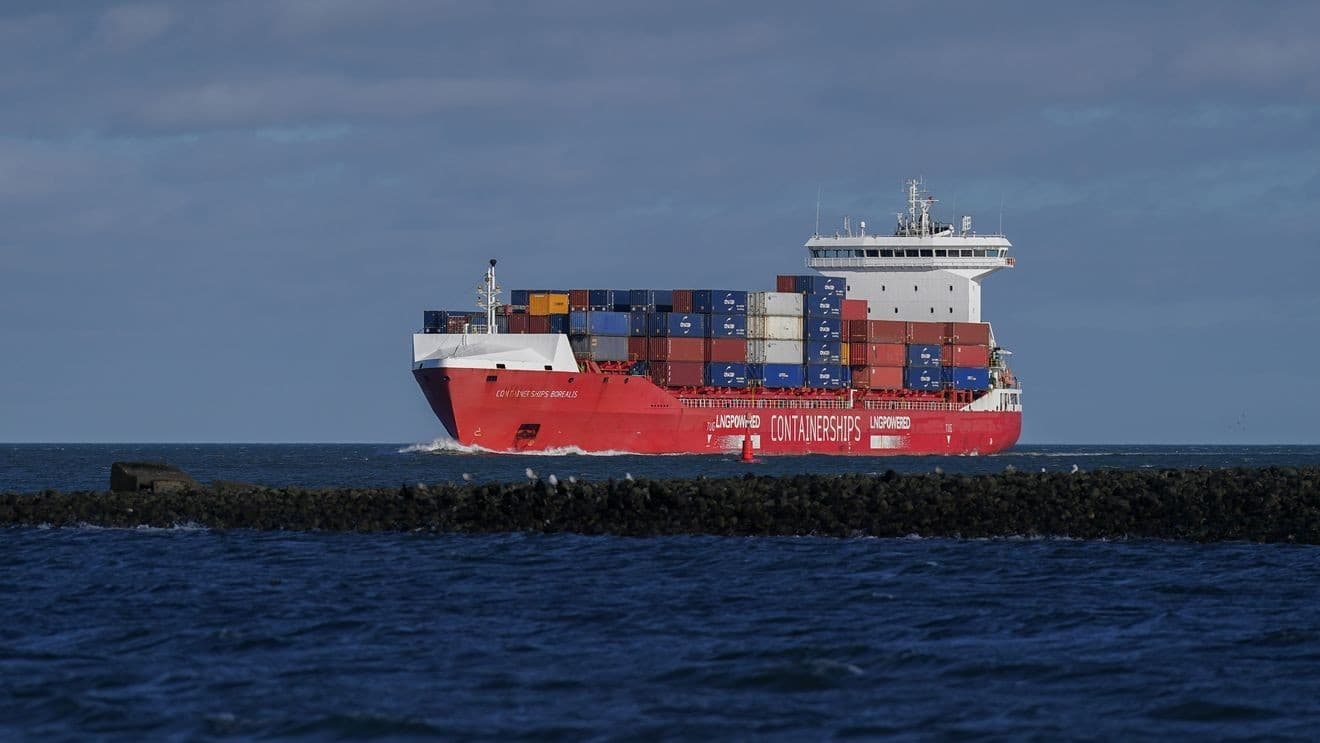
Trump demands about seven countries send warships to keep the Strait of Hormuz open
20 sources compared