USA14 March, 20262 min read
President Donald Trump Deploys International Naval Coalition to Keep Strait of Hormuz Open
This article is an automated aggregation of coverage from news outlets. Our editorials offer in-depth analysis curated by the NewsCord team.
Trump says multiple nations will deploy naval vessels to keep the Strait of Hormuz open. He did not specify which countries would join the naval coalition.
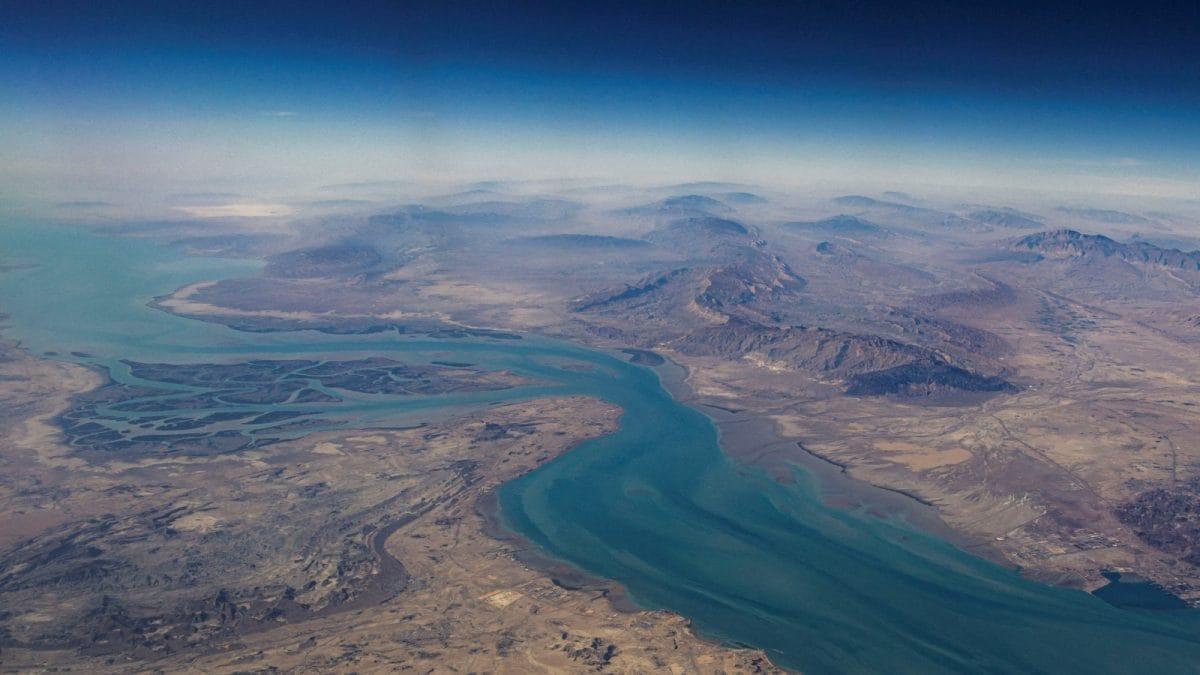
Naval Coalition Announcement
President Donald Trump announced the formation of an international naval coalition to maintain access through the Strait of Hormuz. In a series of posts on his Truth Social platform, Trump asserted that countries 'especially those who are affected by Iran's attempted closure of the Hormuz Strait' would be sending naval assets. The former president specifically identified China, France, Japan, South Korea, and the United Kingdom as nations expected to contribute vessels.
“President Donald Trump announced Saturday that multiple nations will deploy naval vessels alongside the U.S. to maintain access through the Strait of Hormuz.”
He framed the mission as a response to what he described as Iranian attempts to constrain global energy markets. Despite Trump's announcements, the White House has not yet responded to inquiries about formal commitments.

Strategic Importance
The strategic importance of the Strait of Hormuz underscores the urgency of Trump's naval coalition announcement. The 34-mile-wide waterway serves as the critical transit point for approximately 20% of the world's crude oil and liquefied natural gas supplies. Trump characterized Iranian actions as creating an 'artificial constraint' on global energy markets.
He claimed that ongoing Iranian strikes have effectively frozen maritime traffic through this vital chokepoint. The closure of the strait, now in its 15th day according to reports, has caused a sharp spike in global energy prices. Trump's proposed coalition aims to address what he perceives as a deliberate disruption to international commerce and energy security.

Military Threats
Trump's announcement included provocative military threats against Iranian forces. The former president declared that 'the United States will be bombing the hell out of the shoreline, and continually shooting Iranian Boats and Ships out of the water.' He promised to get the strait 'OPEN, SAFE, and FREE.'
“In the meantime, the United States will be bombing the hell out of the shoreline, and continually shooting Iranian Boats and Ships out of the water.”
Despite these threats, Trump made contradictory claims about Iran's military capabilities. He stated that the US had 'already destroyed 100% of Iran's Military capability' while conceding that Tehran could still deploy various weapons. These mixed signals reflect both an attempt to project strength and acknowledgment of ongoing Iranian threats.
Iranian Response
Iranian officials have directly challenged Trump's claims and threatened to respond to any hostile actions. Alireza Tangsiri, the navy chief of Iran's Islamic Revolutionary Guard Corps, dismissed Trump's assertions. Tangsiri stated that 'the Strait of Hormuz has not yet been militarily closed and is merely under control.'
In a post on X, he hit back against the American claims, saying 'Americans falsely claimed the destruction of Iran's navy.' Iran maintains that while it has taken control of the strategic waterway, it has not completely closed it to international traffic.
This indicates a calculated approach to leverage geographic advantage without provoking full-scale international conflict. Both sides are engaging in psychological warfare alongside military preparations.