
Cuba's Díaz-Canel Acknowledges Talks with U.S. as Energy Crisis Worsens
Key Takeaways
- Díaz-Canel confirms recently held talks between Cuban officials and U.S. representatives.
- Discussions aim to resolve bilateral differences and find solutions amid Cuba's energy crisis.
- First public acknowledgment of talks with the U.S. in over a decade.
Historic Diplomatic Shift
Cuban President Miguel Díaz-Canel made a historic public acknowledgment that his government has been holding direct talks with United States officials.
“Publicidad El presidente de Cuba anunció este viernes conversaciones entre funcionarios del Gobierno de la isla y de Estados Unidos para buscar una solución a la actual crisis que vive el país por las amenazas del presidente estadounidense”
This marks the first time in over a decade that Havana has confirmed such bilateral diplomatic exchanges.

The announcement was made during a televised address on March 13, 2026, representing a significant shift from Cuba's traditional stance.
Díaz-Canel confirmed that Cuban officials have 'recently held conversations with representatives of the U.S. government' aimed at seeking solutions through dialogue to bilateral differences.
This rare admission comes as Cuba faces its most severe economic and energy crisis in recent memory.
The communist government has been forced to reconsider its policy of self-reliance and engage with its long-time adversary.
Energy Crisis Context
The timing of this diplomatic opening is directly linked to Cuba's devastating energy crisis.
The island nation has gone without oil shipments for more than three consecutive months.

Severe fuel shortages have crippled transportation systems, halted production across multiple sectors, and caused widespread electricity blackouts.
Díaz-Canel admitted that 'more than three months have passed since any ship entered our country' with fuel.
These conditions have created 'very adverse conditions that have an immeasurable impact on the life' of the Cuban people.
The energy infrastructure, dependent on aging power plants and inconsistent fuel imports, cannot meet the country's demand without external support.
Blackouts reportedly reach 16 hours daily in the capital and exceed 40 hours consecutively in interior regions.
International Pressures
Multiple international factors have converged to force Cuba's hand in engaging with the United States.
“Cuba and US: A New Chapter of Diplomatic Talks Amid Energy Crisis Cuba confirms talks with the US aimed at addressing bilateral differences”
The Trump administration's hardline stance has significantly tightened economic pressure on Cuba.
Donald Trump has warned that there would be 'no more oil or money' for the island unless it made a deal.
He even suggested a 'friendly takeover' of the country.
The collapse of Venezuela's oil supply, historically one of Havana's main energy allies, has been exacerbated by Trump's threats.
Trump has threatened economic sanctions against countries that assist Cuba in covering its oil shortfall.
Economic experts note that 'the country is barely surviving' and that 'Cuba doesn't have a choice. It has to talk.'
Díaz-Canel described this as a 'very sensitive process' requiring 'substantial and sustained efforts to find solutions.'
Cuban Diplomatic Positioning
Cuba has carefully framed the diplomatic talks on its own terms.
Díaz-Canel emphasized principles of equality, sovereignty, and respect for political systems.

He stated that negotiations must be carried out 'on the basis of equality and respect for the political systems of both States, for sovereignty and for the self-determination' of Cuba's government.
The Cuban leadership, including Díaz-Canel and former president Raúl Castro, is personally overseeing these discreet diplomatic exchanges.
The talks are described as being in their 'infancy stage.'
Cuban authorities have preferred to keep details confidential, following 'a practice of the Cuban Revolution of 'not responding to speculative campaigns about this kind of issue.'
This approach reflects Cuba's attempt to navigate its desperate need for relief while maintaining its ideological independence.
Human Impact
The energy crisis has had a profound human impact on ordinary Cubans.
Hospitals and schools have been particularly hard hit by the power outages.

Public transport systems have been severely constrained by fuel shortages.
Families are struggling with disrupted routines, businesses cannot operate normally, and essential services are compromised.
The situation has triggered protests by students and other citizens in different parts of the country.
Long queues for basic fuel and essential services have become commonplace.
The human toll is evident as families navigate daily life amid uncertainty.
Díaz-Canel acknowledged that the energy crisis is 'more than a policy problem' that directly affects 'everyday survival.'
Millions are affected by electricity cuts from Havana to Santiago.
More on USA
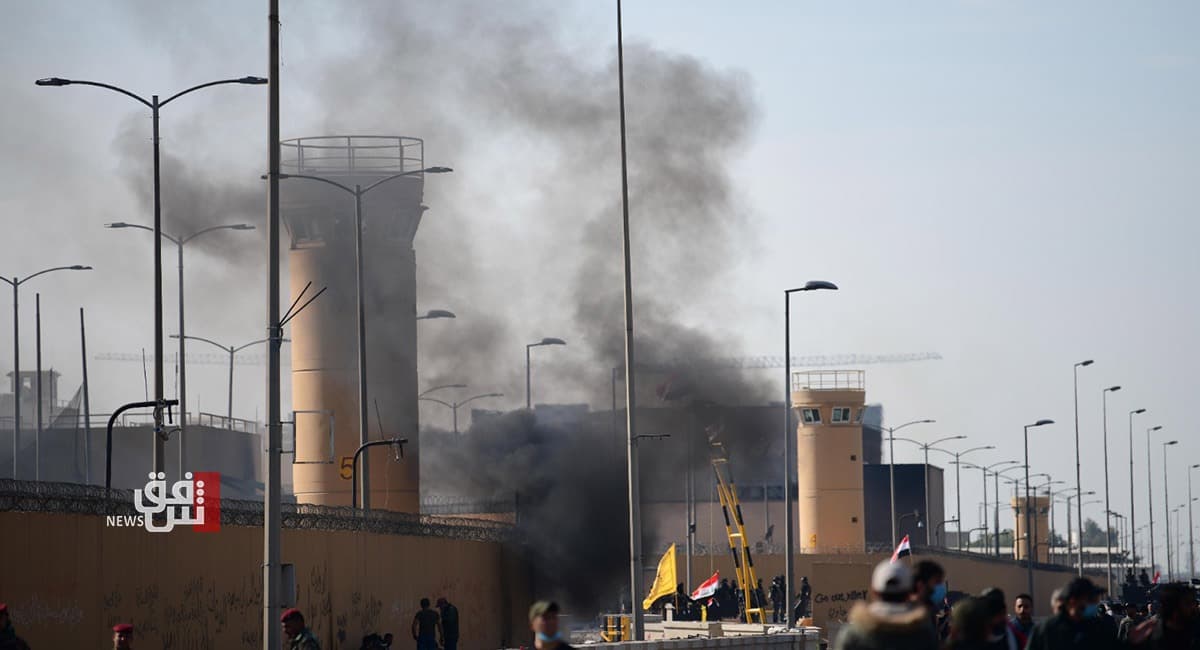
Pro-Iran Group Strikes U.S. Embassy in Baghdad
17 sources compared

President Trump urges allies to send warships to secure Hormuz amid US-Israel war on Iran
50 sources compared

Six U.S. airmen killed as KC-135 crashes in western Iraq during Operation Epic Fury
58 sources compared

FAA Lifts DC-Area Ground Stop; Delays Persist Amid Equipment Outage
23 sources compared