Trump Waives 60-Day Jones Act to Ease Oil Prices
Key Takeaways
- White House issued a 60-day waiver allowing foreign-flagged vessels between U.S. ports.
- The move aims to ease oil and energy prices amid Iran-related disruptions.
- Analysts predict only modest price relief, potentially a few cents per gallon.
Jones Act Waiver Announcement
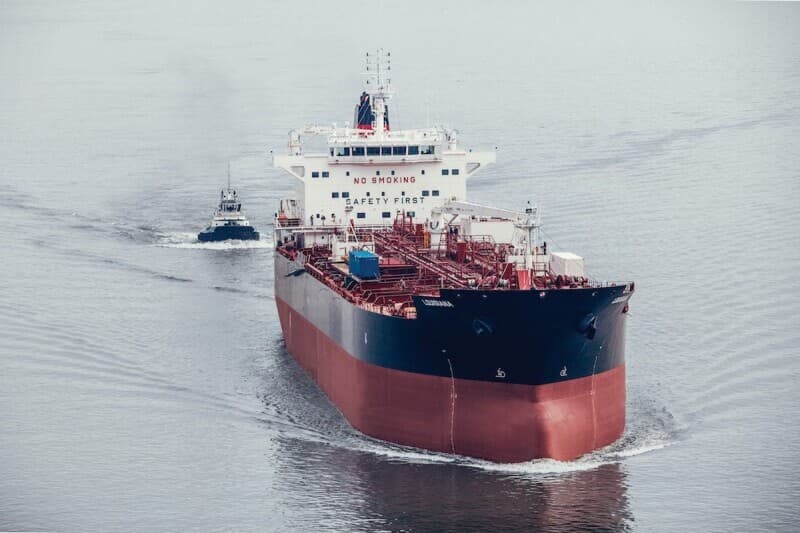
President Donald Trump issued a 60-day waiver of the century-old Jones Act on March 18, 2026, temporarily allowing foreign-flagged vessels to transport oil, natural gas, fertilizer, and coal between U.S. ports.
“"The administration remains committed to continuing to strengthen our critical supply chains," he added”
The Jones Act, formally known as Section 27 of the Merchant Marine Act of 1920, normally requires cargo shipped between American ports to be carried on vessels that are U.S.-built, U.S.-flagged, and mostly U.S.-owned.

This law was established to protect the American shipbuilding sector and ensure national security capabilities with a domestic merchant fleet.
The waiver represents Trump's latest attempt to address the economic fallout from his administration's ongoing war with Iran.
The war has disrupted global energy supplies and sent prices soaring for American consumers.
Iran War Impact on Energy Markets
The waiver comes in response to dramatic price increases triggered by the U.S.-Israeli military operations against Iran that began on February 28, 2026.
These operations have effectively closed the critical Strait of Hormuz - a narrow waterway through which roughly one-fifth of the world's oil and liquefied natural gas supply typically passes.
Since the conflict began, only about 90 ships have traversed the strait, with 20 vessels attacked in the area.
More than 400 ships remain stranded nearby according to market intelligence platform Kpler.
This disruption has caused gasoline prices to surge from $2.92 to $3.84 per gallon in just one month.
Diesel prices have crossed $5 per gallon - their highest level since December 2022.
The economic impact has become a significant political challenge for Trump and the Republican party ahead of November midterm elections.
Expert Assessments of Impact
Energy experts and industry analysts offer sharply divided assessments of the potential impact of the Jones Act waiver on consumer fuel prices.
“The maritime law, requiring all vessels carrying goods between two U”
Predictions range from minimal savings to modest relief according to different sources.
David St Amand, president of maritime consulting firm Navigistics Consulting, told Al Jazeera that 'a Jones Act waiver is unlikely to reduce the price of gasoline at the pump, and any claims of a material benefit to US consumers is not possible.'
He suggested any benefits would likely flow to commodity traders rather than drivers.
James Lightbourn, founder of Cavalier Shipping, estimated that using foreign vessels could cut transportation costs by about 5 cents per gallon.
A 2022 JPMorgan Chase analysis found waiving the Jones Act could save East Coast motorists roughly 10 cents per gallon.
The Center for American Progress projected a more modest 3-cent reduction for East Coast gas prices.
The American Maritime Partnership claimed the maximum potential impact would be 'less than one penny per gallon.'
Industry Concerns and Broader Strategy
The waiver has drawn strong criticism from U.S. maritime industry stakeholders who warn it could undermine domestic shipbuilding and displace American workers.
The American Maritime Partnership, a coalition representing vessel owners, operators, unions, and equipment vendors, issued a statement expressing being 'deeply concerned' about the 60-day waiver being 'abused and unnecessarily displacing American workers and American companies.'
Industry leaders from American Maritime Officers similarly argued that 'waiving the Jones Act would do nothing to reduce gasoline prices' and instead 'create opportunities for foreign-flag operators that avoid paying US taxes, rely heavily on low-wage labor, and operate under regulatory regimes that circumvent international labor and vessel safety standards.'
Meanwhile, the administration is pursuing multiple parallel strategies to address the energy crisis.
These include releasing 172 million barrels from the Strategic Petroleum Reserve, easing sanctions on Venezuelan and Russian oil exports.
The administration is also pledging to send the U.S. Navy to escort tankers through the Strait of Hormuz.
Temporary Nature and Precedent
The 60-day waiver duration and its temporary nature reflect the administration's view of this as a short-term emergency measure rather than a permanent policy shift.
“- The Trump administration announced plans to waive the Jones Act for 60 days”
White House officials emphasized that the action is designed to 'mitigate the short-term disruptions to the oil market' during the Iran war.

They also noted it supports military logistics by ensuring 'consistent fuel supply to U.S. bases and operations.'
The temporary suspension follows a precedent set by former President Joe Biden, who waived the Jones Act for a tanker heading to Puerto Rico with supplies after Hurricane Fiona in October 2022.
However, the current waiver is broader in scope, affecting multiple commodities and regions simultaneously.
Administration officials stress that this emergency action does not represent a change in their commitment to 'continuing to strengthen our critical supply chains'.
They maintain this approach preserves American maritime capabilities for long-term national security purposes.
More on USA

Rand Paul Grills Mullin Over Anger in Homeland Security Confirmation Hearing
65 sources compared

Cesar Chavez Birthday Events Canceled as Sexual Abuse Allegations Surface
111 sources compared
Trump Waives Jones Act for 60 Days to Relieve Oil Price Surge Amid Iran War
10 sources compared

President Trump waives Jones Act to ease fuel costs amid US-Israel war against Iran.
10 sources compared