USA17 March, 20264 min read
President Miguel Díaz-Canel Vows Impregnable Resistance to US Takeover
Díaz-Canel vowed impregnable resistance to any external aggressor amid U.S. takeover threats. Nationwide blackout left millions without power amid Cuba’s energy crisis and fuel shortages.

Defiant Resistance Vow
Cuban President Miguel Díaz-Canel has issued a defiant vow of 'impregnable resistance' against any potential US takeover. In a post on X translated to English, Díaz-Canel declared: 'In the face of the worst scenario, Cuba is accompanied by a certainty: any external aggressor will clash with an impregnable resistance.' The Cuban leader accused the United States of 'publicly threatening Cuba almost daily, with overthrowing by force the constitutional order' and using Cuba's economic crisis as a 'despicable pretext' for intervention.
“Cuban President Miguel Díaz-Canel has vowed to stay in power and resist any potential U.S. takeover. In a post on X, translated to English, Díaz-Canel wrote: 'In the face of the worst scenario, Cuba is accompanied by a certainty: any external aggressor will clash with an impregnable resistance.'”
Díaz-Canel specifically stated that 'they intend and announce plans to take over the country, its resources, its properties, and even the very economy they seek to strangle to make us surrender,' He framed the situation as part of a 'ferocious economic war applied as collective punishment against the entire Cuban people.'

US Escalation Rhetoric
The rhetoric from Washington has intensified dramatically, with President Donald Trump and Secretary of State Marco Rubio openly discussing plans to take over Cuba. Trump told reporters it would be his 'honor' to take Cuba, stating 'I think I will have the honor of taking Cuba' and suggesting he could 'do anything I want with it.' Rubio, who is of Cuban descent, echoed these sentiments, calling Cuba's economy 'non-functional' and claiming that 'they don't get subsidies anymore, so they're in a lot of trouble.'
The secretary of state specifically demanded that Díaz-Canel must step aside, with U.S. officials reportedly telling Cuban negotiators that there will be no deal as long as he remains in power. This confrontational approach comes despite ongoing negotiations between the two governments, with Trump claiming Cuba 'wants to reach an agreement' while simultaneously escalating threats.

Economic Crisis
Cuba is experiencing a severe economic and energy crisis exacerbated by intensified US pressure, particularly the cutoff of Venezuelan oil shipments that had sustained the island for decades. The Trump administration halted Venezuelan oil deliveries to Cuba and signed an executive order authorizing tariffs on countries supplying oil to the island, citing Cuba's ties with Iran, Russia, and China. Díaz-Canel confirmed that Cuba has not received any oil shipments in the past three months, leading to a catastrophic energy shortage.
“President Donald Trump cut off Venezuelan oil shipments to the island and signed an executive order authorizing tariffs on goods imported from countries that sell or supply oil to Cuba, citing the island's close ties with Iran, Russia, and China.”
The Robert Lansing Institute warned that 'the removal of Maduro would represent one of the most serious geopolitical shocks to Cuba since the fall of the Soviet Union,' with consequences including 'loss of cheap oil, weakening of regional alliances, increased U.S. pressure, and rising economic instability inside Cuba.' This economic warfare has left Cuba with 'no money' and 'no oil,' according to one analysis, forcing the government to adopt drastic saving measures including suspension of diesel sales and gasoline rationing.
Power Crisis Impact
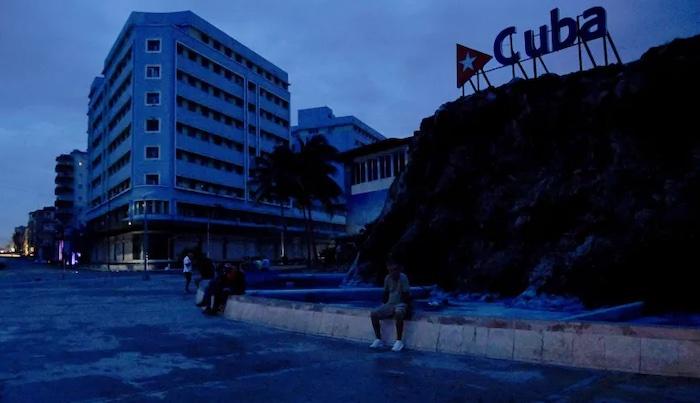
The energy crisis has triggered a nationwide power grid collapse that has left millions of Cubans without electricity, severely impacting daily life and essential services. Cuba was hit again this Monday by a generalized nationwide blackout that left the entire country without electricity - the sixth major power outage in just a year and a half. Cuba's electricity generation is sustained by an aging network of thermal power plants, some with more than 40 years of operation.
The island has suffered for more than two years from massive and recurrent outages, sometimes for several days. According to the US embassy, the national electrical grid is 'increasingly unstable,' with both scheduled and unscheduled outages becoming a daily occurrence across the country.

These disruptions have a direct impact on essential services such as water supply, lighting, refrigeration, and communications, with many areas including Santiago de Cuba remaining without power despite restoration efforts. Havana residents report that 'what little we have to eat spoils' and that 'our people are too old to keep suffering,' with many contemplating emigration.
Negotiation Context
The escalating tensions occur amid ongoing but tense negotiations between the US and Cuban governments, with Washington demanding Díaz-Canel's removal as a precondition for any deal. As Straight Arrow News reported this week, citing the New York Times, U.S. officials have told Cuban negotiators that Díaz-Canel must step aside. The reported strategy focuses on removing him as head of state without dismantling the Community Party.
“As Straight Arrow News reported this week, citing the New York Times, U.S. officials have told Cuban negotiators that Díaz-Canel must step aside. The reported strategy focuses on removing him as head of state without dismantling the Community Party. Both sides have confirmed talks are taking place.”
Neither side has provided details of the ongoing negotiations, though Trump has portrayed Cuba as desperate to make a deal. In an apparent gesture of goodwill amid the talks, Cuba has invited Cuban Americans and other exiles living abroad to invest in and own businesses on the island. However, the confrontational tone from both sides suggests that diplomatic solutions remain elusive, with the Cuban government framing the US demands as an attempt to overthrow their constitutional order and the Trump administration intensifying pressure through economic sanctions and military threats.