
President Trump Says Iran Offered Deal; Pakistan Is Ready to Host US-Iran Talks
Key Takeaways
- Pakistan ready to host talks between the United States and Iran.
- Trump claimed peace talks were progressing between the US and Iran.
- Iranian officials deny that any US-Iran talks are taking place.
Trump's Deal Claims
President Donald Trump has intensified diplomatic speculation by claiming that Iran has offered a deal to end the ongoing US-Israeli war.
“Updated March 24, 2026 at 5:46 PM EDT President Trump said on Tuesday Iran made a valuable offer to reach a deal with the United States, in negotiations that Iranian officials have so far denied are taking place”
Trump simultaneously announced a five-day pause on strikes against Iranian energy infrastructure, citing 'very good and productive conversations' with Tehran.
The president claimed the US and Iran had already reached 'major points of agreement' and expressed optimism about reaching a comprehensive deal.
Trump stated 'I think there's a very good chance we're going to end up in a deal' while the conflict that began with US and Israeli attacks on Iran on February 28 continued.
Despite diplomatic claims, intense military activity persisted, with Iran continuing missile barrages against Israel and thousands of US Marines being deployed to the Gulf.
Pakistan's Diplomatic Role
Pakistan has emerged as a central diplomatic player in efforts to broker peace between the US and Iran.
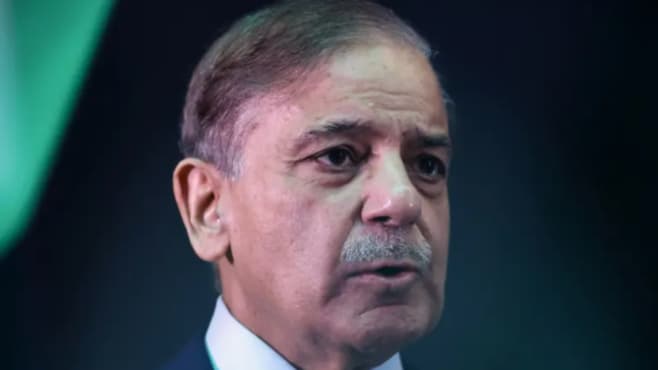
Prime Minister Shehbaz Sharif formally offered Islamabad as a neutral venue for negotiations in a post on social media platform X.

Sharif stated Pakistan 'stands ready and honoured to be the host to facilitate meaningful and conclusive talks for a comprehensive settlement of the ongoing conflict,' subject to concurrence from both Washington and Tehran.
The Pakistani offer gained significant traction when President Trump reposted Sharif's statement on his Truth Social account without additional commentary.
Pakistan's diplomatic efforts have been extensive, with Pakistani army chief Field Marshal Asim Munir speaking directly with President Trump on Sunday.
Foreign Minister Ishaq Dar held separate calls with his Iranian and Turkish counterparts as Islamabad positioned itself uniquely suited for mediation.
Iran's Complex Position
Iran has maintained a complex stance on the reported negotiations, publicly denying direct talks with the US while acknowledging through official channels it has received messages from 'friendly countries' conveying American requests for dialogue.
“The statement added that Wang emphasized to Araghchi that dialogue is always better than fighting and that "all contentious issues must be resolved through dialogue and negotiation, not by using force”
Iranian Foreign Ministry spokesperson Esmail Baghaei confirmed to state media that messages had arrived through 'friendly countries' indicating a US request for negotiations.
Baghaei emphasized that Iran had responded according to 'the country's principled positions' while Iranian Parliament Speaker Mohammad Bagher Ghalibaf dismissed Trump's claims as an attempt to 'manipulate the financial and oil markets'.
Ghalibaf called the reported talks 'fake news' and accused Trump of trying to 'escape the quagmire in which the U.S. and Israel are trapped.'
However, Iranian officials have outlined specific conditions for ending the war, including guarantees against future military action and closure of all US military bases in the Gulf region.
This contradictory posture reflects Tehran's deep skepticism about US intentions, particularly given that previous negotiations were still underway when military strikes began.
Negotiation Formats
Multiple potential formats and venues are under consideration for US-Iran negotiations, with Islamabad emerging as the leading candidate for hosting direct talks.
According to US-based outlet Axios, two possible formats are being discussed for a meeting in Islamabad.
One format involves Iranian Foreign Minister Abbas Araghchi, US envoy Steve Witkoff and Trump's son-in-law Jared Kushner.
Another format envisions US Vice President JD Vance meeting Iran's parliament speaker, Mohammad Bagher Ghalibaf.
However, the diplomatic process remains fragile and tentative, with officials describing it as 'significant enough to pause some military activity but not yet amounting to substantive negotiations.'
The White House has maintained a cautious stance, with press secretary Karoline Leavitt stating that 'these are sensitive diplomatic discussions and the U.S. will not negotiate through the press.'
Regional Impact
The diplomatic efforts to end the Iran war occur against a backdrop of severe humanitarian and economic consequences across the region and globally.
“An earlier version of this item incorrectly said the person killed was an Emirati soldier”
The conflict has resulted in significant casualties, with at least 3,268 people killed in Iran since the war began, including 1,443 civilians – among them at least 217 children.
In Lebanon, Israeli attacks have killed more than 1,000 people and displaced more than a million people, while 16 civilians have been killed on the Israeli side.
The economic impact has been particularly severe for countries dependent on Gulf energy supplies, with Pakistan facing 'devastating' consequences from Iran's effective shutdown of the Strait of Hormuz.
The Philippine President has declared a state of national energy emergency in response to the conflict's impact on energy supplies.
Other countries including Qatar, Turkey and Egypt are also being considered as potential hosts for negotiations, reflecting the complex web of diplomatic efforts underway.
Challenges Ahead
Despite the flurry of diplomatic activity, significant challenges remain to achieving a meaningful resolution to the Iran conflict.
Trust between the US and Iran remains extremely low, particularly after the recent escalation in hostilities and Iran's deeply entrenched suspicion of American intentions.
The political landscape in both countries further complicates negotiations, with Trump facing pressure from within his administration to continue military objectives.
Iranian hardliners appear resistant to concessions while the situation is complicated by the involvement of multiple actors, including Israel which has vowed to continue taking out Iranian leaders.
Analysts suggest that whatever the outcome, 'the Middle East will never be the same,' with Abdul Basit noting that 'the Trump administration finds itself in a corner. They need an exit.'
The delicate balance between military pressure and diplomatic engagement continues to define the approach of all parties involved in what remains an extremely volatile situation.
More on USA

Democrat Emily Gregory wins Florida state House seat in Mar-a-Lago district
29 sources compared

Delta suspends VIP services for members of Congress amid DHS shutdown
21 sources compared

Trump administration bans imports of new foreign-made routers over security risks
10 sources compared
Minnesota Sues DOJ, DHS Over Evidence Access in Officer-Involved Shootings
13 sources compared