
Protesters Attack Cuban Communist Party Headquarters in Morón; Five Arrested.
Key Takeaways
- Five protesters were arrested after partial destruction of Morón's Communist Party headquarters in central Cuba.
- The protest centered on power outages and food shortages, amid U.S. oil blockade tensions.
- Authorities characterized the incident as vandalism by the protesters, rather than legitimate demonstration.
Morón Protest Overview
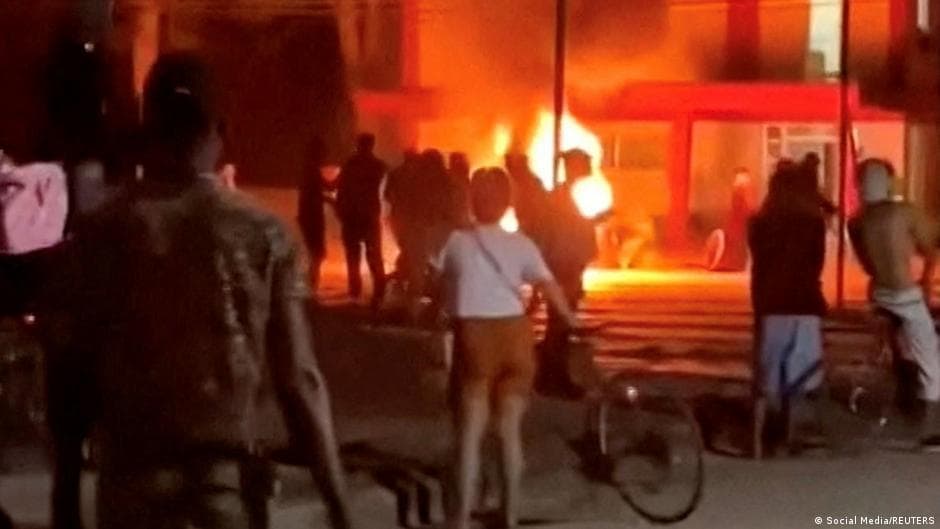
Protesters in central Cuba's Morón city attacked the local Communist Party headquarters in a rare outburst of public dissent triggered by severe economic conditions.
“Protesters in central Cuba have torched a local communist party office, as conditions on the island continue to deteriorate under severe restrictions from the United States meant to squeeze the economy”
According to Cuban authorities, at least five people were arrested following the disturbances that occurred during the protest, while one person was injured and transported to the Captain Roberto Rodríguez Provincial General Teaching Hospital for treatment.

The Cuban Ministry of the Interior reported that the incident involved vandalism against the Municipal Committee of the Party, with a smaller group throwing stones at the building entrance and setting fire to the street using furniture from the reception area.
Additional damages were recorded at other local establishments including a pharmacy and a government supermarket, as confirmed by both official state media and opposition-aligned sources.
Protest Escalation
The protest initially began peacefully as residents marched through downtown Morón to denounce the constant power outages and difficulties accessing food, but the situation escalated into violence following an exchange with local authorities.
State-run newspaper Invasor reported that "what began peacefully, after an exchange with the authorities in the area, degenerated into vandalism against the headquarters of the municipal committee of the Communist Party," with unverified videos showing protesters breaking into the office and throwing stones at a burning building.

Opposition media confirmed that participants marched through several streets with pot-banging protests, gathering first in front of the police station and then in front of the municipal PCC headquarters which they "completely looted."
During the demonstration, attendees chanted slogans such as "Liberty!", "Down with the dictatorship!", "We are not afraid!", and "Patria y Vida" while also voicing direct criticisms of President Miguel Díaz-Canel.
Economic Crisis Context
The protests in Morón occur against the backdrop of Cuba's severe economic crisis, which has been significantly exacerbated by recent US actions.
“HAVANA (AP) — A group of residents of a city in central Cuba took to the streets early Saturday and partially destroyed the local headquarters of the ruling communist party”
Since US President Donald Trump's administration captured Venezuelan President Nicolas Maduro - Cuba's most important foreign benefactor - in January, Venezuelan oil shipments to Cuba have been cut off, while Trump has threatened to impose tariffs on any country selling oil to the island.
This "oil blockade" has created a massive economic chokepoint for Cuba's already faltering electrical grid, leading to fuel shortages that have reduced public transportation and made it difficult for teachers and students to attend classes.
The prolonged blackouts now last 15 to 20 hours per day in some regions like Ciego de Ávila, with residents reporting they cannot cook or have running water, while the island of 9.6 million inhabitants also faces shortages of food, medicine, and other basic goods.
In response to the mounting pressure, Cuba's government confirmed on Friday that it had begun talks with Washington to try to defuse the crisis, though no details on the nature of the talks were provided.
Government Response
The Cuban government responded to the rare violent protests by detaining five people and launching an investigation into what they termed "vandalism acts," while President Miguel Díaz-Canel acknowledged that anger over the prolonged power outages was understandable but warned against violence, stating "there will be no impunity for vandalism and violence."
State media outlet Vanguardia de Cuba actively worked to counter online reports that a person had been shot by police, dismissing such claims as "media manipulation" that seeks "to sow fear and confusion among our people."

The incident in Morón represents significant political turbulence for Cuba, as violent public demonstrations are exceedingly rare in the communist country, with some participants in the 2021 anti-government protests receiving sentences of 20 years or more in prison.
While Cuba's 2019 constitution grants citizens the right to demonstrate, a more specific law defining that right remains stalled in the legislature, leaving protesters in a legal gray area and potentially facing severe consequences for their actions.
Political Significance
The uprising in Morón marks the first significant anti-government protests seen in Cuba since the COVID-19 pandemic and represents a notable escalation in public dissent under the current economic crisis.
“At CNEWS, we respect your privacy, and it is thanks to personalized advertising that we can provide you with high-quality information instantly and for free”
The protests follow a pattern of nightly demonstrations across the country where residents engage in "cacerolazos" - pot-banging protests from their homes - while some bolder individuals take to the streets, sometimes lighting bonfires.
The timing of these protests coincides with Donald Trump's increasingly aggressive rhetoric toward Cuba, with the US president predicting the communist dictatorship "will fall pretty soon" and claiming the country "wants to make a deal so badly" after previously warning of a potential "friendly takeover."
This external pressure combined with the severe internal economic hardships has created an "electric atmosphere" where Cubans are reportedly "no longer afraid to protest," according to local observers, though the government remains cautious about responding too forcefully given the potential for US military intervention.
More on Protests

President Diaz-Canel Confirms Cuba-US Talks to Settle Bilateral Disputes
159 sources compared
Naturalized US citizen Ayman Mohamad Ghazali rams vehicle into West Bloomfield synagogue, dies
129 sources compared

Artist Secret Handsake Installs Titanic-Pose Statue of President Trump With Jeffrey Epstein on National Mall
15 sources compared
ISIS-Inspired Suspects Throw Homemade Bombs at Mayor Zohran Mamdani's Residence; Two Charged
10 sources compared