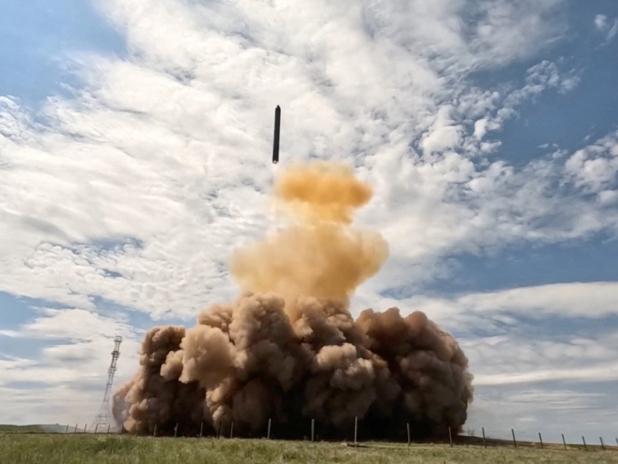
Russia · 12 May, 2026 · 3 min read
Putin Says Russia’s RS-28 Sarmat Test Launch Is ‘Most Powerful Missile System’
Putin says Sarmat ICBM is the world's most powerful missile system. Test follows expiry of New START treaty between US and Russia.
Calendario de despliegue operacional del Sarmat.
6 of 11 outlets skipped it: se habla de alcance superior a 35.000 km..
11outlets compared
Same story, two versions
tap a side to read it in full
PressTV
“the first regiment equipped with the missile would be deployed by the end of 2026.”Read the original ↗
Cambia la urgencia percibida y la lectura del estado real del programa.
Sarmat test and New START
Russia tested a new long-range, nuclear-capable intercontinental ballistic missile, the RS-28 Sarmat, after the ending of the New START agreement in February formally released the world’s two largest nuclear powers from a raft of restrictions.
Russian President Vladimir Putin said after receiving a report of a successful launch of Sarmat, "This is the most powerful missile system in the world," and he said the missile would be on "combat duty" by the end of this year.
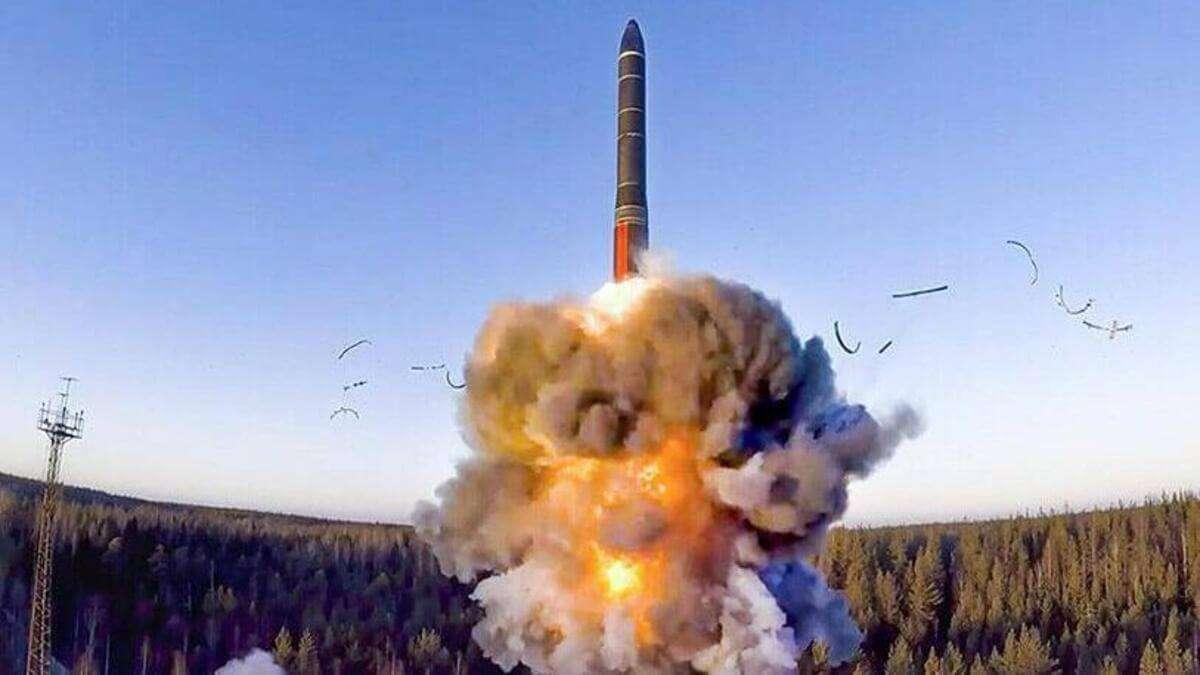
The test-launch took place at 11:15 a.m. Moscow time from the Plesetsk Cosmodrome in the Arkhangelsk region, and Russian officials said that around half an hour later the missile hit its target at the Kura test range on the Kamchatka Peninsula.
Putin said the missile could carry a warhead more than four times more powerful than anything Western militaries possessed, and he said it has the ability to penetrate all existing and future anti-missile defence systems.
The Kremlin said it had notified the United States of the launch, while the state news agency Tass reported that Moscow and Washington agreed to re-establish high-level military dialogue shortly after New START expired but there were no immediate signs of renewing or prolonging it.
Putin’s claims and officials
After the launch, Putin called the test a “major event and unconditional success,” and he said the positive results would allow Russia to deploy the first missile regiment armed with this missile system to combat duty in the Uzhur formation of Krasnoyarsk Krai by the end of this year. The Strategic Rocket Forces commander Sergei Karakayev informed Putin of the successful test, and Karakayev said the deployment of launchers equipped with the Sarmat missile system would “significantly enhance the combat capabilities” of Russia’s ground-based strategic nuclear forces. CBS News reported Putin said the Sarmat would enter combat service at the end of the year and described it as built to replace the aging Soviet-built Voyevoda.C
CBS News also said the Sarmat is designated “Satan II” by NATO and is meant to replace about 40 Soviet-built Voyevoda missiles. CIn parallel, Atalayar framed the broader nuclear context by quoting Joe Biden’s response to why the United States had not adopted a more firm position against Russia: «Porque ello supondría la Tercera Guerra Mundial».

Deterrence stakes and next steps
France 24 reported that the test came months after the last treaty with the United States limiting their atomic arsenals lapsed, and it said Putin claimed Sarmat would be on "combat duty" by the end of this year. Pavel Podvig, a senior researcher at the UN Institute for Disarmament Research, told France 24 that the deployment of Russia’s “largest missile” this year was realistic, but he added it will not lead to a "significant change in the deterrent potential of Russia's strategic forces." Atalayar tied the nuclear dimension to the Ukraine war by saying that the conflict is the most dangerous nuclear confrontation since the crisis of the missiles of Cuba of 1962 and that Russia’s nuclear posture has been modulating the allies’ gradual response to support Kiev.
The same Atalayar text said Russia has more than 1.500 ojivas deployed in missiles, submarinos y bombarderos capable of reaching U.S. territory, and it described the Federation Rusa as the only country that can be defined as an existential threat for the United States. In the background of the test, CBS News said the nuclear arms pact expired in February and that the U.S. and Russia have about 4,300 and 3,700 nuclear warheads respectively, according to the Federation of American Scientists.C