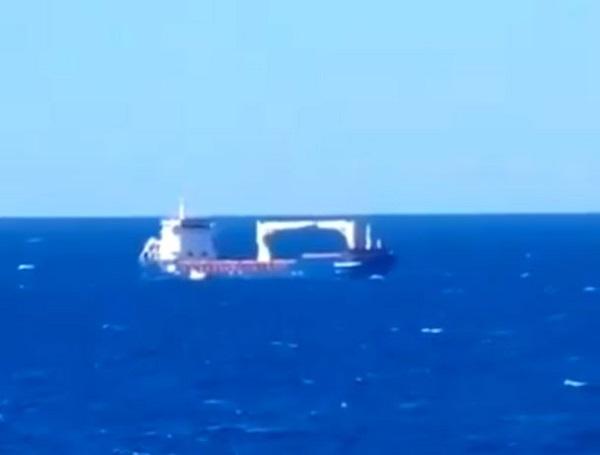
Russian Cargo Ship Ursa Major Sinks Off Spain Carrying Nuclear Reactor Components For North Korea
Key Takeaways
- Ursa Major sank off Spain after a series of explosions.
- Carrying nuclear reactor components destined for North Korea's submarines.
- Investigations cite explosions; torpedo or mine attack suspected.
Sinking near Spain
A Russian cargo ship, the Ursa Major, also called the Sparta 3, sank in the Mediterranean Sea after a series of explosions about 60 miles off the coast of Spain on December 23, 2024, after Spanish maritime authorities dispatched a helicopter, a fast rescue boat, and a tugboat when the vessel put out a distress call at 12.53pm.
The Guardian reported that the Ursa Major put out a distress call at 12.53pm and that by 11.20pm it had sunk and now lies at a depth of 2,500 metres, after Spanish attempts to assist were curtailed at 8.07pm when a Russian warship arrived, took over operations, and ordered the two Sasemar boats to withdraw to a distance of two nautical miles.
CNN’s investigation, as described by The Week, said the ship’s captain, Igor Anisimov, confessed the ship contained nuclear reactors similar to those used in submarines and that it would be headed to Rason port in North Korea.
The Week also said the Spanish investigation found a 50 cm by 50 cm hole in the hull, and it described a possible Barracuda supercavitating torpedo as a way to explain the sudden slowing of the vessel after it suffered three explosions on the starboard side.
In parallel, Europa Sur reported that the Ursa Major sank on 23 December 2024 after registering "una serie de explosiones" in its fourth of machines, and that the crew were evacuated until Cartagena with two mariners reported missing.
Competing explanations
CNN’s investigation, as relayed by The New Voice of Ukraine, said the sinking may have marked "a rare and high-stakes intervention by a Western military" to prevent Russia from sending an upgrade in nuclear technology to North Korea.
The Week framed the same core dispute by noting that a new CNN report suggested the sinking might have been caused by a high-stakes intervention by a Western military power, while Western security intelligence described the incident as strange and did not provide alternative explanations.

The Guardian reported that the Russian warship then launched flares over the Ursa Major, and it said CNN noted four similar seismic signatures heard just after the flares were fired.
The Week added that the Russian military ship Ivan Gren ordered all other vessels to keep away two nautical miles and asked that the crew be returned, while Spanish maritime authorities insisted on conducting a rescue operation and sending a helicopter to the ship.
In contrast, the Russian owner Oboronlogistics described the incident as a targeted terrorist attack, and The Economic Times said Russian officials called the event a targeted terrorist attack while the Pentagon declined to comment.
North Korea stakes
Multiple reports tied the Ursa Major’s suspected cargo to North Korea’s port of Rason, with The Guardian saying the captain told Spanish investigators the “manhole covers” onboard were “nuclear reactor components similar to those used by submarines,” while also stating that no nuclear fuel was being transported.
The Week said the captain, Igor Anisimov, confessed the ship contained nuclear reactors similar to those used in submarines and that it would be headed to Rason port in North Korea, and it also noted that the incident followed two months after Kim Jong Un sent troops to assist with Moscow’s invasion of Ukraine.
The Guardian reported that the vessel was officially transporting “non-dangerous merchandise” including 129 shipping containers, two cranes, and two large maintenance hole covers, but that investigators questioned the route and the undeclared cargo suggested by satellite photographs of two huge blue containers each estimated to weigh about 65 tonnes.
The Times of India said the Spanish government released a statement on February 23 after pressure from opposition lawmakers, and it reported that the captain told investigators the vessel was carrying “components for two nuclear reactors similar to those used in submarines,” with it unclear whether they contained nuclear fuel.
Looking ahead, The Guardian said the wreck lies at a depth of 2,500 metres and that CNN reported a “flurry of recent military activity” around the ship’s remains, including US nuclear “sniffer” aircraft overflying the scene twice in the past year and a Russian spy ship setting off four further explosions in the wreckage a week after it sank.
More on Russia
Putin Says Russia’s RS-28 Sarmat Test Launch Is ‘Most Powerful Missile System’
11 sources compared

Iran-Linked Harakat Ashab al-Yamin al-Islamiya Claims Attacks on Jewish Sites Across Europe
10 sources compared
U.S. Navy USS Alaska Docks in Gibraltar as Trump Says Iran Ceasefire Is on Life Support
11 sources compared

Medvedev Warns Germany Remilitarization Aims to Repeat June 22, 1941
10 sources compared