
RCMP Warns Treacherous Conditions As Spring Snowstorm Leaves Highway 63 Impassable Near Fort McMurray
Key Takeaways
- Highway 63 near Wood Buffalo impassable due to blowing snow and treacherous conditions.
- RCMP warn of treacherous Alberta road conditions as spring storm hits.
- Motorists stranded for hours in Fort McMurray area due to the storm.
Blowing snow strands motorists
A spring snowstorm with violent winds pummelled Alberta, leaving Highway 63 and Highway 881 impassable and stranding motorists south of Fort McMurray.
“It may be late April, but a gusty snowstorm was making a mess of traffic across Alberta on Friday”
The Edmonton Journal reported that “Highway 63 remains impassable between Highway 881 and mile marker 140,” with the “majority of the stranded vehicles” in that area, while the affected zone extended “even further south to Wandering River, which is roughly 200 kilometres south of Fort McMurray.”

Global News described the same storm’s impact in the Fort McMurray area, saying RCMP shut down several roads because of “extremely poor driving conditions” that left some motorists stranded “for hours in their vehicles.”
CP24 said the RCMP warned of “treacherous” road conditions across Alberta as the storm hit, and that Highway 63 would remain closed Friday night due to “heavy snowfall and winds going into Saturday.”
In the Wood Buffalo region, RCMP escorted tow trucks to reach vehicles blocking the roadway and drivers stranded overnight, as the Edmonton Journal reported on Friday.
The Edmonton Journal added that the heavy snow and blizzard-like conditions started around “11 a.m. on Wednesday morning” in the area, and that conditions “continued to worsen over the last 48 hours.”
CP24 put the scale of the disruption at “Approximately 300 vehicles are stranded along the highway,” while Global News said Environment Canada warned that non-essential travel should be avoided in the hardest-hit areas south of Fort McMurray.
Road closures and advisories
As the storm intensified, authorities issued a web of closures and warnings that shifted by corridor and direction.
CP24 listed specific blocks: “Highway 63: Northbound traffic will be blocked by Alberta Sheriffs at Wandering River,” “Highway 63: Southbound traffic will be blocked by Regional Municipality of Wood Buffalo Bylaw officers at the junction of Highway 881,” and “Highway 881: Northbound and Southbound travel remains blocked north of Imperial Mills by Lac La Biche RCMP.”
The Edmonton Journal similarly reported that “Highway 63 northbound at Wandering River to Fort McMurray has been shut down,” and that travel was also shut down “along Highway 63 in the area south of Marianna Lake and Fort McMurray.”
It also said “Northbound and southbound travel north of Imperial Mills on Highway 881 is also closed, according to RCMP,” and described Highway 63 as impassable between “Highway 881 and mile marker 140.”
CP24 said snowplows, tow trucks, and Wood Buffalo RCMP would continue working together “throughout the weekend” to assist stranded motorists and remove vehicles to re-open the highways.
The same CP24 report described a provincewide tow ban for central Alberta highways, stating that Alberta RCMP issued a tow ban for Highway 21 south from Fort Saskatchewan to the Yellowhead, then east along the Yellowhead to Elk Island National Park.
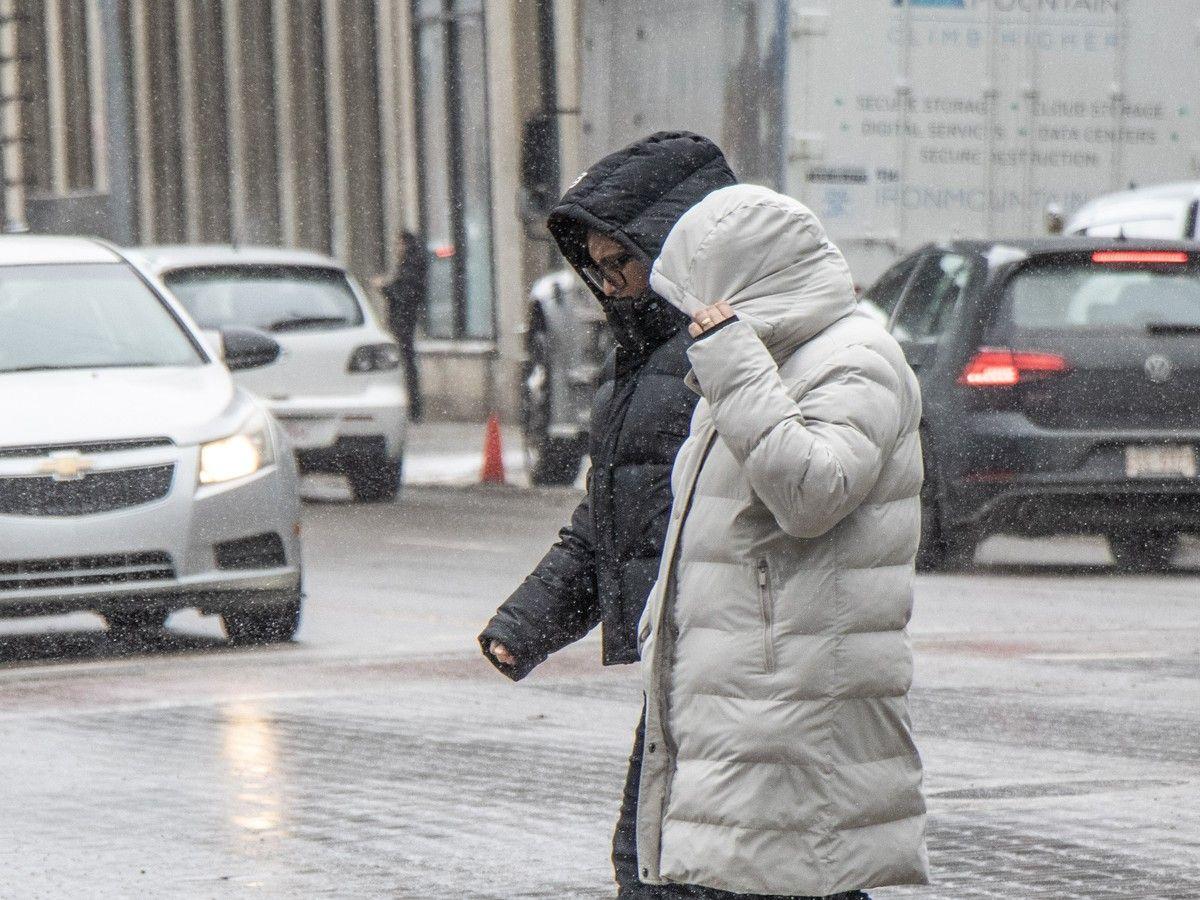
Global News added that Environment Canada issued a blowing snow advisory stretching “from Athabasca to the southeast corner of the province,” and warned that heavy snow combined with gusty winds could bring “near-zero visibility and hazardous driving conditions.”
RCMP escorts and safety guidance
RCMP and local officials focused on keeping traffic moving where possible while discouraging additional travel into the storm zone.
“Roofs blown off buildings, trees uprooted, highways closed, motorists stranded in their vehicles by heavy snow — those are just a few of the problems caused by a nasty spring storm that has slammed into Alberta”
The Edmonton Journal reported that “On Friday, RCMP escorted several tow trucks southbound in the northbound lanes of Highway 63 to reach vehicles blocking the roadway and drivers who were stranded.”
In an interview with Postmedia, Alberta RCMP Staff Sgt. Sabrina Clayton said that “(Escorting tow trucks) started this morning as a way to try and get traffic moving again,” but that the effort was “hampered by some of the snowdrifts that are in the way now that traffic’s not been moving, and plows haven’t been able to access the area.”
Clayton told the Edmonton Journal that as of Friday afternoon, “Highway 63 and 881 remain impassable due to dangerous storm conditions,” and she said RCMP were still trying “to establish how many people are actually stranded on the highway.”
She also said there were “everything from industry equipment that’s stuck out there, to semi trucks that are blocking the road as well as passenger vehicles,” and that while there had been “a number of collisions,” “none have been serious.”
The Edmonton Journal quoted Wood Buffalo Mayor Sandy Bowman saying, “We are in contact with the Province and focused on doing everything we can locally to support the response,” and added that even though it was “outside our municipal boundary,” the city was “stepping in to help residents get home safely.”
CP24 echoed the safety posture by quoting RCMP’s instruction: “If you are stranded, stay with your vehicle. RCMP, emergency crews, tow trucks, snowplows, and sanding trucks are active in the area.”
Storm totals and regional impacts
The storm’s effects were not limited to the Wood Buffalo corridor, with Global News describing damage and disruptions across Alberta’s major cities and surrounding areas.
In Calgary, Global News said wind gusts of nearly “90 kilometres per hour” toppled trees, tore the roofs off buildings and flipped over semi-trucks, while also forcing the cancellation of the “Parade of Wonders” — the kick-off celebration for the annual Calgary comic expo.
In Edmonton, Global News reported dangerous driving conditions including “snow, ice and strong winds,” and said vehicles were sent “into the ditch or crashing into each other” during the Friday morning commute.
Global News also stated that Environment Canada issued a blowing snow advisory stretching “from Athabasca to the southeast corner of the province,” and that the national weather service warned heavy snow plus gusty winds could create “near-zero visibility and hazardous driving conditions.”
The same report said Edmonton’s blowing snow advisory included “close to 10 centimetres of snow in the forecast by Saturday morning” and a forecast high of “just -2 C to start the weekend,” while Calgary’s forecast included “up to four centimetres of snow” and a forecast high of “-3 C on Saturday.”
It added that the normal daytime high for both cities at this time of year is “14 C,” and that “It’s not looking like the best weekend,” according to Global Calgary weather specialist Sarah Offin.
In the hardest-hit areas south of Fort McMurray, Global News said Environment Canada warned that “up to 50 centimetres could fall,” prompting warnings that “non-essential travel should be avoided.”
Diverging numbers and ongoing response
While the core narrative across outlets centered on impassable highways and stranded motorists, the reporting also diverged in how it quantified the scale and described the immediate operational picture.
“"I know I lot of people have switched over to summer tires in anticipation of spring, and that's definitely not helped in this case”
CP24 said “Approximately 300 vehicles are stranded along the highway,” while the Edmonton Journal described a “significant number” of stranded vehicles and said RCMP were “still trying to establish how many people are actually stranded on the highway.”
CP24’s live-update style also included a detailed count of crashes in Edmonton, stating that “a total of 60 car crashes were reported from 4 p.m. on Thursday to 11 a.m. on Friday,” according to Accident Support Services International.
The Edmonton Journal, by contrast, emphasized that while there had been “a number of collisions,” “none have been serious,” and it described minor collisions where “many vehicles are sliding into the ditch and have become stranded.”
CP24 also reported that RCMP issued a tow ban for highways northeast of Edmonton just before 2 p.m., while the Edmonton Journal focused on RCMP escorting tow trucks southbound in the northbound lanes of Highway 63 and said “plows haven’t been able to access the area.”
Global News framed the storm as a “nasty spring storm” and described how Environment Canada warnings stretched across the province, including a blowing snow advisory from Athabasca to the southeast corner of Alberta.
It also projected a shift toward more seasonable conditions next week, saying the forecast high for both Calgary and Edmonton on Monday is “around 5 C” and will increase to the “mid-teens by Thursday.”
More on Canada

Saudi National Arrested After Crossbow Attack at University of Surrey Manor Park Student Village
11 sources compared
Mark Carney Unveils Canada’s AI for All Strategy, Warns Foreign Platforms Can Be Used Against Canadians
12 sources compared

Wang Yi Calls Mark Carney’s Beijing Visit a Turning Point for Canada-China Ties
13 sources compared

Man, Woman, and Child Die After Fall From High-Rise Flats in Elephant and Castle
10 sources compared