Representative Ogles Sparks GOP Islamophobia Row as House Leadership Stays Silent
Key Takeaways
- Andy Ogles and other Republicans posted anti-Muslim messages drawing criticism.
- House Republican leadership has not publicly condemned the statements; facing mounting pressure to respond.
- The controversy underscores GOP Islamophobia criticisms and calls for accountability within Congress.
Ogles' Anti-Muslim Remarks
Representative Andy Ogles of Tennessee ignited a major controversy this week with inflammatory anti-Muslim remarks that drew condemnation from Democrats and religious figures.
“Would you like to receive Push Notifications”
Ogles posted on social media platform X that 'Muslims don't belong in American society. Plurality is a lie,' before doubling down on his comments with a follow-up post declaring that 'Muslims are unable to assimilate; they all have to go back.'

The Tennessee Republican specifically targeted Muslim candidates including Zohran Mamdani, calling him 'little muhammad' and demanding he be 'DEPORTED' and 'subject to denaturalisation proceedings' after Mamdani won the Democratic primary for New York City mayor.
The remarks came amid broader tensions over Islamophobia in American politics, with civil rights groups and Democratic lawmakers immediately condemning what they characterized as bigoted rhetoric that incites hatred against millions of Muslim Americans.
Broader Anti-Muslim Pattern
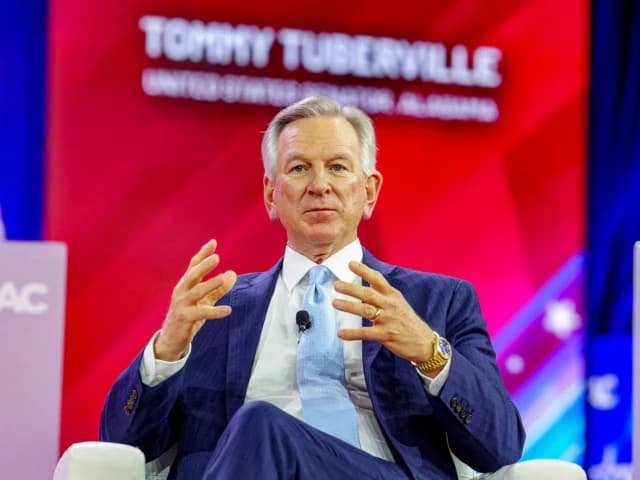
Ogles' remarks appear to be part of a broader pattern of anti-Muslim rhetoric emanating from House Republicans, with other lawmakers including Randy Fine of Florida and Tommy Tuberville of Alabama making similar inflammatory statements.
Republican leaders have been emboldened by former President Donald Trump's first-term restrictions on entry from Muslim-majority countries - widely referred to as a 'Muslim ban' - and his past sharing of anti-Muslim propaganda on social media, critics argue.

The Washington Post analysis found that since the start of 2025 nearly 100 Republican members of Congress have posted about Islam or Muslims on social media, with almost all of the posts being negative and two-thirds referencing themes such as radical Islam, Sharia law, extremism or terrorism.
Texas lawmakers were particularly active, with Chip Roy writing more than 100 posts referencing Islam this year, including one that said 'Protect America. Ban Sharia.'
Democratic Condemnation
Democratic lawmakers have responded forcefully to the anti-Muslim rhetoric, with House Minority Leader Hakeem Jeffries describing Islamophobia as 'a cancer that must be eradicated from both the Congress and the Country.'
“House GOP leadership silent as more members post anti-Muslim statements Several Republican lawmakers are ramping up anti-Muslim comments and facing little to no response from their leadership”
Representative Shri Thanedar of Michigan has introduced a resolution to censure Ogles and remove him from the Homeland Security Committee, stating that 'Congressman Ogles' disgusting and bigoted words have no place anywhere in our country, let alone from a member of Congress. His words incite hatred against millions of Muslim Americans.'
Other Democratic leaders echoed these sentiments, with Katherine Clarke writing that 'We already know that Randy Fine and Tommy Tuberville are vile bigots. But what's even worse is the silence from GOP leadership.'
The Council on American-Islamic Relations government affairs director Robert McCaw also condemned the remarks, ironically noting that 'the only people trying to impose their religion on America are those politicians who seek to ban Muslims from our nation.'
GOP Leadership Silence
Republican House leadership has faced mounting criticism for its silence in condemning the anti-Muslim rhetoric, with Speaker Mike Johnson declining to directly criticize Ogles' remarks when asked by reporters.
Johnson stated that 'The language that people use, it's different language than what I would use, but I think that's a serious issue,' referring to claims that Islamists are trying to impose Muslim sharia law on the United States.
Critics have characterized this response as 'morally cowardly' and 'politically shortsighted,' noting that a simple statement rejecting religious bigotry would have been politically easy yet none has been issued by House Republican leaders.
The reluctance to confront the issue directly has allowed the rhetoric to spread rather than recede, with social media analysis showing increasing numbers of Republican lawmakers posting anti-Muslim content.
Historical Contrast
The current controversy stands in stark contrast to the post-September 11th approach of former President George W. Bush, who visited an Islamic Center and declared that 'Islam is peace' in the aftermath of the terrorist attacks.
“Would you like to receive Push Notifications”
Bush stated that 'Those who feel like they can intimidate our fellow citizens to take out their anger don't represent the best of America. They represent the worst of humankind, and they should be ashamed of that kind of behavior.'
This historical context highlights a significant shift in political discourse about Islam and Muslims in American society.
The current rhetoric has also been linked to real-world consequences, as evidenced by the case of two men charged with federal terrorism-related crimes for allegedly igniting a homemade bomb at an anti-Islam protest outside Mamdani's mansion in New York, with authorities stating that the pair declared they were inspired by the Islamist militant group Islamic State.
More on USA

FCC chair Brendan Carr Threatens Broadcasters' Licenses Over Iran War Coverage
18 sources compared

Cuba's Díaz-Canel Acknowledges Talks with U.S. as Energy Crisis Worsens
25 sources compared
Ric Grenell Steps Down as Kennedy Center President; Trump Names Replacement Matt Floca
10 sources compared

United States launches large-scale strike on Iran's Kharg Island, CENTCOM confirms.
14 sources compared