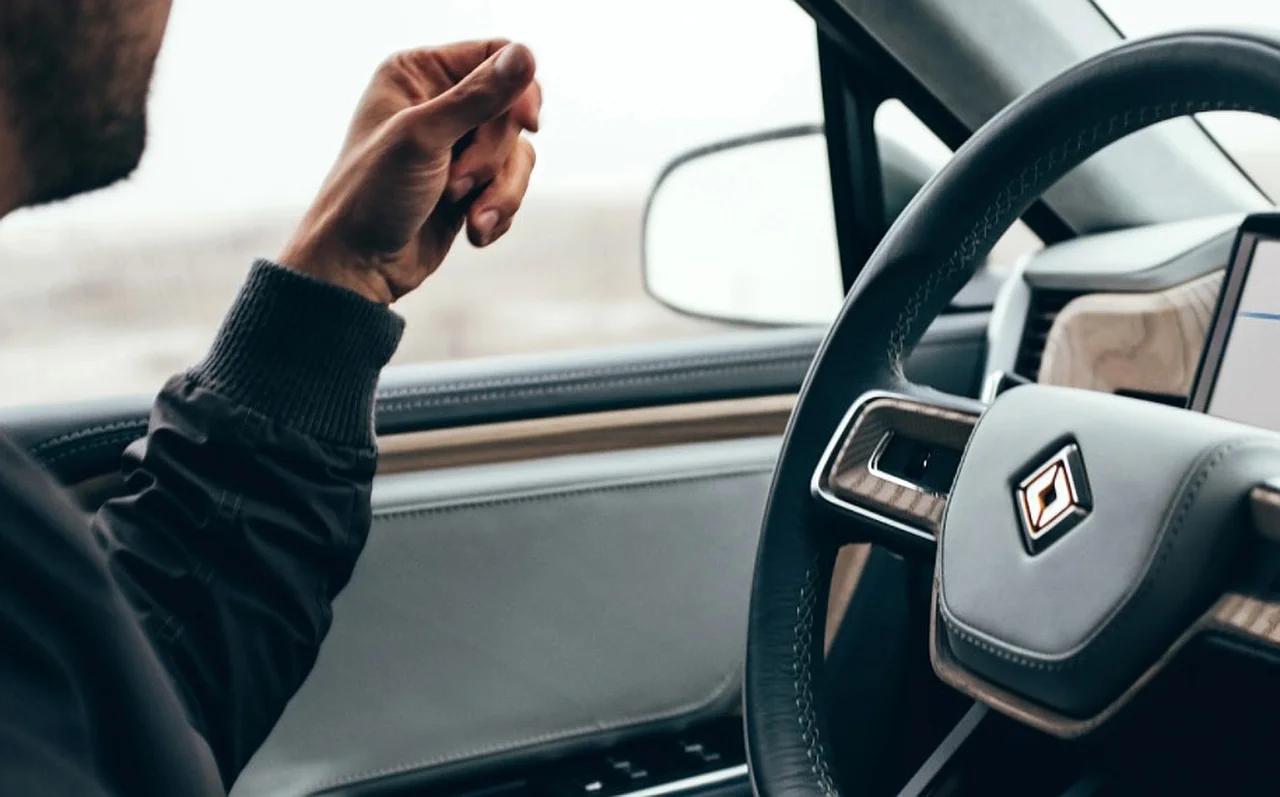
Rivian Faces Class Action Over Driver+ Promises For R1T And R1S In Central District Of California
Key Takeaways
- Class action alleges Rivian overstated level 3 autonomous claims for R1T and R1S Gen 1.
- Plaintiffs claim Rivian misled customers about Driver+ features and failed to deliver promised technologies.
- The lawsuit centers on first-generation R1T and R1S vehicles and their Driver+ system.
Lawsuit Over Level 3
Rivian is facing a class action lawsuit alleging it overstated the self-driving capabilities of its first-generation R1T truck and R1S SUV models, with plaintiffs arguing the vehicles were not capable of Level 3 autonomous driving as promised.
The complaint says the Gen 1 vehicles were manufactured without the hardware, cameras, sensors, and compute needed for hands-free driving and/or Level 3 operation, and it argues that no software update could make them perform as advertised.
In the U.S. District Court for the Central District of California, plaintiffs say Rivian marketed its Gen 1 vehicles as capable of level 3 autonomous driving through its Driver+ system, including claims that the functionality would be standard on every Rivian vehicle.
The Courthouse News report says the class action was filed in the Central District of California on Wednesday, and it identifies plaintiff Michael Fritz of San Diego as saying RJ Scaringe explicitly stated all Rivian vehicles would be equipped with two front-facing remote sensors in a 2018 vehicle unveiling video.
TechCrunch reports that the lawsuit focuses on the first-generation models and alleges Rivian represented that these flagship vehicles would be capable of hands-free, eyes-off driving, which the suit also describes as Level 3 autonomy.
Marketing, Scaringe, and Denial
Plaintiffs point to a five-year national marketing campaign and public statements by Rivian’s founder RJ Scaringe, including references to the Driver+ system being marketed as standard in every vehicle and eventually achieving full autonomy.
Courthouse News says plaintiff Michael Fritz of San Diego claimed Scaringe explicitly stated all Rivian vehicles would be equipped with two front-facing remote sensors and other technology that would provide drivers with self-driving technology during a 2018 vehicle unveiling video.
TechCrunch quotes the complaint’s assertion that Rivian “unquestionably knew” its Gen 1 vehicles would never be capable of Level 3 autonomy or “true hands-free driving,” yet continued to tout those capabilities to induce consumers to purchase.
Rivian declined to comment on the pending case, with TechCrunch reporting that Rivian declined to comment on the lawsuit citing pending litigation.
The Engadget report adds that when contacted by TechCrunch, Rivian declined to offer comment on the pending case, while noting that Rivian introduced its “universal hands-free driving” software update late last year for its R2 collection and the second generation of its R1 lineup.
Prices, Plaintiffs, and Claims
The class action alleges that plaintiffs paid between $81,000, $83,000 and $97,000 for Gen 1 vehicles after doing extensive research, and it says none of them would have purchased a Gen 1 vehicle—or paid what they did—if Rivian had disclosed it would never be capable of true hands-free autonomous driving.
“Rivian has been sued over allegations that the EV maker made false claims about the autonomous driving capabilities of its R1T truck and R1S SUV models”
Courthouse News reports that the three main plaintiffs live in Michigan and Wisconsin, and it says the suit accuses Rivian of fraudulent concealment, negligent misrepresentation and unjust enrichment, among other claims including state law violations in California, Michigan and Wisconsin.
TechCrunch says the lawsuit includes three named plaintiffs and that the law firms representing the plaintiffs, Coleman Law and Tycko & Zavareei, have requested a jury trial.
Engadget frames the dispute as a class action over self-driving in Rivian’s early vehicles, and it states that plaintiffs claim the company overstated the capabilities of the R1T and R1S.
TechCrunch also notes that Rivian’s second-generation vehicles were overhauled in 2024 and equipped with the “Rivian Autonomy Platform,” including 11 cameras, five radar sensors, and a computer that is 10 times more powerful than the previous system, while the lawsuit concerns the Gen 1 owners who do not offer hands-free driving.
More on Technology and Science

Saudi Doctors Successfully Separate Filipino Conjoined Twins Olivia and Gianna in Riyadh
11 sources compared
FDA Advisers Recommend Approving Moderna’s mFlusiva mRNA Flu Vaccine for Older Americans
11 sources compared

Ancient DNA Shows Plague Killed Siberian Hunter-Gatherers Near Lake Baikal 5,500 Years Ago
17 sources compared

Tropical Storm Arthur Moves Inland Near Matagorda County, Texas, Threatening Life-Threatening Flooding
11 sources compared