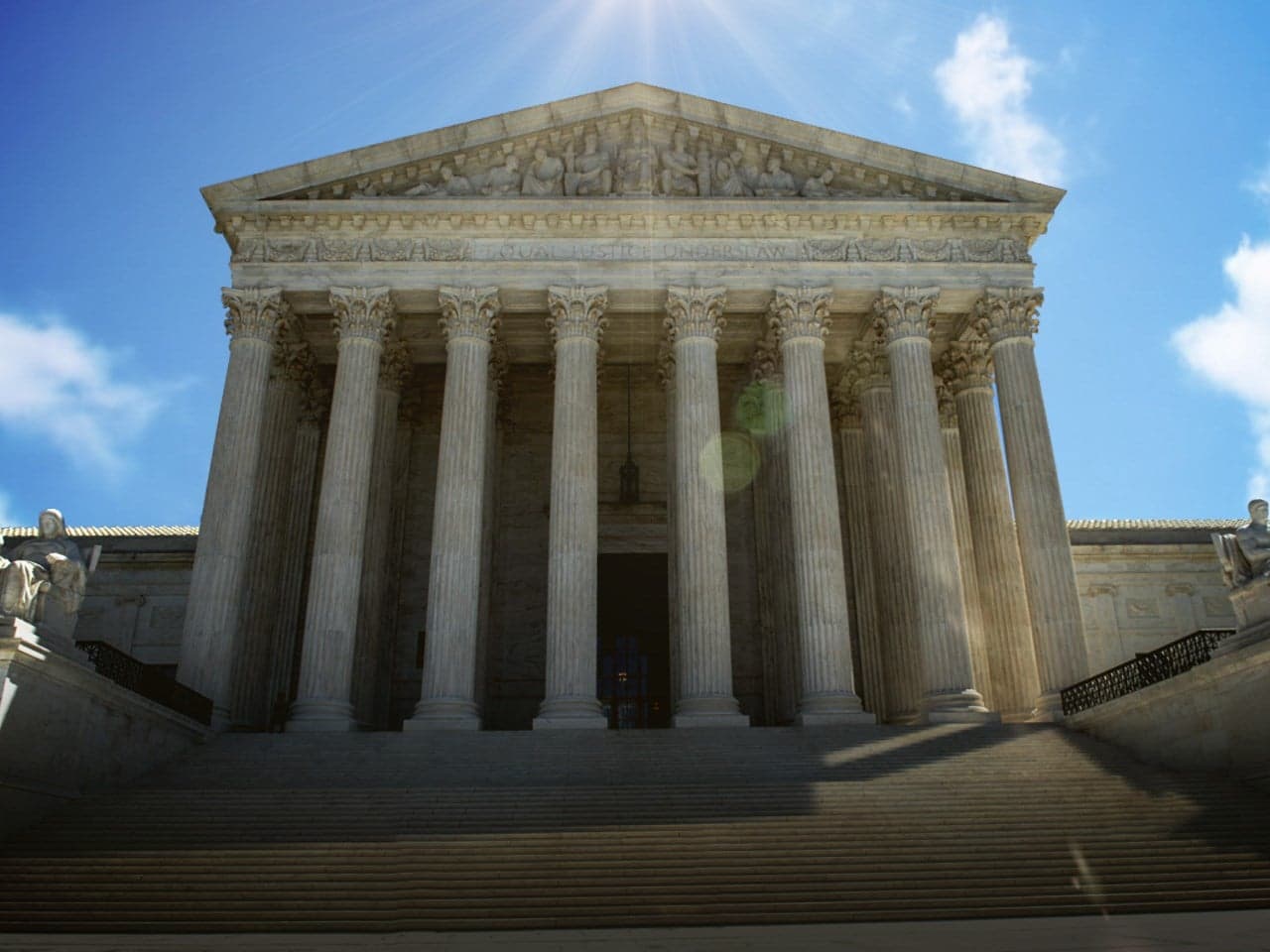
RNC bid to disqualify late-arriving mail ballots goes before Supreme Court
Key Takeaways
- Justices skeptical of counting late-arriving mail ballots, case from Mississippi
- Mississippi allows ballots postmarked by Election Day to be counted if received within five days
- Ruling could affect 13 states plus DC with grace periods for mail ballots
Supreme Court Case Overview
The Supreme Court heard arguments on Monday regarding a Republican Party bid to prevent states from counting mail-in ballots received after Election Day even if they were postmarked on or before, a case with potentially major ramifications for the 2026 midterm elections and all federal elections going forward.
“Supreme Court seems skeptical of allowing states to accept late-arriving mail ballots Today’s live updates have ended”
Thirty states plus D.C. currently have some form of grace period for late-arriving ballots, with Mississippi's law allowing ballots to be counted if they are postmarked by Election Day but received within five business days afterward.

The court's conservative majority sounded skeptical of state laws that allow the counting of late-arriving mail ballots, a persistent target of President Donald Trump, with the case potentially affecting voters in 13 other states and the District of Columbia which have grace periods for ballots cast by mail, as well as an additional 15 states that have more forgiving deadlines for ballots from military and overseas voters.
The justices appeared divided along ideological lines, with conservative justices skeptical of the grace periods and liberal justices more sympathetic, while the court has a 6-3 conservative majority that could potentially invalidate state laws allowing ballots postmarked by Election Day to be counted if they arrive later.
Republican Arguments
The Republican National Committee contends that a longstanding federal law that sets the Tuesday after the first Monday in November as Election Day for federal offices preempts state laws that allow ballots cast by Election Day, but received later, to count, with party attorney Paul Clement arguing that the prospect that the outcome of an election could change because of ballots arriving after Election Day would be unacceptable to losing candidates.
Paul Clement, representing the Republican and Libertarian parties, began his argument by saying that post-Election Day deadlines are wrong as a matter of "text, precedent, history and common sense," while Justice Brett Kavanaugh questioned whether late-arriving ballots risk undermining election confidence, quoting from an analysis by a New York University law professor that "'The longer after Election Day any significant changes in vote totals take place, the greater the risk that the losing side will cry the election has been stolen.'"

Several conservative justices spread conspiracy theories and crazy hypotheticals about mail-in ballot deadlines, with Justices Clarence Thomas and Neil Gorsuch suggesting that mail-in ballots could be given to a neighbor or a notary, then submitted after Election Day but still be counted if they arrived within five days of the election, while Justice Samuel Alito wondered about the appearance of fraud in situations where "a big stash of ballots" that arrive late "radically flipped" an election.
The Trump administration filed a brief backing the challenge to Mississippi's law, with Solicitor General D. John Sauer arguing that "official receipt is at the definitional heart of 'election'" and criticizing Mississippi's law as unduly "general and permissive."
State Defense Arguments
Mississippi Secretary of State Michael Watson, a Republican who is defending the state law, argues that federal law allows ballots cast by Election Day to be received later, stating that "states may decide that voters have made their final choices when ballots are submitted to state officials rather than when they're received."
“• The Supreme Court heard oral arguments in a case about whether states may count mail-in ballots received after Election Day”
Defending the state law, Mississippi Solicitor General Scott Stewart pointed out that the Trump administration and its allies in the case have yet to submit a single case of fraud due to late-arriving mail ballots, arguing that "states have broad powers over elections" and that allowing mail-in ballots to arrive during a brief grace period did not change the meaning of Election Day since ballots were still cast by or before that day.
The court's liberal justices indicated they would uphold state laws with post-Election Day deadlines, with Justice Ketanji Brown Jackson stating that "we have a very long history of states having a variety of different ballot receipt deadlines, to include after Election Day," while Justice Sonia Sotomayor argued that "the people who should decide this issue are not the courts, but Congress, the states and Congress."
Forcing states to change their practices just a few months before the election risks "confusion and disenfranchisement," especially in places that have had relaxed deadlines for years, state and big-city election officials told the court in a written filing, with California, Texas, New York and Illinois being among the states with post-Election Day deadlines, and rural Alaska, with its vast distances and often unpredictable weather, also counting late-arriving ballots.
The liberal justices worried too that a ruling invalidating the law could make it harder for members of the military to vote, with Justice Elena Kagan suggesting that "Congress couldn't have conceived of the kind of early voting we have now, it couldn't have conceived of 1,000 other ways in which we administer elections now."
Political Context
The case comes before the Supreme Court at a moment of broader attacks against mail-in voting, with four Republican-led states having eliminated their ballot arrival grace periods last year, and Congress mulling proposals that would restrict voting by mail amid a sprawling debate in the U.S. Senate over legislation demanded by President Donald Trump that would impose sweeping new voter restrictions nationwide.
Trump has targeted the practice of counting ballots after Election Day, arguing it delays results and leads to suspicions about the vote tallies, as part of his broader attacks on most mail ballots, despite strong evidence to the contrary and years of experience in numerous states showing minimal fraud.

The Republican-backed measure that would severely restrict mail-in voting across the country has passed the House of Representatives and is being considered by the Senate, while a bloc of hard-right Republicans is also pushing a separate proposal that would entirely ban mail-in ballots, with narrow exceptions for military service, travel, disability, medical issues and other hardships.
Trump last year vowed to end the use of mail-in ballots nationwide before the 2026 U.S. midterm elections in November, a move that likely would disproportionately benefit his party given that Democratic voters traditionally have been more likely to use mail-in ballots than Republican voters, and he has continued to make false claims of widespread voting fraud in the 2020 presidential election that he lost to Democrat Joe Biden.
The Trump administration signed an executive order on elections last year that aims to require votes to be "cast and received" by Election Day, and has urged Senate Republicans to expand the voter restriction proposals to include a sweeping ban on mail-in voting, with limited exceptions for military personnel and certain others.
Potential Impact
If the court strikes down the grace periods, it'll leave some states and their voters scrambling to adjust with only a few months before absentee ballots are sent out this fall, potentially creating chaos among states that allow mail-in balloting.
“The Supreme Court ‘s conservative majority on Monday sounded skeptical of state laws that allow the counting of late-arriving mail ballots, a persistent target of President Donald Trump”
A final ruling will almost certainly come by late June, early enough to govern the counting of ballots in the 2026 midterm congressional elections, but any decision narrowing voting access would embolden Republicans to go even further in their attempts to restrict voting rights.

At least 725,000 ballots were postmarked by Election Day 2024 and arrived within a legally accepted post-election window, according to data gathered by The New York Times citing election officials in 14 of 22 states and territories where late-arriving ballots were accepted that year, and about 30% of voters cast a mail ballot in 2024, according to data gathered by the U.S. Election Assistance Commission.
The ruling could also extend to military and overseas ballots, which are allowed to arrive late in 29 total states, potentially disenfranchising hundreds of thousands of voters who could be unaware of the stricter rules or have their ballots thrown out because of postal delays or because they live in remote, rural locations.
The Mississippi dispute marks the latest in a string of election and voting rights cases before the court this term, which has also cleared the way for a Republican congressman from Illinois to challenge his state's rules governing vote counting and is currently considering challenges to federal rules that limit how much political parties can spend in coordination with candidates.
More on USA

Trump Administration Deploys ICE Agents at Airports During DHS Shutdown, Triggering Backlash
11 sources compared

Supreme Court Leans Toward GOP Push to Limit Mail-In Ballots
41 sources compared

Adam Schiff and John Curtis introduce bipartisan bill banning sports wagering on Kalshi and Polymarket.
25 sources compared

US State Department Warns Americans Worldwide of Possible Attacks Amid War With Iran
14 sources compared