
Supreme Court Leans Toward GOP Push to Limit Mail-In Ballots
Key Takeaways
- Court skeptical of Mississippi grace period for late ballots.
- Ruling could reshape national rules on late-arriving mail ballots.
- Ruling could affect military and overseas ballots nationwide.
Court Skepticism
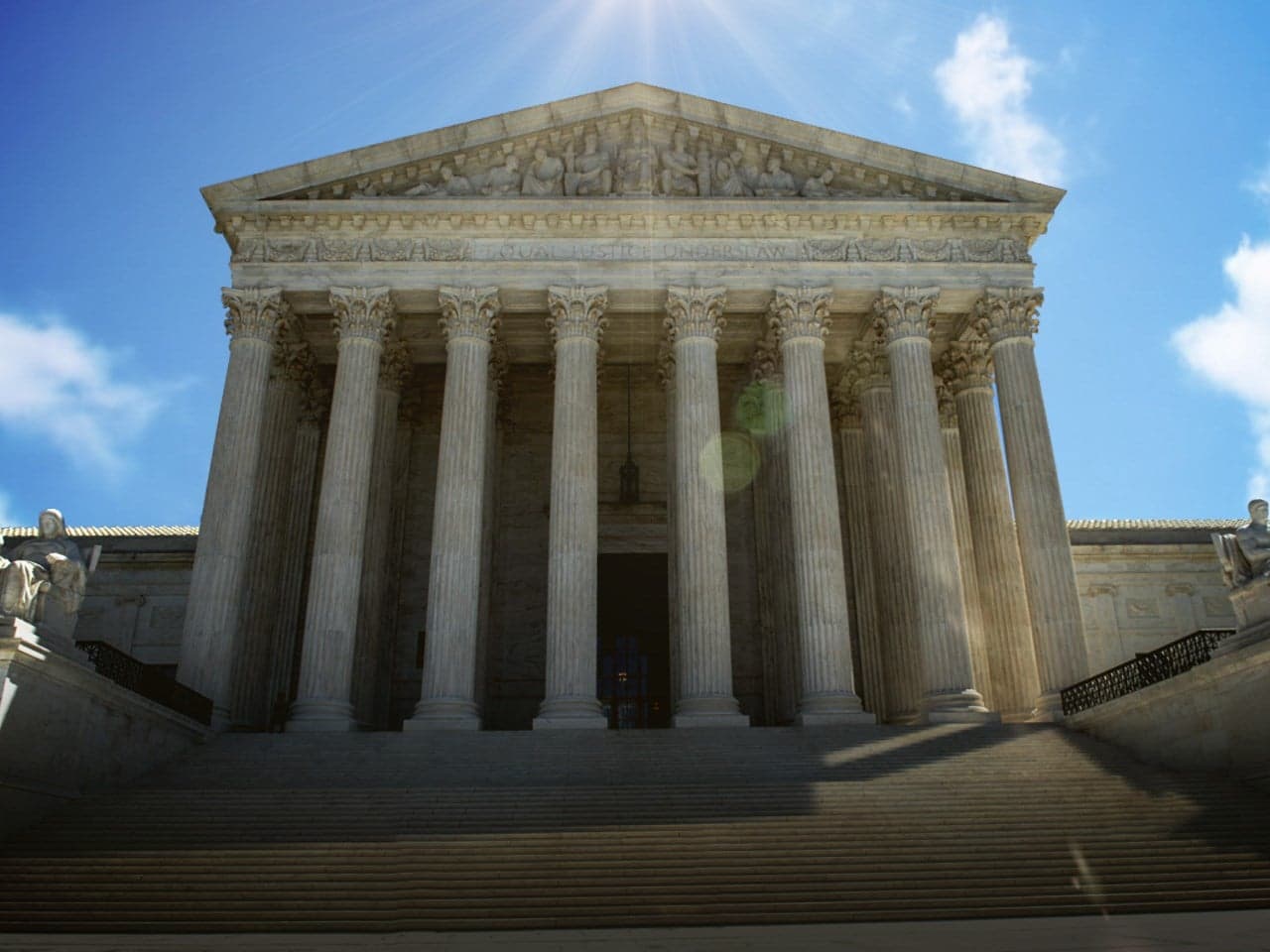
The Supreme Court appears poised to embrace a conservative challenge to state laws allowing mail-in ballots to be counted after Election Day.
“Many states that accept late-arriving absentee ballots implemented their policies during the COVID-19 pandemic when vote by mail surged in popularity and Postal Service delays raised concerns about inadvertent disenfranchisement”
Conservative justices expressed significant skepticism during oral arguments on March 23 in a case involving Mississippi's five-day grace period law.

The law allows ballots postmarked by Election Day to be counted if received within five business days, similar to policies in 13 other states and Washington, D.C.
During more than two hours of arguments, conservative justices raised concerns about potential fraud, administrative burdens, and the definition of when an election has concluded.
Justice Samuel Alito warned about 'line-drawing problems' with grace periods, while Justice Brett Kavanaugh emphasized they became popular only recently.
Legal Arguments
The legal controversy centers on the interpretation of federal election laws and whether Congress intended to require ballots to be received by Election Day.
The Republican National Committee and Trump administration argue that federal statutes from the 1800s establishing a uniform national election day require ballots to be in custody of election officials by Election Day.

Former U.S. Solicitor General Paul Clement argued that historical practice during the Civil War and World War II supports this interpretation.
Mississippi's attorney general contends federal law only requires voters to 'cast' their ballots by Election Day, not necessarily have them received by officials.
The court has examined historical voting practices from the 19th century to determine congressional intent when establishing uniform election dates.
Political Dynamics
The case unfolds against a backdrop of intense partisan politics and President Trump's long-standing opposition to mail-in voting.
““June would give them plenty of time,” Clement said”
Trump has repeatedly claimed without evidence that mail-in voting is vulnerable to fraud and baselessly insists it cost him the 2020 election.
The Trump administration has actively supported the Republican challenge to Mississippi's law, with Solicitor General D. John Sauer criticizing it as unduly 'general and permissive.'
While the law was passed by a GOP-controlled legislature and defended by Republican Attorney General Lynn Fitch, the broader Republican Party has struggled with mail voting as a common practice.
Some Republicans, including Trump, have called to ban mail voting entirely, while others recognize their voters also use mail voting at high rates.
This creates a delicate political balance for the party, as eliminating grace periods could inadvertently hurt Republican candidates while aligning with Trump's narrative about election security.
Voting Impact
A ruling against Mississippi's law could have significant implications for election administration and voting rights across the country.
Fourteen states and the District of Columbia currently have grace periods allowing ballots postmarked by Election Day to be counted if they arrive later.

Twenty-nine states and D.C. allow at least some military and overseas ballots to be counted if received after Election Day.
If the Supreme Court strikes down these state laws, it would force election officials nationwide to implement significant changes before November 2026 midterms.
Local election officials have warned that such a ruling would increase administrative burdens, with officials in California, Massachusetts, and Washington stating that grace periods enable them to do their 'essential work in a timely and reasonable manner.'
The potential impact extends beyond administrative concerns, as Democrats are more likely than Republicans to vote by mail.
Democratic elections attorney Marc Elias argued that the GOP is 'trying to kick out of the electorate voters who they would rather not have participate.'
Broader Implications
The Supreme Court's deliberations also touch on broader questions about early voting practices and the definition of 'election' under federal law.
“But 14 states and the District of Columbia have enacted so-called grace periods, in which ballots that are postmarked by Election Day can be counted if they arrive after that day”
During arguments, several justices questioned how to distinguish between ballots arriving after Election Day and early voting.

Justice Elena Kagan noted that Congress couldn't have conceived of modern early voting when establishing federal election laws.
Justice Neil Gorsuch pressed the Mississippi lawyer to clarify how far states might go in expanding ballot deadlines.
The court's conservative majority appears deeply divided on these questions, with Justice Amy Coney Barrett particularly tough on both sides' arguments.
The case comes as four Republican-dominated states—Ohio, Kansas, North Dakota and Utah—have already eliminated grace periods last year.
Legal experts predict the court will issue a decision by July 2026, with significant implications for the upcoming midterm elections.
More on USA

Trump Administration Deploys ICE Agents at Airports During DHS Shutdown, Triggering Backlash
11 sources compared
RNC bid to disqualify late-arriving mail ballots goes before Supreme Court
19 sources compared

Adam Schiff and John Curtis introduce bipartisan bill banning sports wagering on Kalshi and Polymarket.
25 sources compared

US State Department Warns Americans Worldwide of Possible Attacks Amid War With Iran
14 sources compared