
RSF Drone Strike Kills Five Civilians Near Jumu'iyyah Road In Omdurman, Khartoum
Key Takeaways
- RSF drone strike near Jumu'iya Road in Omdurman kills five civilians.
- Rights groups call the strike a flagrant violation of international humanitarian law.
- RSF drone strikes continue targeting civilians in Sudan, prompting international concern.
Khartoum drone strike
A drone strike carried out by the paramilitary Rapid Support Forces (RSF) killed five civilians in Khartoum, according to Emergency Lawyers and an NGO report cited by Al Jazeera.
“A drone strike carried out by the paramilitary Rapid Support Forces (RSF) has killed five civilians in Khartoum, according to an NGO”
The Anadolu Ajansı report said the RSF drone targeted a civilian vehicle “on the Jumu'iyyah Road in southern rural Omdurman,” coming from “Sheikh al-Siddiq area in White Nile state,” and added that the strike killed “all five passengers in the vehicle.”
Al Jazeera similarly reported that “a drone strike… has killed five civilians in Khartoum,” and said the attack was the “second to take place in the capital within a week.”
Anadolu Ajansı described the incident as part of “a pattern of attacks targeting civilians on public roads and in populated areas,” and said the group held the RSF fully responsible “for this crime and the resulting loss of civilian lives.”
Emergency Lawyers said the strike constitutes “a flagrant violation of international humanitarian law,” which “requires the protection of civilians and prohibits targeting them under any pretext.”
The Al Jazeera account also framed the killing as part of an ongoing pattern, stating that Emergency Lawyers said the incident “forms part of an ongoing pattern of attacks on civilians.”
In the same reporting cycle, Al Jazeera added that nearly 700 civilians were killed in drone strikes in the first three months of this year, “according to UN figures.”
Legal charges and escalation
Emergency Lawyers, as quoted in Anadolu Ajansı and Al Jazeera, treated the Khartoum strike as more than a battlefield incident, saying it was “a flagrant violation of international humanitarian law” and calling for “an immediate halt to indiscriminate attacks on civilians.”
Anadolu Ajansı reported that the rights group stressed “the principle of distinction between military and civilian targets,” adding that “such acts amount to serious crimes that require accountability without impunity.”

Al Jazeera’s report said Emergency Lawyers accused the RSF of breaching international humanitarian law and described the incident as part of “an ongoing pattern of attacks on civilians.”
The Al Jazeera account also placed the strike in a broader drone campaign, stating that “Nearly 700 civilians were killed in drone strikes in the first three months of this year, according to UN figures.”
It further described how the conflict had shifted after government forces regained control of the capital last year, with Al Jazeera saying the Khartoum months had seen “months of relative calm in the city after government forces regained control last year.”
Even with that relative calm, Al Jazeera said a drone struck a hospital in the Jebel Awliya area “around 40 kilometres (25 miles) south of central Khartoum,” and described it as “the first such attack in the area in months.”
The Anadolu Ajansı report tied the incident to the wider war that began in April 2023, saying Sudan has been “gripped by conflict since April 2023 between the army and the RSF.”
Darfur displacement and aid
Beyond Khartoum, Mada Masr described a surge in violence in North Darfur’s Tina locality and nearby areas, linking RSF abuses to another displacement wave.
“The Rapid Support Forces, relying on drones, continue to Bomb civilians in various parts of Sudan, in a clear violation of international humanitarian law, according to international human rights organizations”
The report said “a surge in violence over the past week has swept through the village belt of North Darfur’s Tina locality,” and attributed the escalation to “abuses by Rapid Support Forces (RSF) fighters against civilians.”
It described the villages as an “unprotected buffer zone,” with one official saying they were “caught between advancing RSF troops from Fasher and military forces positioned in the highlands behind them.”
Mada Masr reported that “entire villages have been emptied under the threat of violence,” and said that since late March “the situation has steadily deteriorated,” with sources at Tina’s emergency rooms describing “a constant stream of people fleeing the area.”
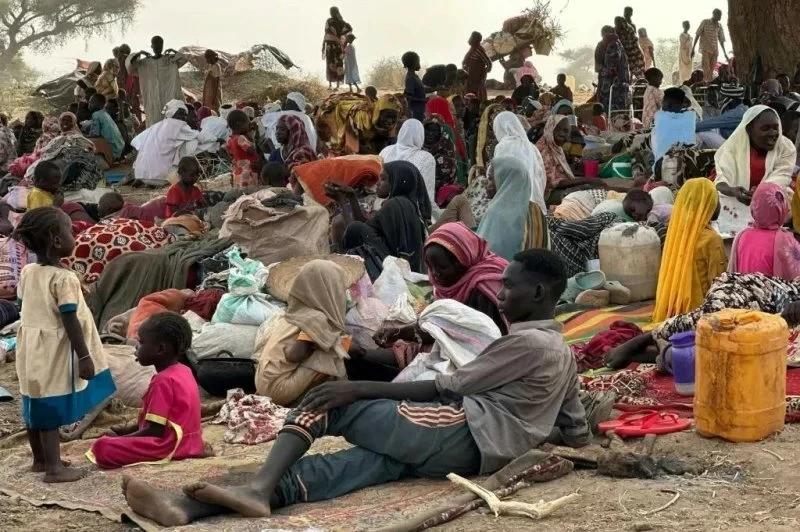
The report said displaced people often head toward “overcrowded shelters near the Chadian border,” and quoted a volunteer saying “dozens of families arrive daily.”
It also tied the displacement to the fragility of aid delivery, stating that “Last week, a drone strike destroyed a United Nations aid truck en route to North Darfur’s Tawila,” wiping out “emergency shelter kits.”
The same Mada Masr dispatch also described other drone strikes attributed to the RSF hitting “Obeid in North Kordofan,” and “Rabak and Kosti in White Nile State,” while noting that “On the ground… the RSF captured the town of Keili on Saturday.”
Drone war beyond Khartoum
Multiple reports in the source set described drone attacks and bombardments across Sudan, reinforcing the theme of civilian targeting.
The Al Jazeera Net report said “The Rapid Support Forces, relying on drones, continue to Bomb civilians in various parts of Sudan,” and cited military sources that “a drone belonging to the Rapid Support Forces targeted a civilian car in the Al-Aisawiya area south of Omdurman,” killing five civilians.
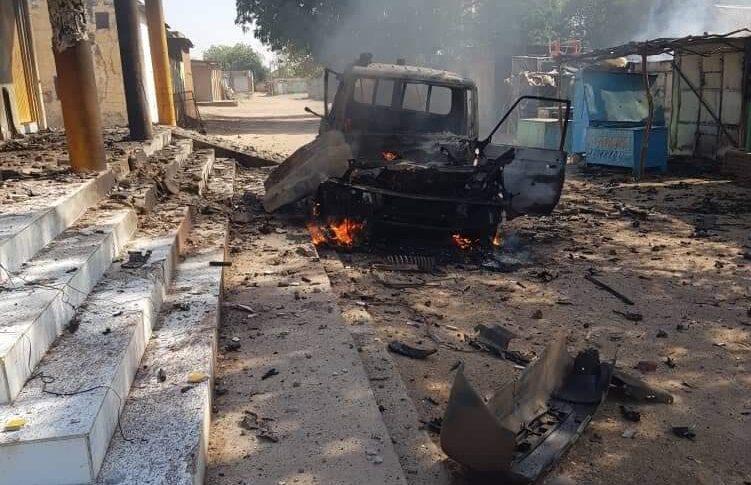
It also said the drones targeted “the densely populated area of southern Khartoum, where there are no military zones,” and described hospitals “going out of service,” citing the Sudan Doctors Network’s claim of “nearly a complete collapse of the health system in Deling city.”
In parallel, the بوابة الشروق report described “7 dead and 22 injured” from “drone strikes by the Rapid Support Forces on the city of Al-Obeid,” saying the strikes targeted “residential neighborhoods” and that “The strikes killed 7 people and wounded 22 others.”
It stated that the purpose was “not to hit military objectives, but to inflict as many civilian casualties as possible,” and called the attacks a “flagrant violation of all humanitarian and international laws and norms.”
The France 24 report, citing the UN High Commissioner for Human Rights, said Türk expressed “deep shock” at “reports of more than 200 civilians being killed in Sudan since March 4” in drone attacks targeting “markets, hospitals, schools, and infrastructure.”
Meanwhile, the القدس العربي report described a drone strike in central Darfur, saying a Sudanese report stated “20 people were killed and 17 injured” in an army drone strike targeting Um Dukhun, and quoted the Sudanese Founding Alliance saying “The army continues its criminal offensives against civilians.”
Oil, oilfields, and stakes
As the drone campaign and civilian casualties spread, the BBC described Kordofan becoming a “major frontline” in the war, linking control of the region to leverage over Sudan’s oil supply.
“Sudanese rights group says RSF drone strike killed 5 civilians near Khartoum Emergency Lawyers says RSF attack constitutes ‘a flagrant violation of international humanitarian law’ Adel Abdelrheem 02 May 2026•Update: 02 May 2026 KHARTOUM, Sudan Sudan’s Emergency Lawyers said on Saturday that five civilians were killed in a drone strike by the Rapid Support Forces (RSF) targeting a civilian vehicle in west of the capital Khartoum”
The BBC said Kordofan is “rich in oil” and that “those who control Kordofan effectively control the country’s oil supply, as well as a large part of Sudan,” citing Amir Amin of Oasis Policy Advisory.

It added that Kordofan’s oil also matters for landlocked South Sudan because “its oil passes through Kordofan’s pipelines before export.”
The BBC reported that the battle intensified since June, when the army set out to retake territory from the RSF after making gains in the three months prior, including “retaking the capital Khartoum and the neighboring Gezira state.”
The BBC also described General Abdel Fattah al-Burhan’s presence, saying he “landed at Khartoum’s main airport on July 20” and that it was his “second visit to the city since his troops drove RSF fighters out in March,” while noting he “remains based in Port Sudan.”
The BBC included a threat from RSF civil administration head Youssef Awadallah Aliyan, saying, “If the army’s aviation returns again and bombs the citizens of Western Kordofan State, we will strike and shut down Heglig’s oil and kill the engineers.”
In the same broader context, France 24 described the war as “the world’s worst humanitarian crisis,” saying it has “killed tens of thousands and displaced more than 11 million people,” and quoted Türk saying, “The time has come for the conflict to end. The Sudanese people have suffered far more than they should have.”
More on Sudan

Khartoum Rejects Massad Boulos Ceasefire Plan, Demands RSF Withdrawal From Captured Cities
10 sources compared
UN Investigators Say RSF Tactics in El-Obeid Bear Hallmarks of Genocide
15 sources compared

Sudan Gold Mine Collapse Kills 15 Miners At Mohamed Tawfiq Mine Near Egyptian Border
11 sources compared

Qatar Airways Launches First Port Sudan Flights From Doha With Airbus A320
10 sources compared