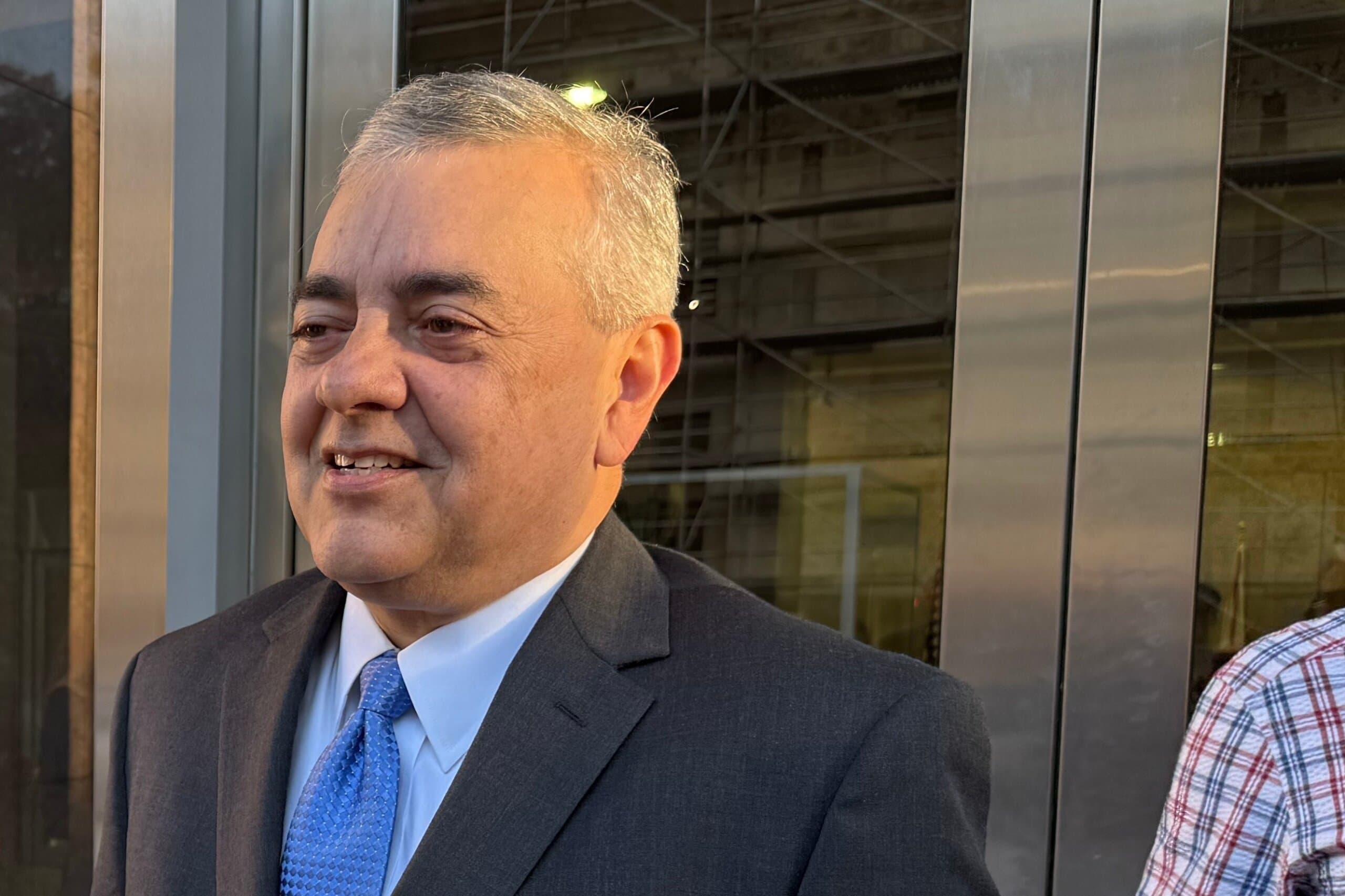
Secretary of State Marco Rubio testifies he didn't know ex-lawmaker David Rivera lobbied for Maduro
Key Takeaways
- Rubio testified he was unaware Rivera lobbied for Maduro while working with him years ago.
- Rivera faces trial for lobbying Maduro as an unregistered foreign agent, tied to $50 million.
- Rubio's testimony marked the first Cabinet member to testify in a criminal trial since 1983.
Rubio Testifies on Knowledge
Secretary of State Marco Rubio testified in federal court that he had no knowledge former Florida congressman David Rivera was secretly lobbying on behalf of Venezuela's government when they discussed U.S. policy toward the South American country during the early Trump administration.
“Rubio testifies he didn't know of allegations an ex-lawmaker was lobbying for Venezuela's Maduro Secretary of State Marco Rubio has testified for nearly three hours over his interactions with former Florida congressman David Rivera MIAMI -- Secretary of State Marco Rubio testified in court that he had no knowledge that former Florida congressman David Rivera was lobbying on behalf of Venezuela's government — as prosecutors later alleged — when he met with his longtime friend to discuss U”
Rubio expressed shock at the allegations, stating "I would've been shocked" had he known about Rivera's alleged activities.

The testimony came during Rivera's criminal trial where he faces charges of money laundering and failing to register as a foreign agent after receiving a $50 million contract from Nicolás Maduro's government.
Rubio emphasized his long-standing friendship with Rivera, dating back to their time together in the Florida legislature in the early 2000s, when they became "very close" as Cuban-American Republicans who ardently opposed Venezuela's socialist government.
2017 Meetings Details
The testimony detailed two 2017 meetings between Rubio and Rivera about Venezuela policy.
At the first meeting in Washington, Rivera informed Rubio that he was working with Venezuelan media magnate Raúl Gorrín on a plan to persuade Maduro to step aside, calling it a "fake election" that empowered a constituent assembly.

Rivera showed Rubio a bank account containing millions of dollars that he claimed would be used to support Venezuela's opposition party.
Two days later, borrowing talking points provided by Rivera, Rubio delivered a Senate floor speech signaling the U.S. would not retaliate against Venezuelan insiders who worked to push Maduro from power, saying "No vengeance, no retribution."
Rubio also spoke with President Trump about the Venezuela situation, alerting him that there might be something "brewing" with the country.
Legal Case Details
The legal context involves Rivera and political consultant Esther Nuhfer being charged in 2022 with money laundering and failing to register as foreign agents after receiving a $50 million contract from Maduro's government.
“The outreach quickly unraveled, however”
Prosecutors allege the goal was to persuade the White House to normalize relations with Venezuela and ease sanctions pressure, while Rivera's attorneys argue the contract was focused exclusively on commercial work with Exxon Mobil, which is generally exempt from the Foreign Agents Registration Act.
The indictment reveals that Rivera and Nuhfer were accused of trying to arrange meetings for then-Foreign Minister Delcy Rodríguez — now Venezuela's acting president — with White House officials, members of Congress including Rubio, and the CEO of Exxon.
Prosecutors contend that the contract was structured to disguise the true nature of the work and that Rivera deliberately avoided registering as a foreign agent so he could meet with U.S. officials without raising alarms.
Unusual Testimony
Rubio's testimony marked a highly unusual moment in American political history, as he became the first sitting Cabinet member to testify in a criminal trial since 1983, when Labor Secretary Raymond Donovan testified at a Mafia trial.
The testimony took place in a packed Miami courtroom with heightened security, reflecting the high stakes of the case.

Rubio's appearance was notable not only for his current role as the nation's top diplomat but also for his personal history with Rivera, whom he described as a "vociferous anti-communist voice" and "one of the leading voices against the Castro regime" in Cuba.
The defense team emphasized the two men's longstanding friendship and shared anti-Maduro views during cross-examination, with Rivera's attorney asking Rubio if Rivera had ever said anything nice about Maduro, to which Rubio replied "No."
Defense Position
Rivera maintains his innocence, arguing that he was working to help Venezuela's opposition and pursue business solutions, not act as an illegal foreign agent advancing Maduro's interests.
“Not since Labor Secretary Raymond Donovan testified at a Mafia trial in 1983 has a sitting member of the president’s Cabinet taken the stand in a criminal trial”
Defense attorneys have emphasized that Rivera never spoke positively about Maduro in conversations with Rubio and that the three-month contract with Venezuela's state oil company subsidiary ended before Rivera met with Rubio.
Rivera claimed in a statement that "everything we worked on together in 2017 was meant to remove Maduro from power in Venezuela," using Rubio's testimony to support his defense.
The case has become one of South Florida's most closely watched political corruption and foreign influence trials, touching U.S.-Venezuela relations during a volatile period.
Prosecutors say Rivera received $20 million from the deal, with Rivera dividing the money among three Miami associates including Nuhfer and Gorrín, who received about $4 million for introducing Rivera to Perera, a developer who connected Rivera to Gorrín.
More on USA

US to Deploy 3,000 82nd Airborne Division Troops to the Middle East Amid Iran Tensions
19 sources compared

Delta Suspends Special Services for Members of Congress Amid Partial Government Shutdown
20 sources compared

Trump administration bans imports of new foreign-made routers over security risks
10 sources compared
Minnesota Sues DOJ, DHS Over Evidence Access in Officer-Involved Shootings
13 sources compared